Broken torsion spring on your Burbank garage door? See why pre-1960 housing in the service area wears springs out early, and what really drives repair cost.
A snapped torsion spring doesn't mean a dead door forever, but it does mean the door isn't moving under its own power until the spring is swapped. A single-car door with one spring can sometimes limp open by hand for a day if you're careful, but a double door with two springs, or a door where one spring broke and the other is close behind, won't lift safely at all - the opener will strain, the cables can jump the drum, and forcing it is how a track bends.
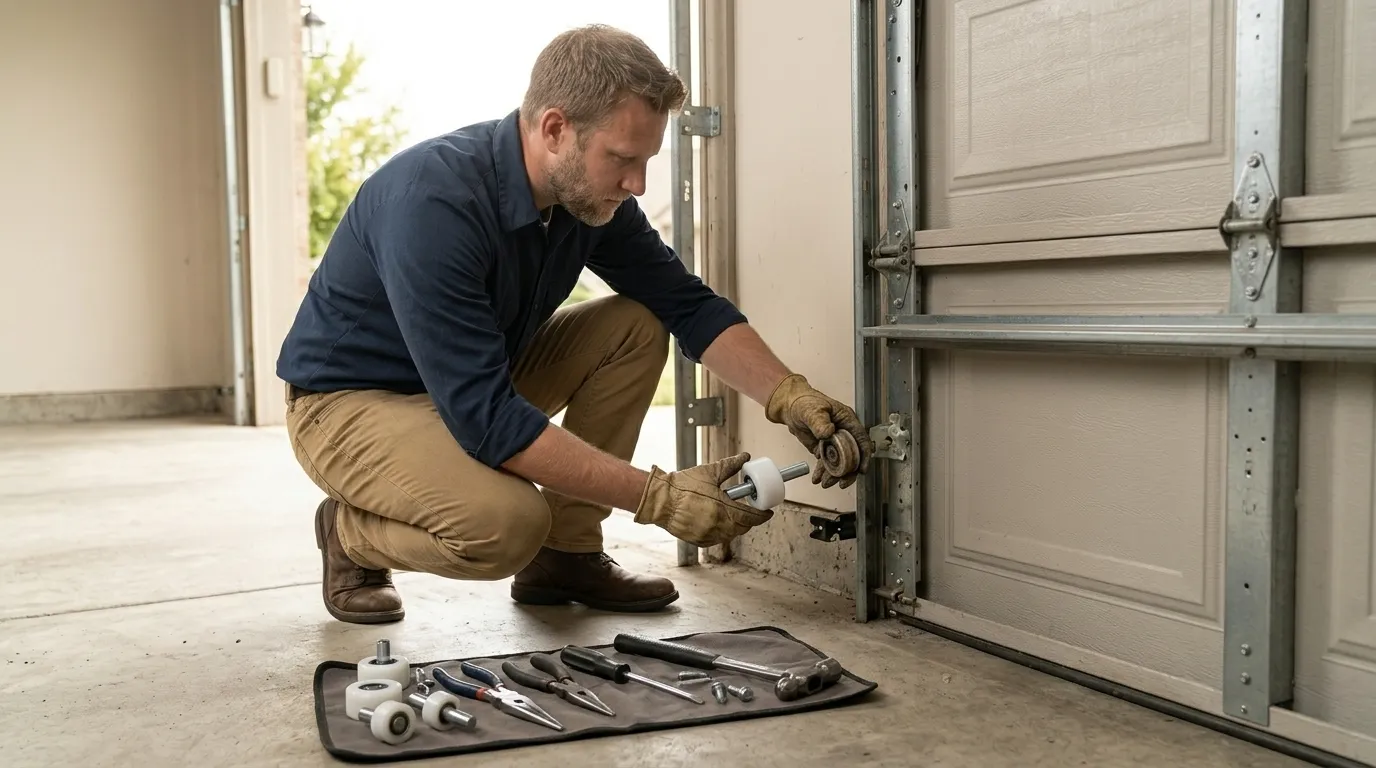
Most jobs are a same-visit fix once a truck is on site: pull the old spring, size the new one to the door's weight and drum, wind it to the right turns, test the balance. The wait isn't the repair itself, it's getting scheduled. If you're stuck with the car inside and the door won't budge, say so when you call - a door that's fully down and locked shut is a different priority than one that's stuck half-open.
We don't recommend leaving a door on one working spring "for now." The second spring is almost always close to its own failure point, and running unbalanced strains the opener gears in a way that turns one repair into two.
The Symptom
The classic sign is a loud bang from the garage, usually when nobody's touching the door - that's the spring letting go under tension, not a break-in or a car backfiring. After that you'll notice the door feels heavier than it should, the opener strains and maybe reverses partway up, or the door won't lift past a foot or two even with help.
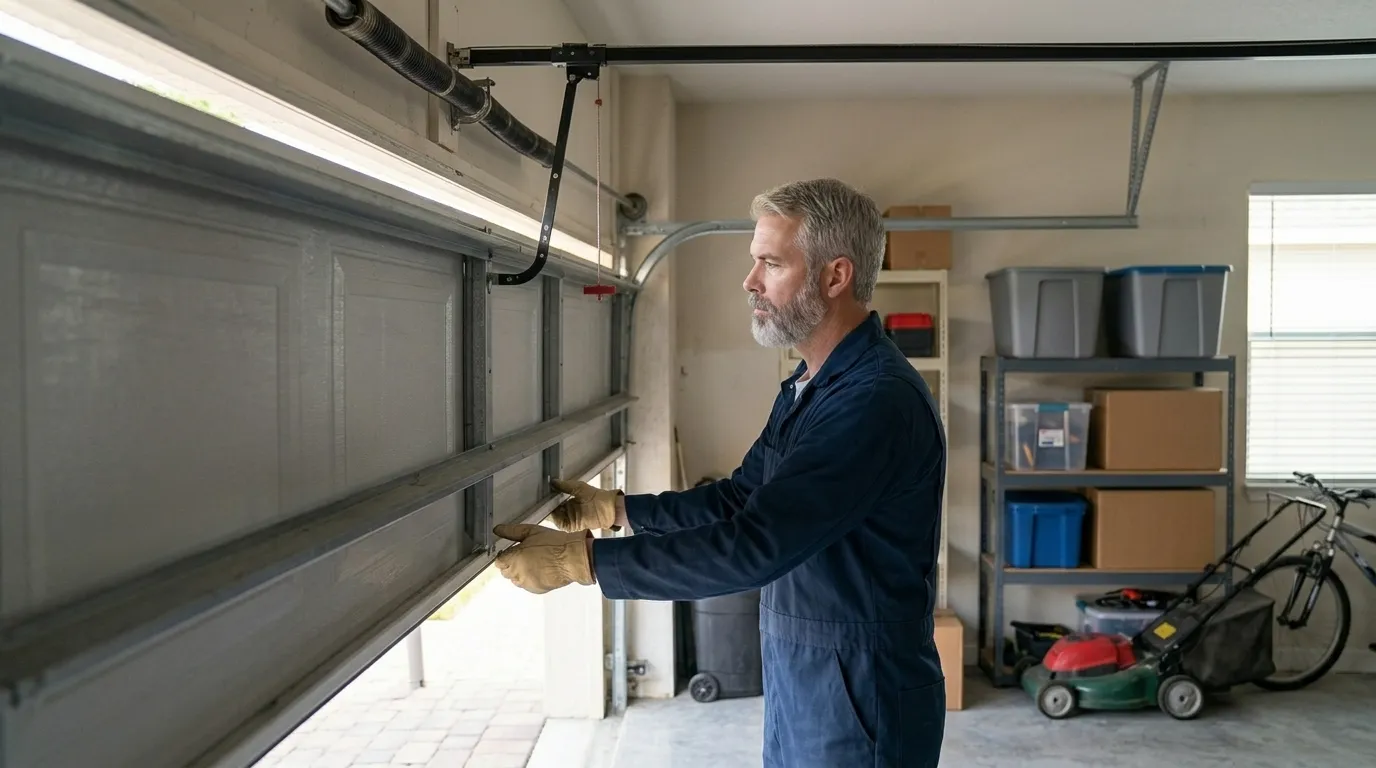
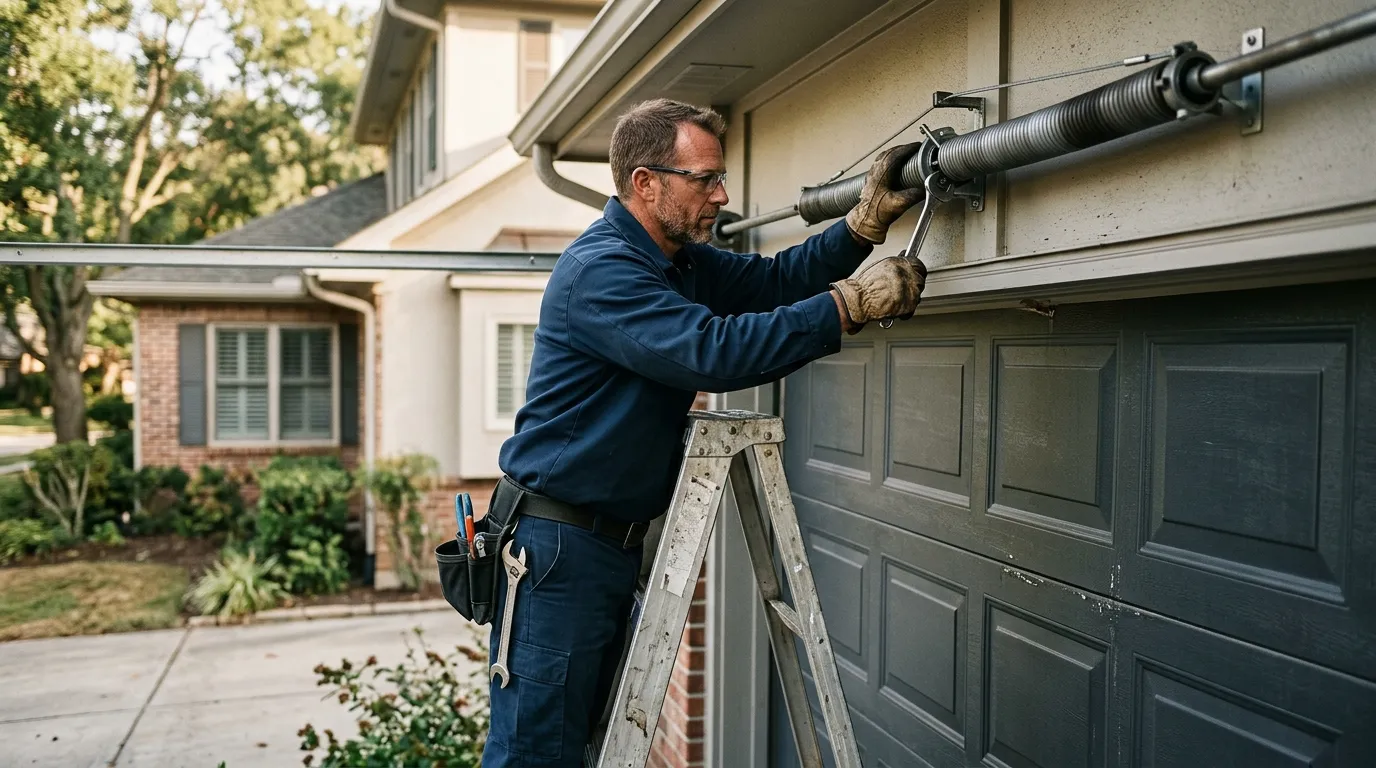
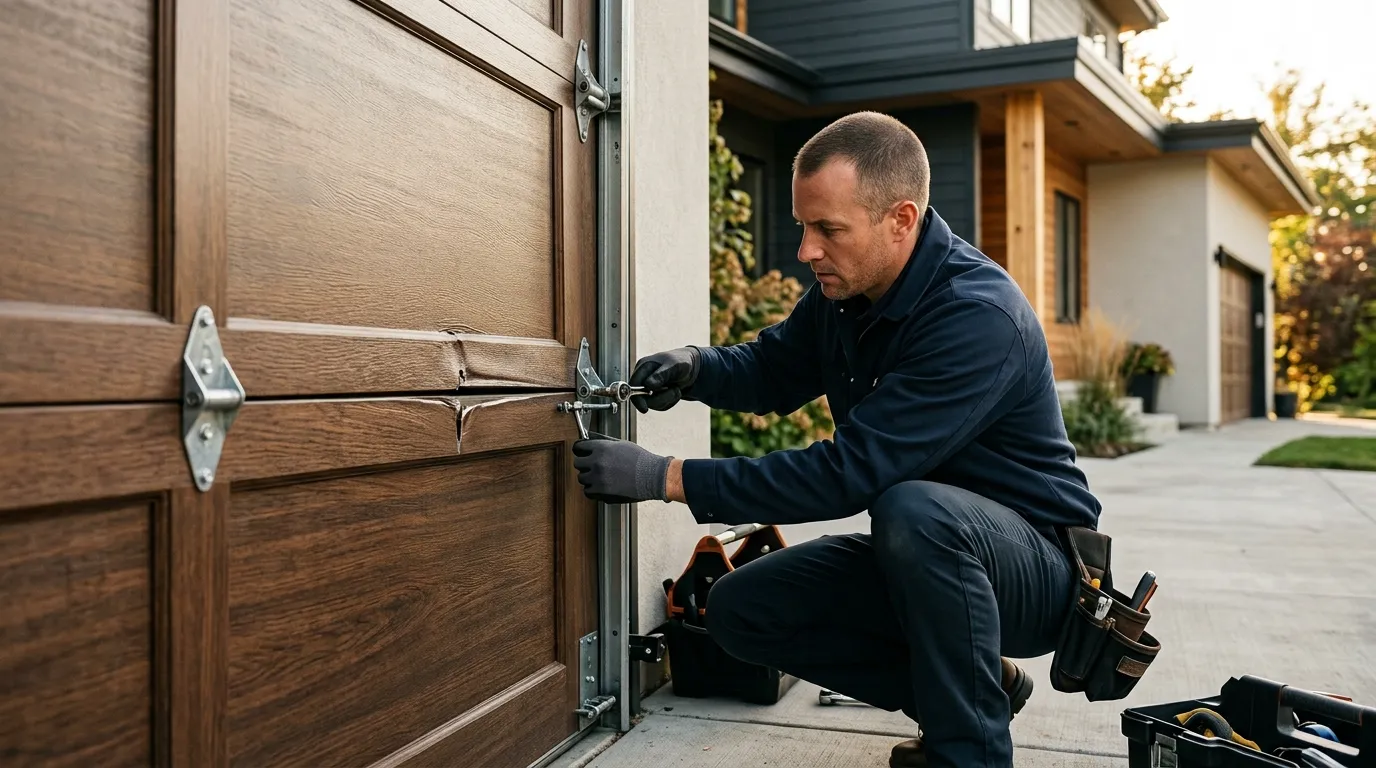
Look at the spring itself if you can see it safely: a broken torsion spring has a visible gap in the coil, usually right in the middle. Don't test this by running the opener repeatedly - each try with a broken spring puts more load on the opener's motor and gears than they're built for, and that's a second bill.
A related but different symptom is a door that closes crooked, one side dropping faster than the other. That's often a spring going soft rather than fully snapped, and it's worth catching before it breaks outright, since a lopsided door under load is what bends track and pulls cable off the drum.
What It Costs
We don't publish a flat number here because the honest answer depends on the door: single spring or a matched pair, the wire gauge and length for your drum size, and whether the drum or bearing plates took damage when the spring let go. A door that's been running unbalanced for weeks sometimes needs more than the spring - a bent shaft or worn bearing shows up once the tension's off.
What we can tell you is what drives the number up or down: two springs cost more than one, heavier doors (insulated steel, wood-look) need higher-rated springs than a light aluminum door, and older drums sometimes aren't sized to match new standard spring stock, which means custom winding instead of an off-the-shelf part. None of that is unique to any one house - it's the same math whether the door is on a ranch-style slab or a newer build.
With median household income at $86,956 across roughly 520,756 households in this service area, most owners we talk to choose a full spring swap - both sides, matched - rather than replacing just the broken one and running mismatched tension for another year. It costs more up front and less over the life of the door.
Why It Happens Here
Housing across this service area was built mostly between 1943 and 2012, with the median landing around 1959, and across the 45 named communities we run calls in, the stock skews heavily pre-1960. Doors on houses from that era were often built with a single torsion spring rated for a lighter door than what's actually hanging on it now, especially after an owner swaps a thin original panel door for a heavier insulated replacement without upsizing the spring to match.
The climate band here is moderate heat rather than hard freeze-thaw, so springs aren't failing from the cold-snap embrittlement you'd see farther north. What wears them out instead is straight cycle count and heat-driven metal fatigue - years of daily use plus summer temperature swings that stress steel that's already carrying more load than it was rated for decades ago.
Put those two things together - older single-spring setups sized for lighter doors, on houses that have had 60-plus years to accumulate open-close cycles - and a snapped spring on a pre-1960 house in this area is one of the most common calls we take, not a random failure.
How it works
From “it’s stuck” to “it’s fixed”
01
Tell us what’s wrong
Describe the symptom - won’t open, loud bang, opener runs but the door won’t move.
02
On-site diagnosis
A technician tests the door under power and by hand and finds what actually failed.
03
Clear, up-front plan
You get the fix that’s needed and what drives the cost - before any work starts.
04
Repaired & tested
The repair is done, the door is set true and tested, and the work area left clean.
Next step
Serving Burbank, CA - tell us what your door’s doing and we’ll take it from there.
Straight answers about garage door repair in Burbank. Still unsure? Ask us directly.
Can I drive the garage door with a broken spring until I get it fixed?
Not safely, and not for long. A door with a broken spring is much heavier than the opener or a person is meant to lift. Forcing it risks bent track, a dropped door, or a strained opener motor. If the car's trapped inside, it's better to leave the door down and call than to keep running the opener trying to force it open.
Do both springs need replacing if only one broke?
Not always, but most owners in this area choose to replace both at once. The springs are the same age and under the same cycle count, so if one has failed the other is usually close behind. Replacing just one saves a little now but often means a second service call within the year.
Why did my spring break with no warning?
Torsion springs fail from fatigue, not sudden damage - the coil weakens over thousands of open-close cycles until it lets go. On a house from the 1950s or 60s, that spring has likely been through decades of daily cycles, so the break can look sudden even though it's been building for years.
Will a new opener fix a broken spring problem?
No. The opener and the spring do different jobs - the spring carries the door's weight, the opener just triggers movement. A new opener on a broken spring will strain just as hard as the old one did. The spring has to be replaced regardless of what's happening with the opener.