Opener Installation for La Crescenta-Montrose Homes
Opener installs for La Crescenta-Montrose homes built around 1958, where low headroom and older door hardware change what opener actually fits. Serviced from Burbank, 6 miles out.
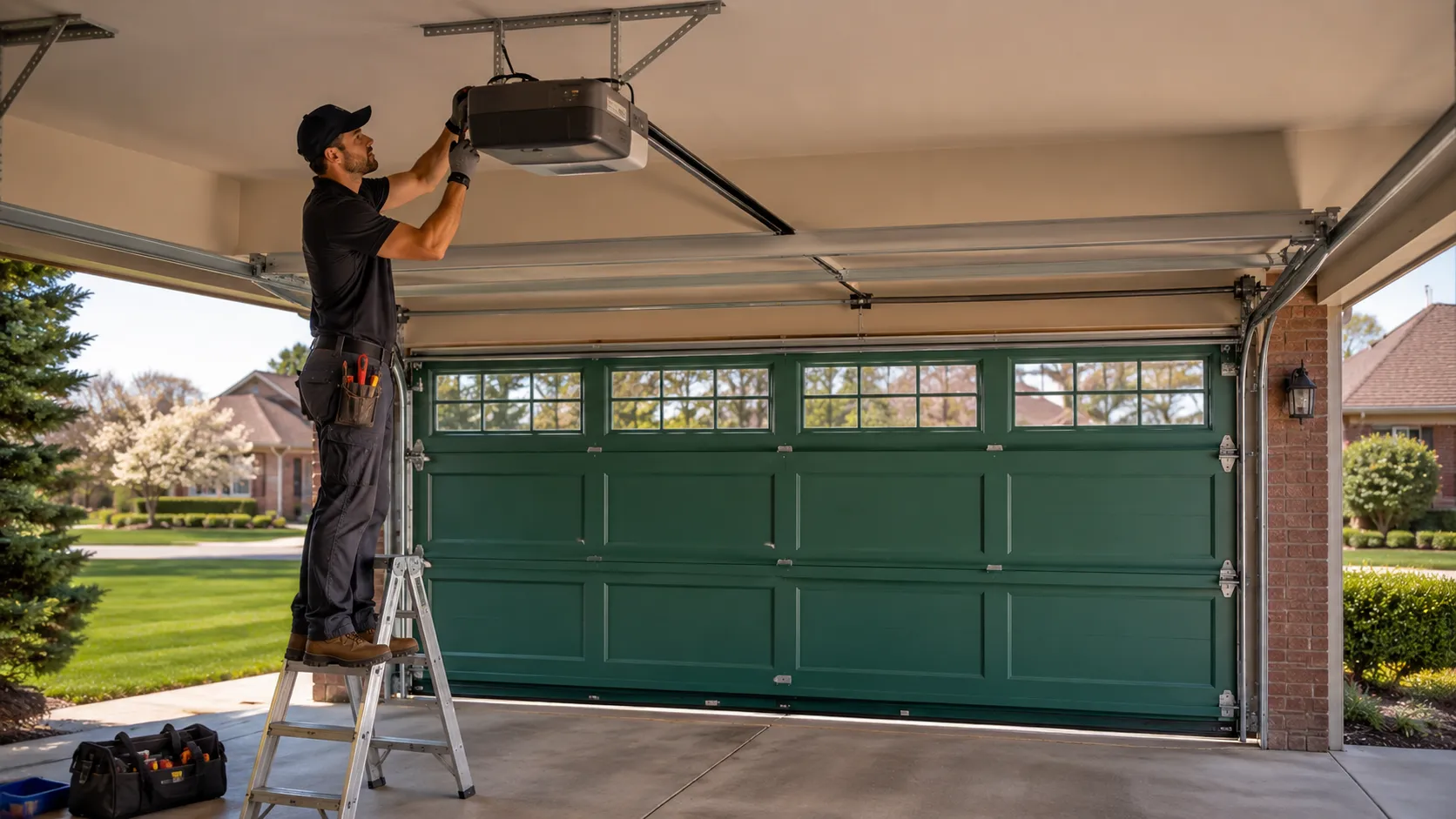
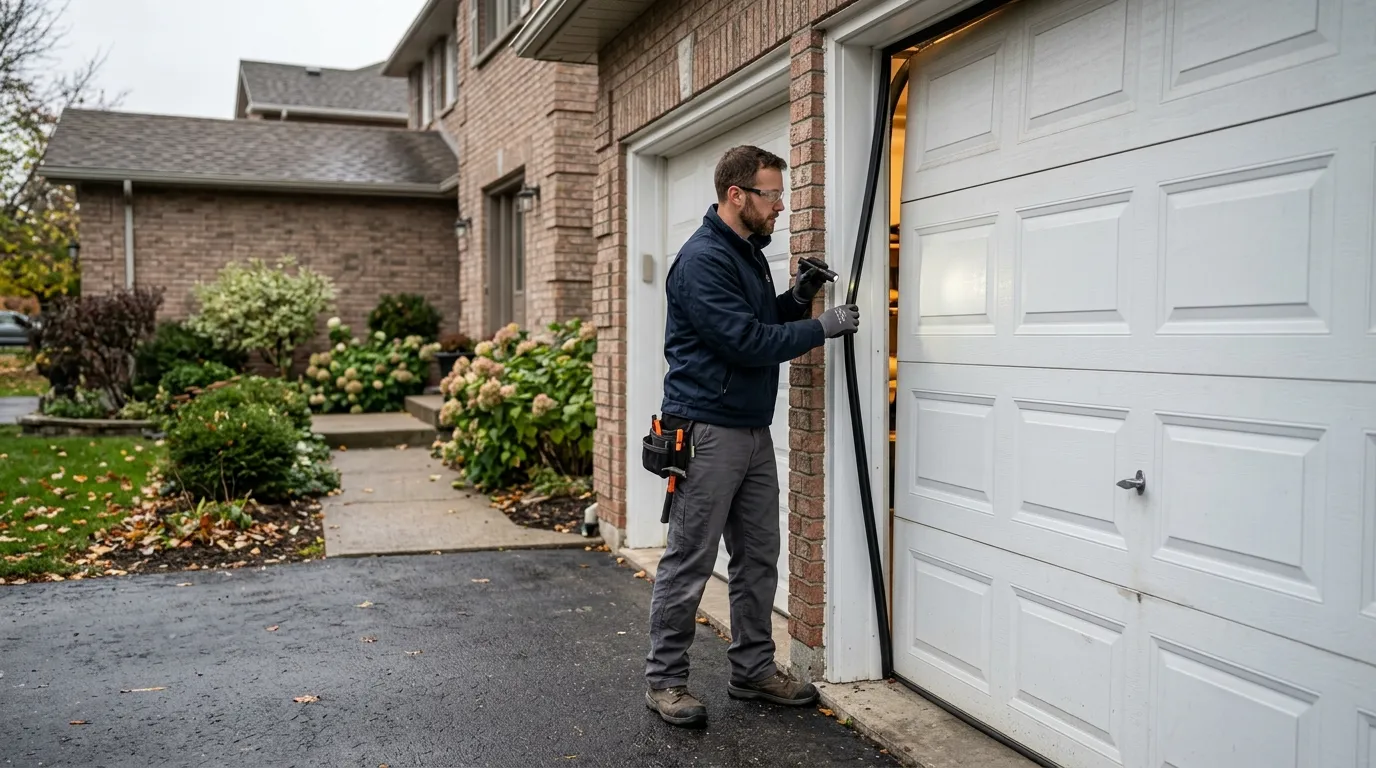
We run this job out of Burbank, six miles down the hill, so there's no local branch to call - just one crew that drives out for the appointment. When you book an opener install in La Crescenta-Montrose, tell us the door's width and whether it's a single or double, and if you know the age of the house, mention it. Homes here tend to date to around 1958, and that one detail changes which opener rail and mounting bracket we load on the truck before we leave the shop. We don't quote a response time for this area because we're not staged here - we schedule around the drive and confirm a window with you directly. If your door already has a broken spring or a track that's bent, say so when you call; that's a separate repair and it usually needs to happen before an opener goes on, not after. For a look at what else we handle on doors themselves in this pocket of the valley, our area page covers that separately from opener work. This page is just the install. See also our general opener install page for Burbank if you want pricing context that applies across the wider service area.
The Symptom
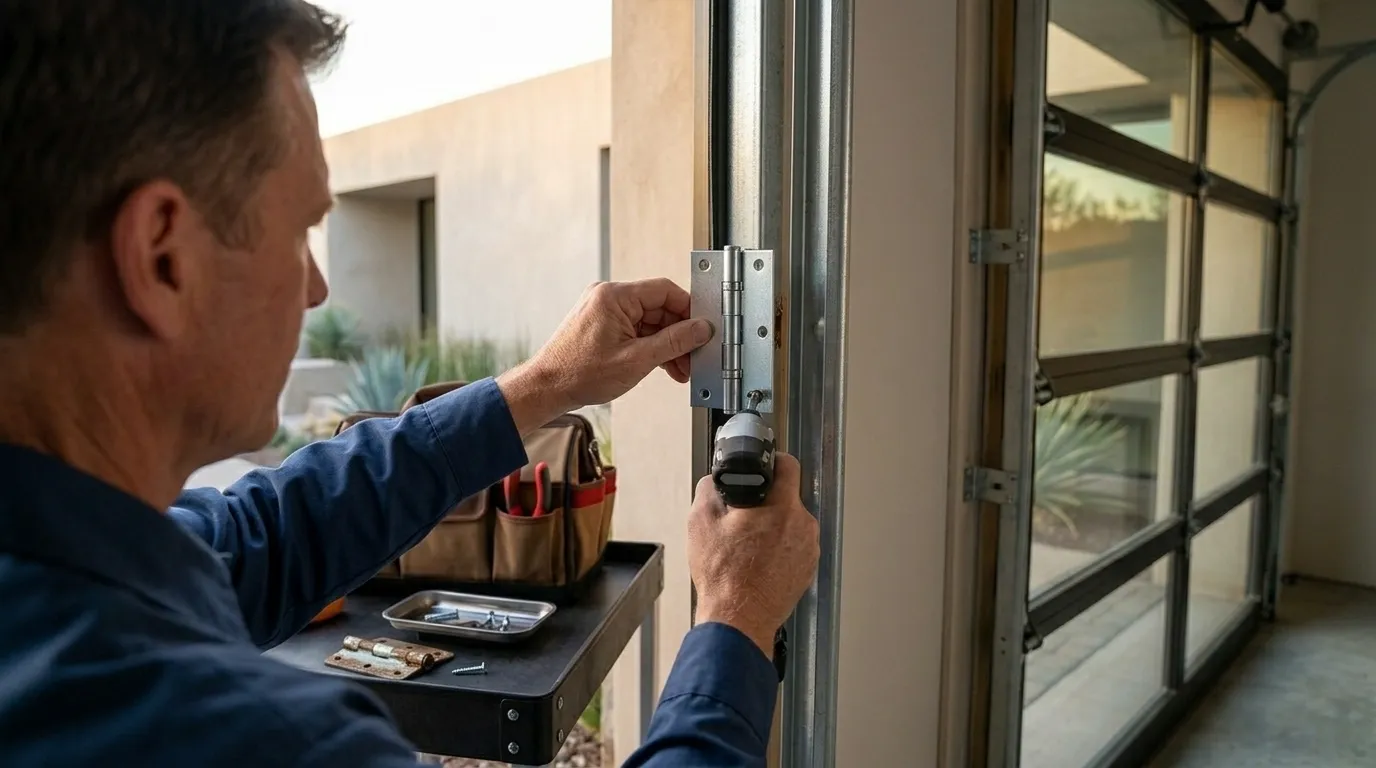
Before you get to the opener at all, look at the door it's going to lift. A lot of garage doors in La Crescenta-Montrose are original or close to it - houses here run a median build year of 1958, and that means single-layer steel or early sandwich-panel doors, often 16 feet wide on a two-car opening, hung on hardware sized for a much lighter pull than what a modern opener assumes. The symptom that brings people to us isn't usually "the opener won't turn on." It's the opener straining, chattering, or reversing halfway up because it's fighting a door and spring set that was never matched to it. On a house this age, headroom above the door is often tighter than current code allows for a standard 7-foot extension rail, which is why openers installed without checking clearance first end up grinding against the header or the horizontal track. If your opener is newer than your door, the door is usually the actual problem - the opener is just where it shows up.
Parts We Carry
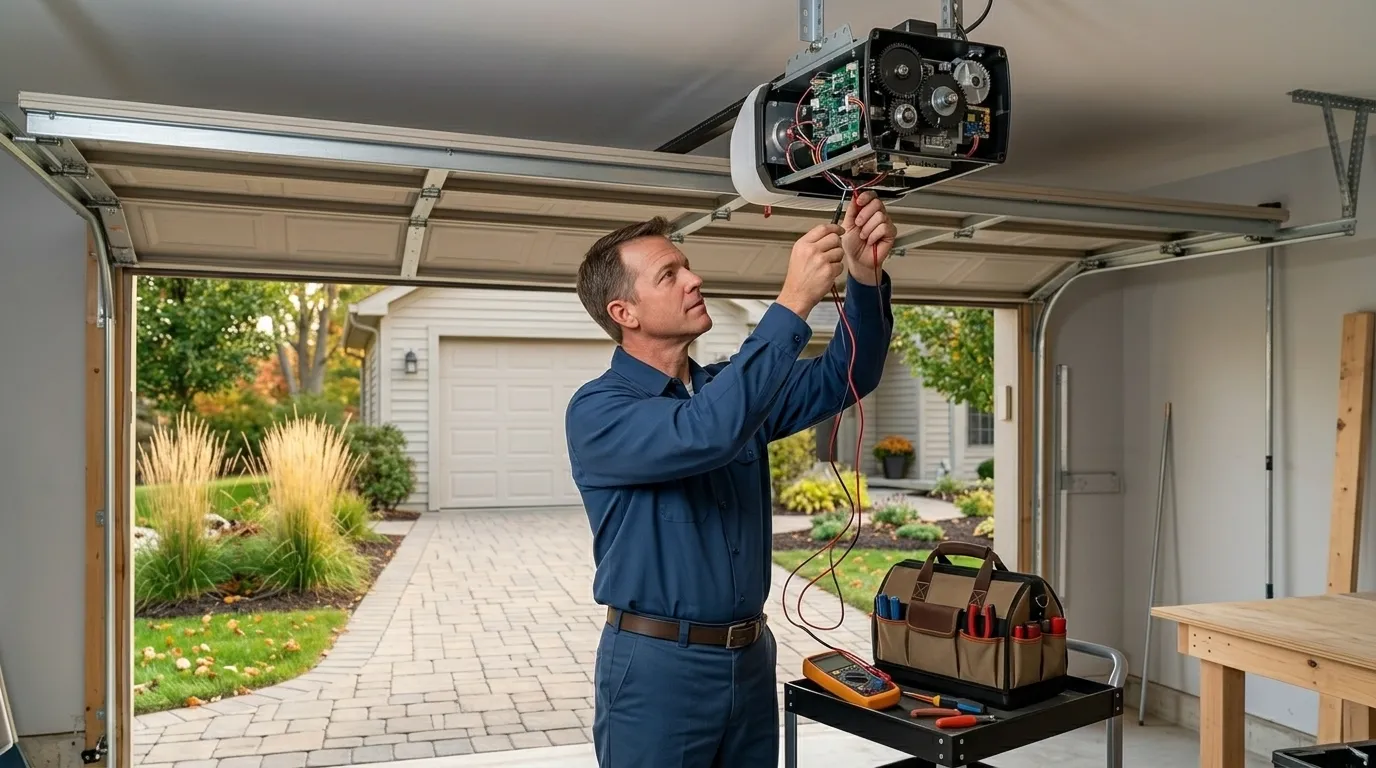
We carry belt-drive and chain-drive openers in the horsepower ranges that fit both older heavier doors and lighter modern replacements, plus jackshaft models for garages where the low header rules out a standard rail entirely. For a household income median of $119,775 in this area, we see more owners choose the belt-drive unit with battery backup over the cheapest chain-drive kit - not because we push it, but because it's the quieter option and it keeps the door operable in an outage, which matters if the garage doubles as the only way into the house. We stock standard 7-foot rails and short-clearance extension kits, plus the sensor brackets and wall consoles that come with current models. What we don't stock is a parts inventory specific to this town - everything rides out from Burbank on the truck, which is part of why we ask for the door's age and width before the appointment instead of guessing on site.
Doing It Yourself
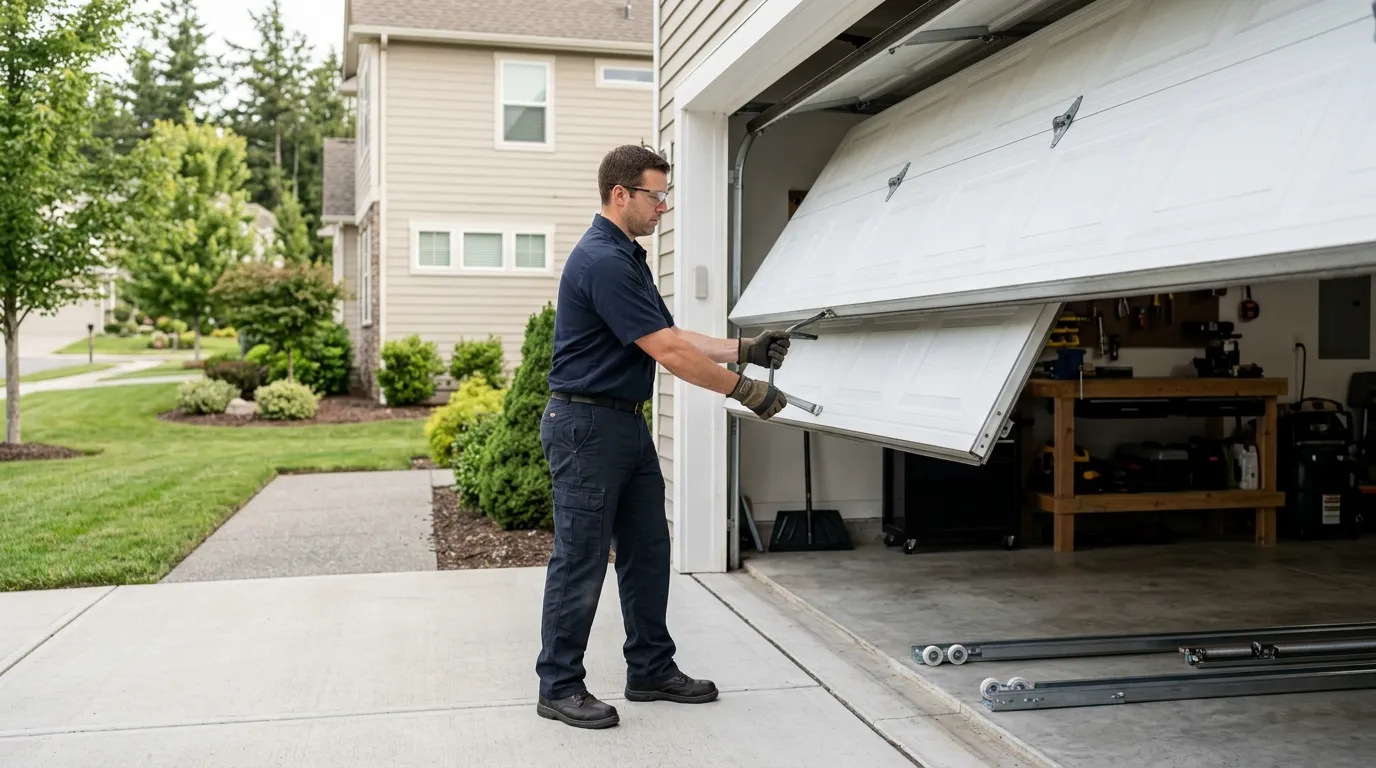
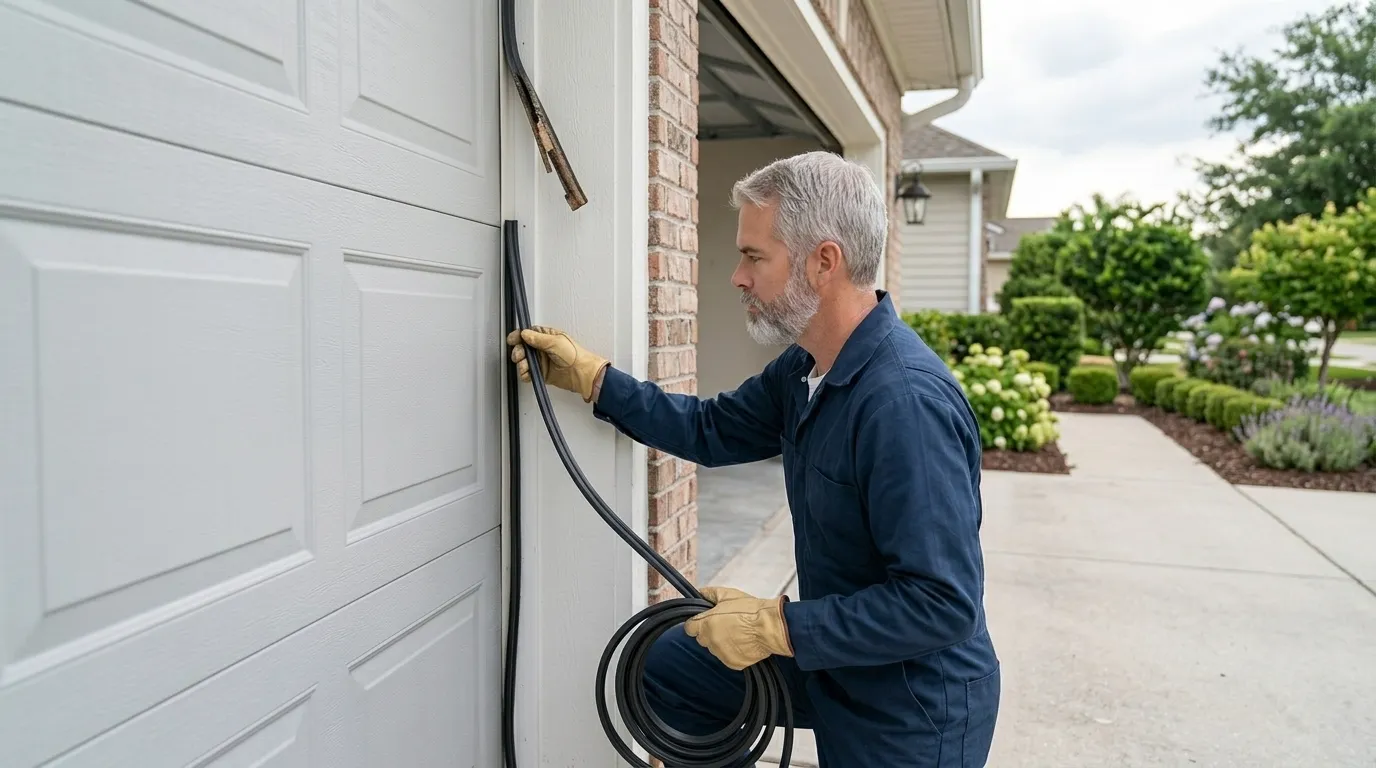
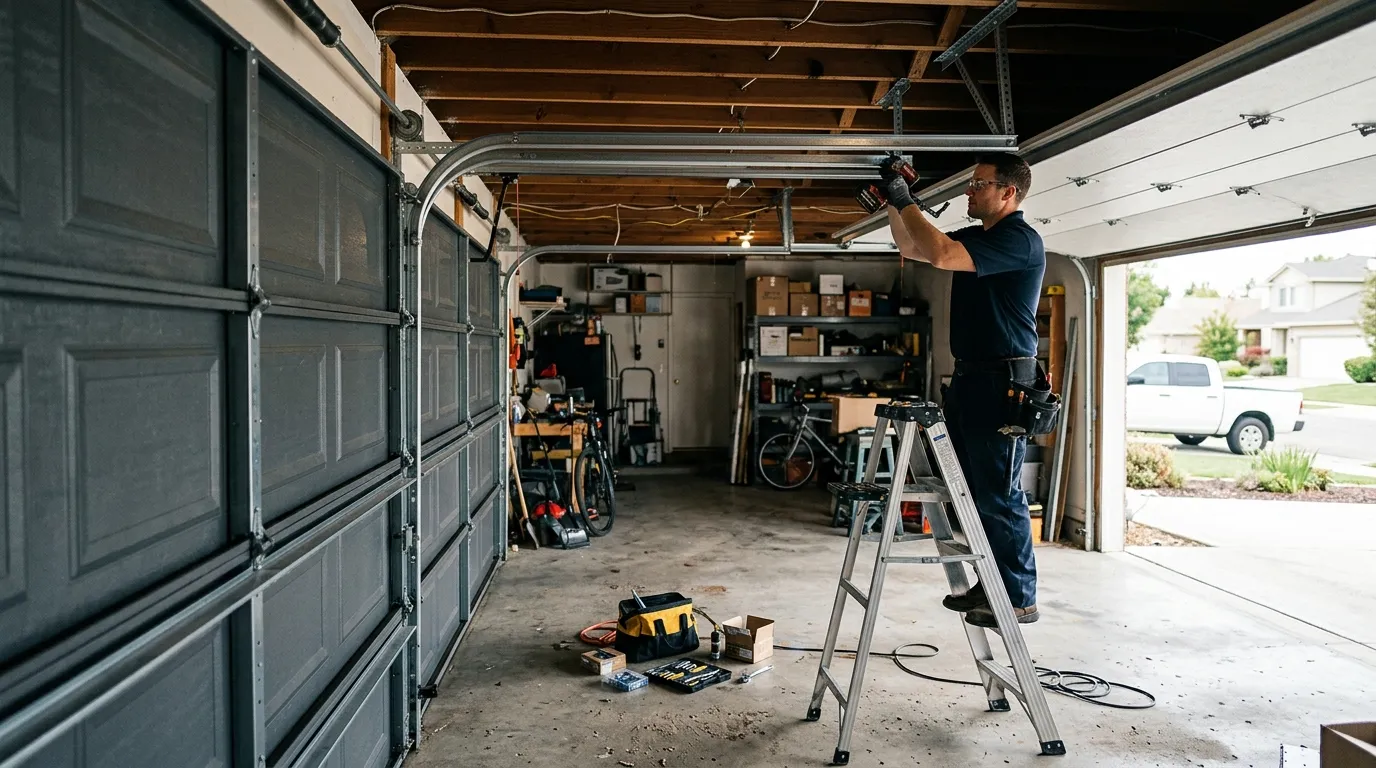
Mounting an opener bracket and running a rail isn't beyond a handy homeowner, and if your door is newer with standard 7-foot headroom, a kit install can be a weekend job. Where it gets risky on houses of this era is the spring side of the equation - if the door is original to a 1958-built house, the torsion or extension springs are old enough that disturbing them to fit a new opener bracket can let go under load, and that's not a DIY repair under any circumstances. The other limit worth naming honestly: if your header clearance is under what a standard rail needs, a jackshaft or low-headroom kit costs more and isn't something we'd recommend sourcing and fitting yourself the first time. If you get partway into an opener swap and hit a spring you're not sure about, stop and call - that's the one part of this job where a mistake costs more than the service call would have.
How it works
From “it’s stuck” to “it’s fixed”
01
Tell us what’s wrong
Describe the symptom - won’t open, loud bang, opener runs but the door won’t move.
02
On-site diagnosis
A technician tests the door under power and by hand and finds what actually failed.
03
Clear, up-front plan
You get the fix that’s needed and what drives the cost - before any work starts.
04
Repaired & tested
The repair is done, the door is set true and tested, and the work area left clean.
Next step
Serving Burbank, CA - tell us what your door’s doing and we’ll take it from there.
Straight answers about garage door repair in Burbank. Still unsure? Ask us directly.
Will a new opener work with my original 1958 door?
Sometimes, but not always. If the door is original steel from that era, it's often lighter-built than current code doors, and a modern opener sized for a heavier door can put more force through old hinges and track than they were built for. We check the door's condition before recommending horsepower.
Do you keep a truck stocked in La Crescenta-Montrose?
No. We work out of Burbank, about six miles away, and load the opener, rail, and brackets for your specific door before we drive out. There's no separate depot here, so appointment timing is built around that drive rather than a same-block response.
Why does headroom matter for opener installation?
Standard rails need roughly a foot of clearance above the closed door. A lot of houses built around 1958 in this area have tighter framing than that, which means a standard kit won't clear the header and you need a low-headroom or jackshaft opener instead.
Can I install the opener myself and just call you for the springs?
Yes, that split works for some owners - you handle the rail and bracket, we handle spring tension. Tell us that's the plan when you book so we bring the right spring set and skip the opener hardware.