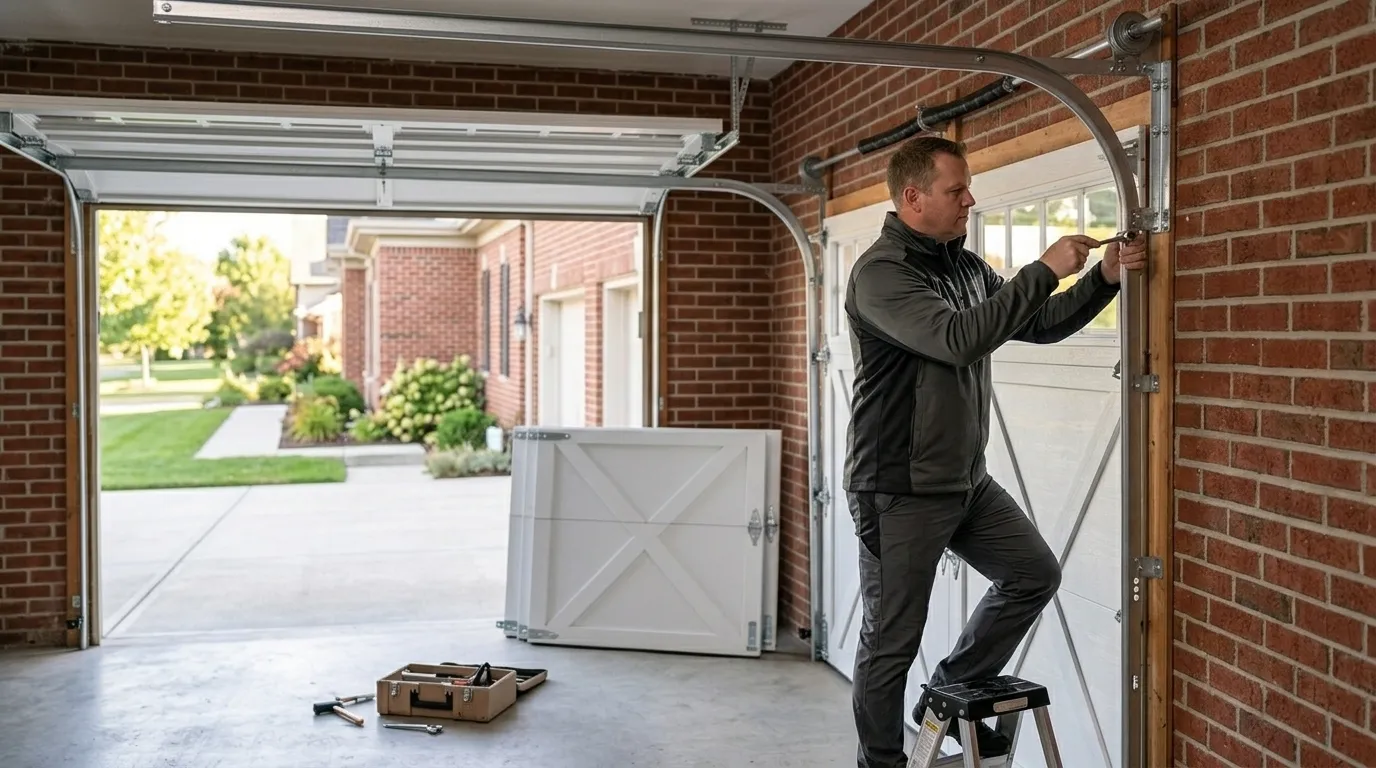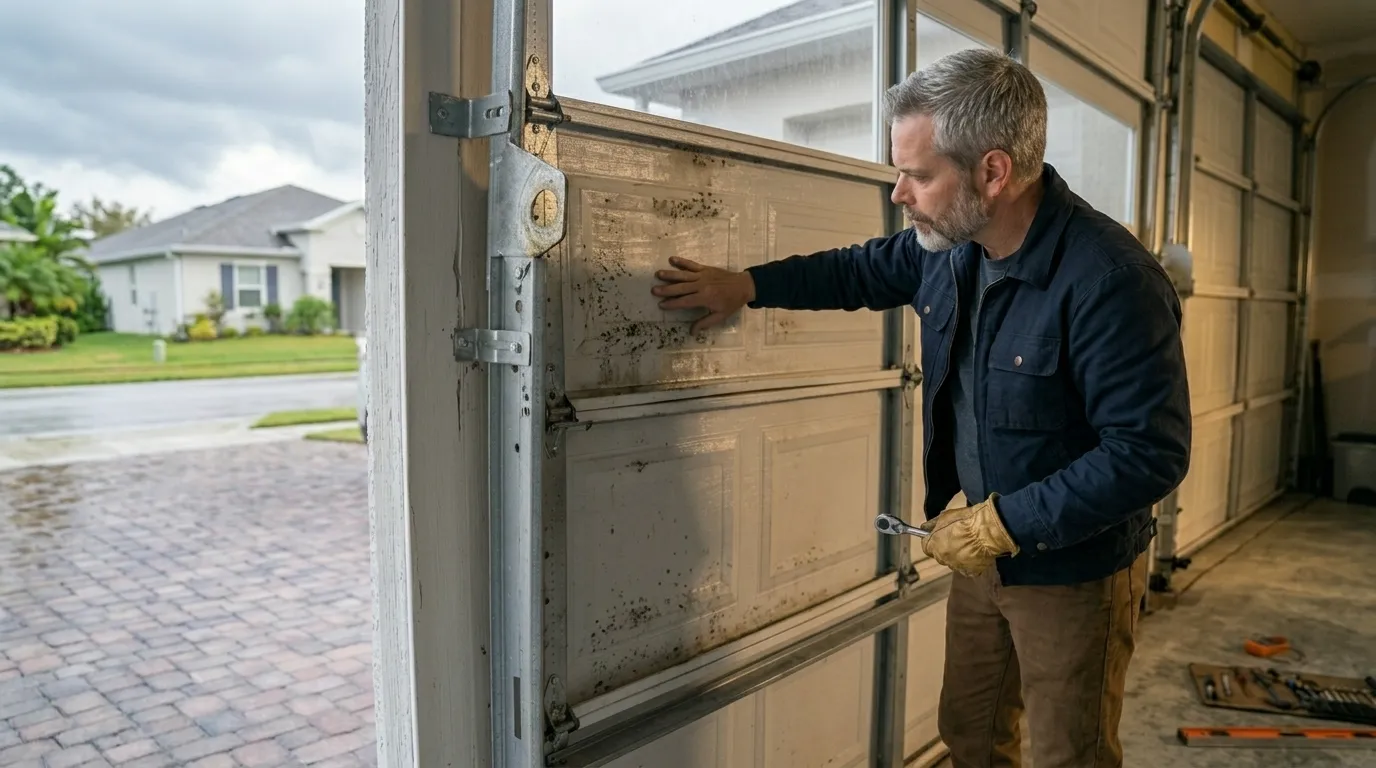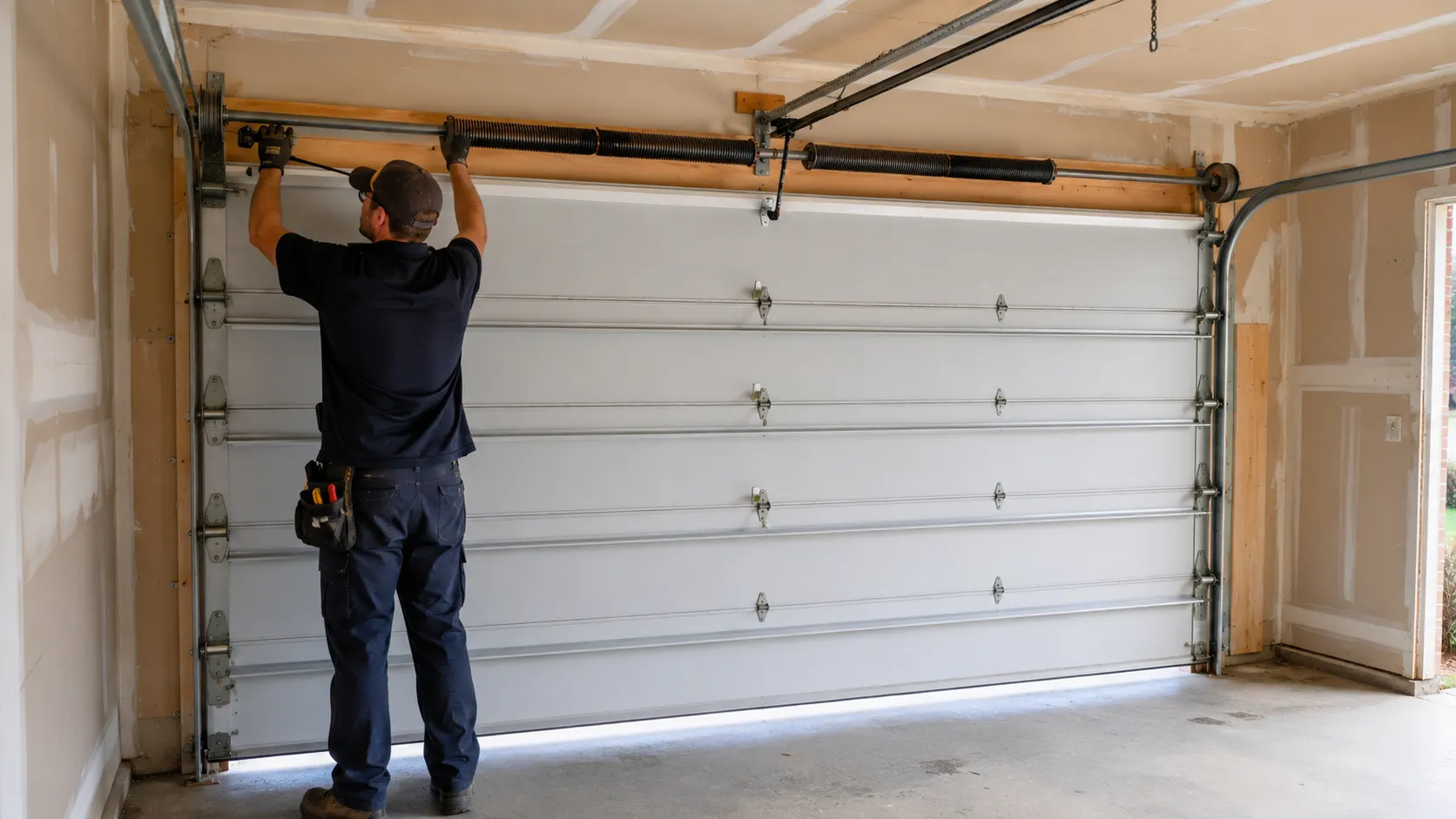
The Symptom
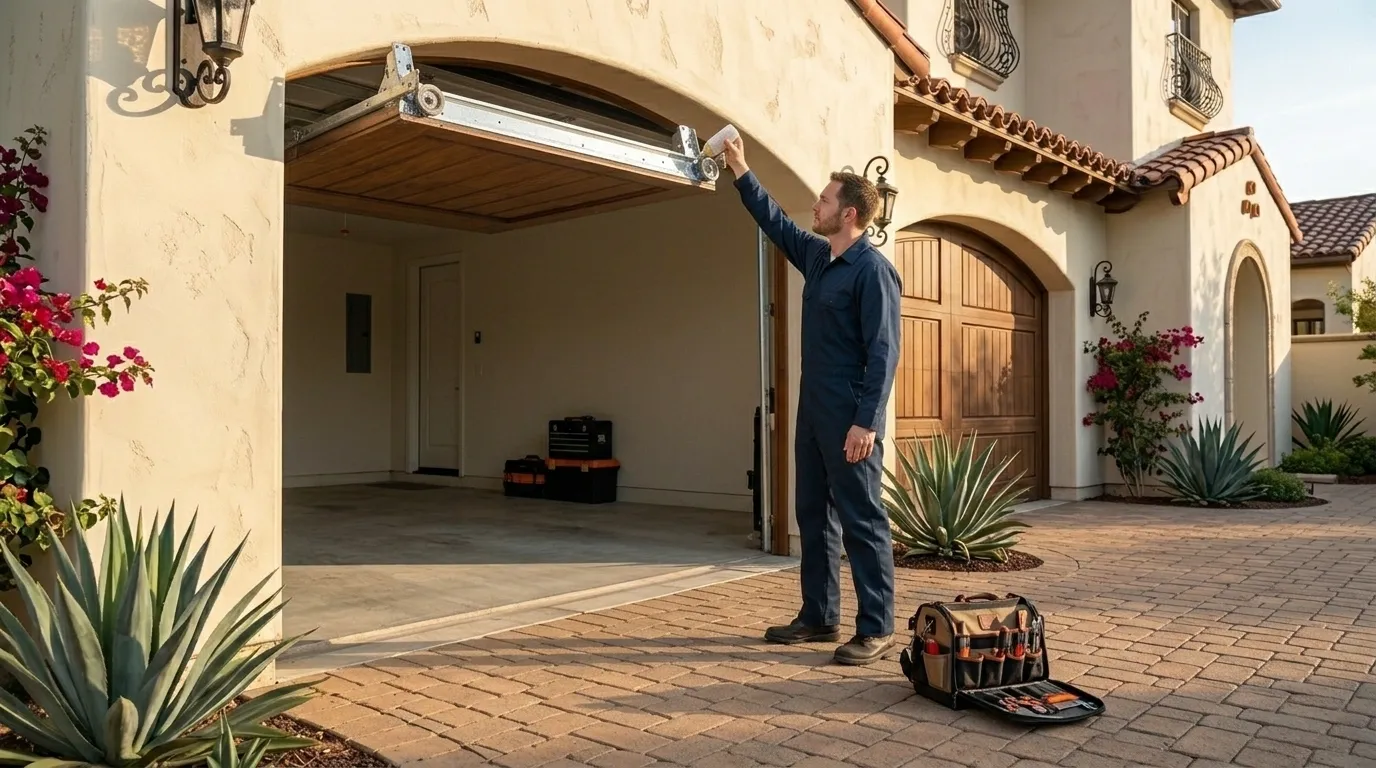
Houses in La Crescenta-Montrose mostly went up around 1958, right in the middle of the service area's 1943-2012 build range, and the doors that came with them were steel sectional panels on plain steel rollers with no bearing at all - just a stem riding straight in a bracket. Fifty-plus years later those steel rollers are usually long gone, replaced at some point with the cheap nylon rollers that were standard through the '80s and '90s. Those nylon rollers don't fail quietly. They squeal on the way up, they jump the track on a cold start, and eventually the roller stem snaps clean off inside the bracket.
The area sits in a moderate-heat climate band, and repeated heat cycling is hard on nylon rollers specifically - the plastic wheel expands and contracts against the steel track thousands of times a year, and the wheel face wears oval instead of round. An oval roller doesn't roll, it thumps, and that thump is usually what gets a homeowner to call. If your door only makes noise on the first cycle of the morning and then quiets down, that's consistent with roller wear, not a spring problem - springs don't care what time of day it is.
Parts We Carry
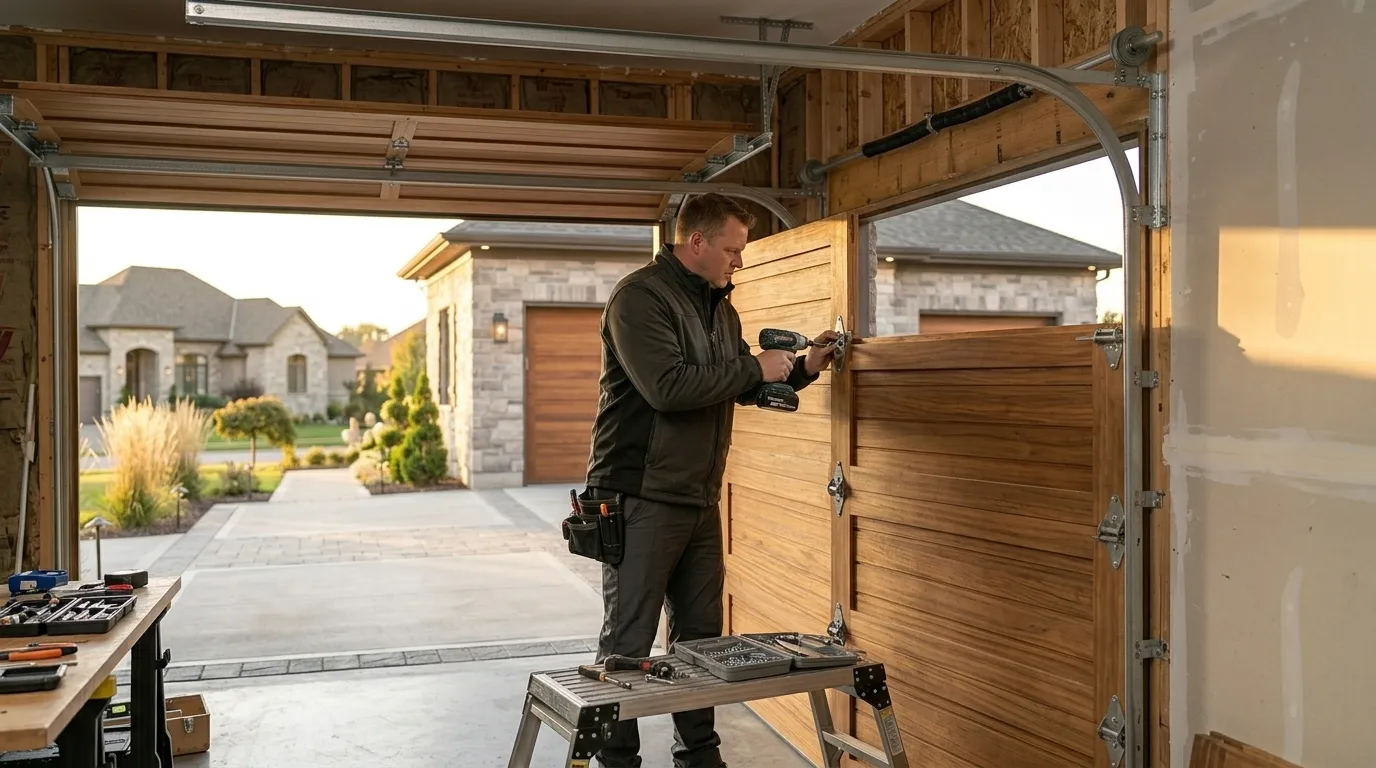
For a door from this era we carry both 7-ball steel bearing rollers and sealed nylon rollers, because which one is right depends on what's already on the door and what the bracket was built for. A lot of the original 1958-era brackets were stamped for a plain stem, not a bearing housing, so we check the bracket before we quote the roller - swapping in a bearing roller on a bracket that can't take one just moves the noise somewhere else.
Steel ball-bearing rollers cost more up front but run quieter and last longer under repeated heat cycling, which matters here given the climate band this area sits in. Nylon rollers are the cheaper repair and still a reasonable call on a door that only gets used once or twice a day. Given that median household income in the wider service area sits at $86,956, we quote both options rather than defaulting to the pricier one, and let the homeowner decide what the door is worth to them.
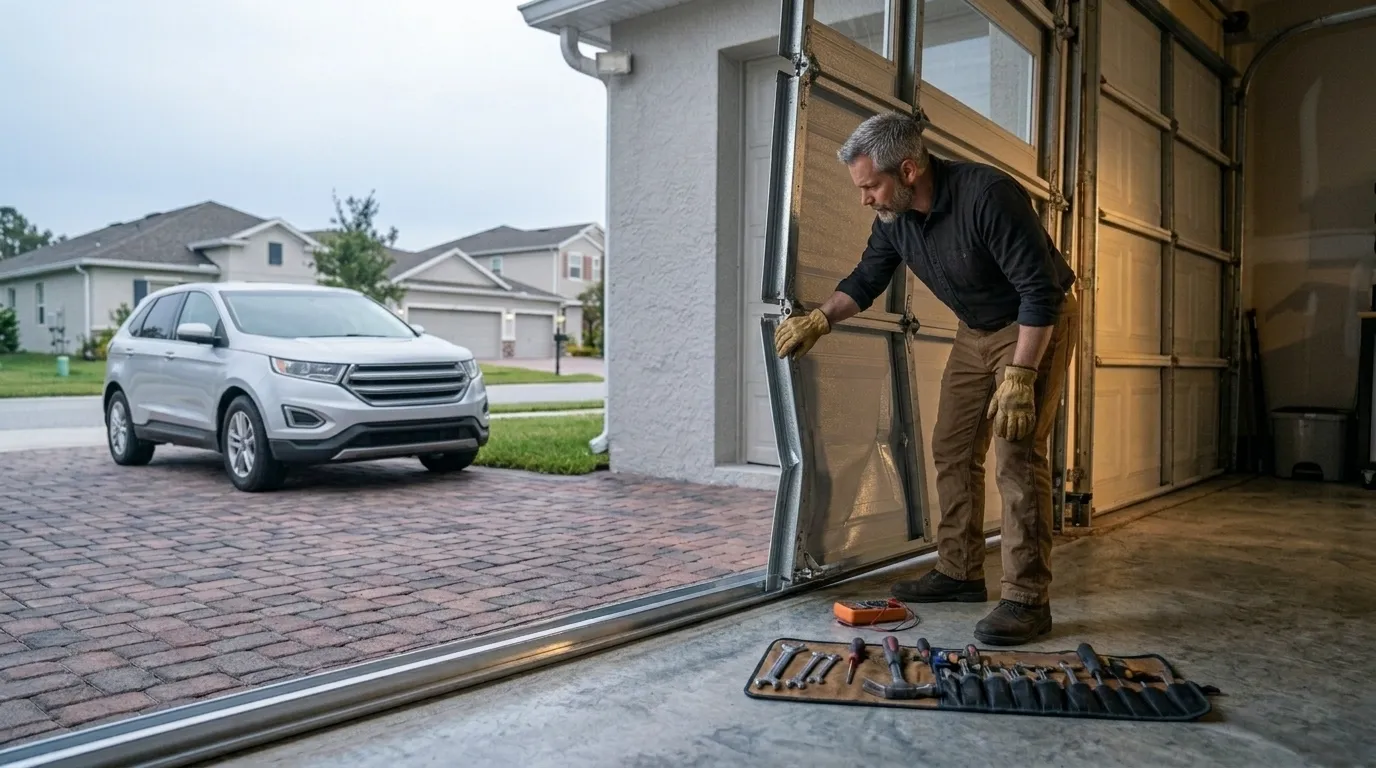
One limitation worth saying plainly: if the roller failure has already chewed up the track - bent flange, gouged rail - a roller swap alone won't fix the noise. That's a track section, not a roller, and we'll tell you that on-site rather than sell you a part that won't solve it.