What Can Go Wrong
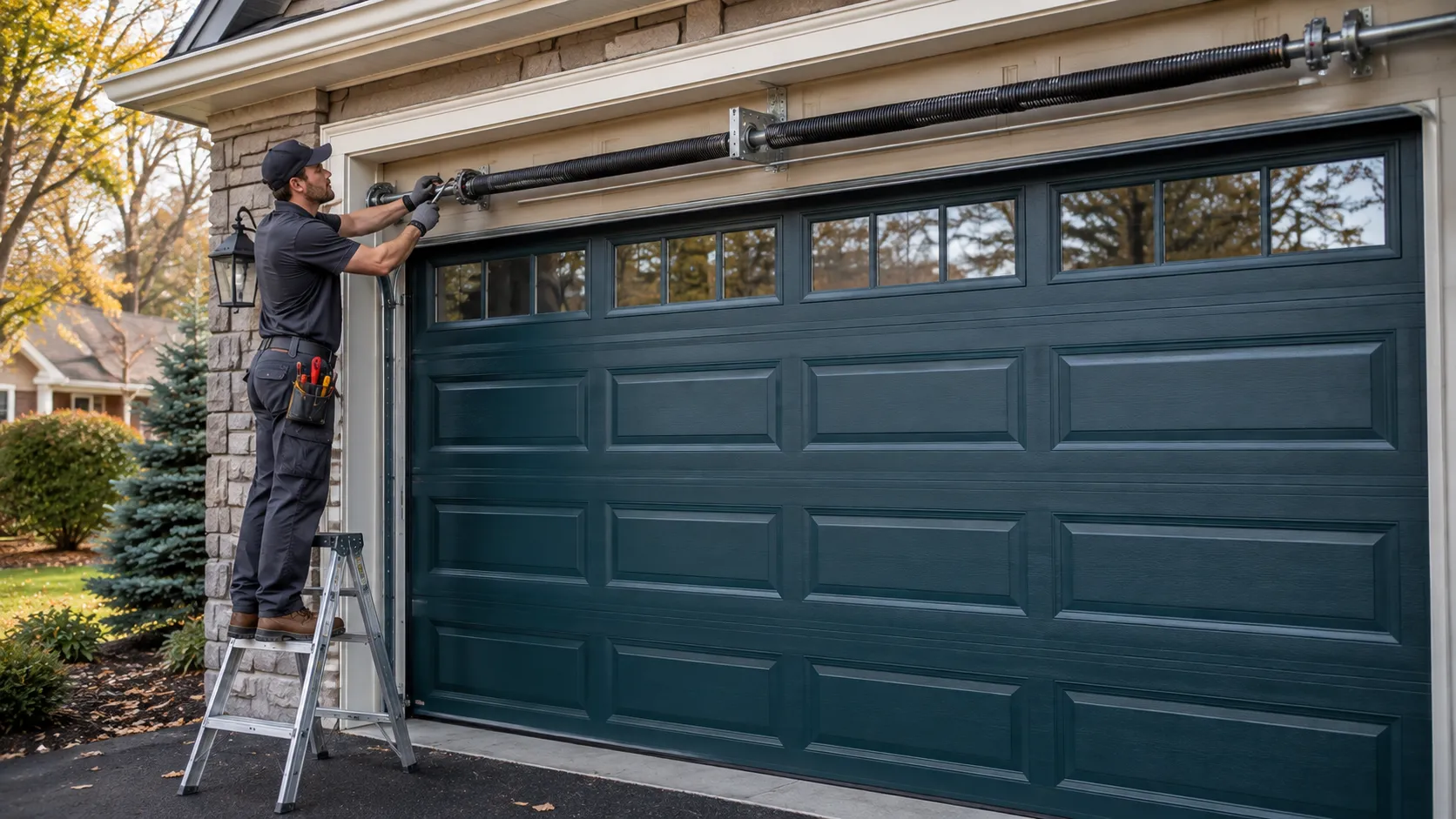
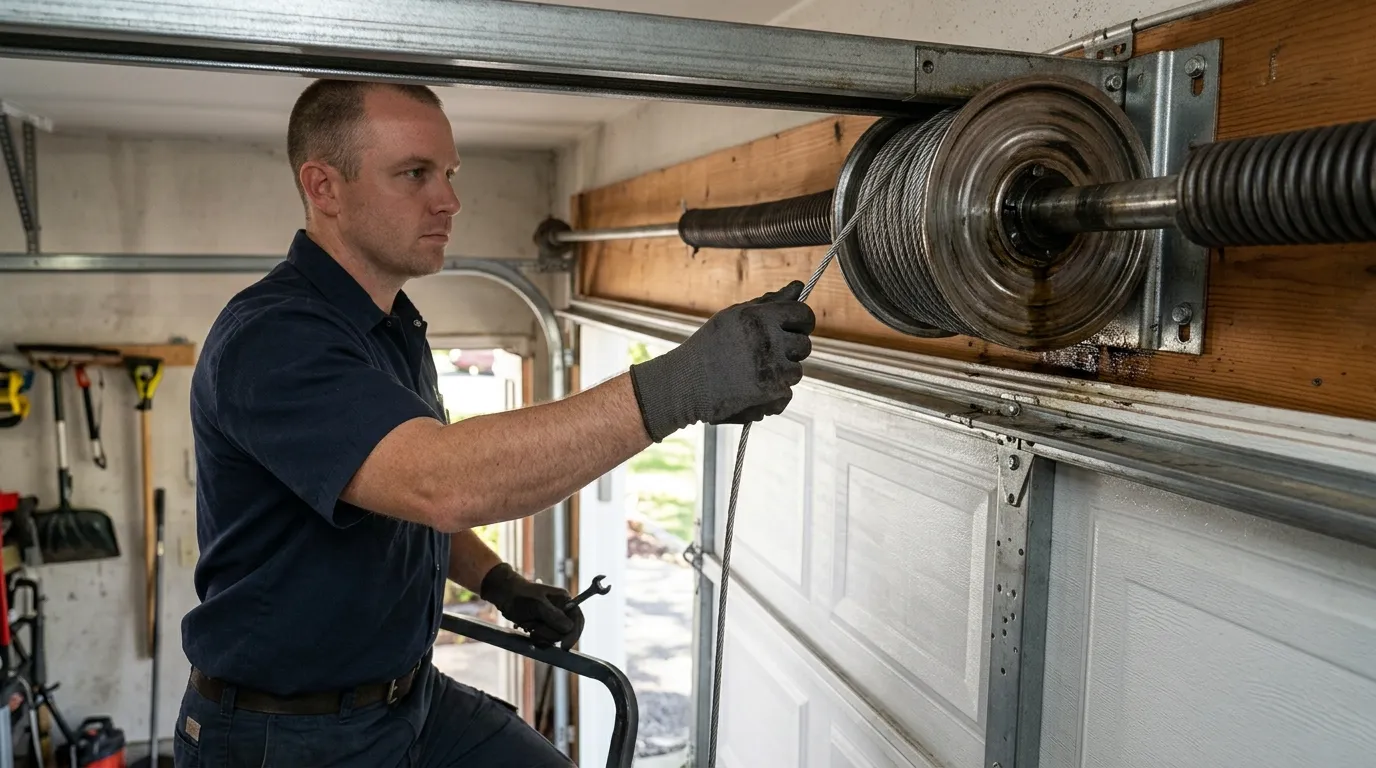
Housing in this part of the service area was built mostly in a range from 1943 to 2012, but La Cañada Flintridge's own median sits at 1957 - meaning a large share of doors here started life as heavier one-piece or early sectional units on side-mounted torsion springs, hardware that was standard for that era and isn't what gets installed today. When that original torsion spring finally fatigues, it usually doesn't fray first - it snaps clean, and the door drops fast. On these older setups the drums and shafts are also original as often as not, so a spring failure frequently pulls a cable or bends a shaft with it. Rollers on original tracks tend to be steel-on-steel, which is louder and wears the track lip faster than the nylon rollers on newer installs. None of this means the doors are unsafe by design - it means the failure mode is different from what you'd see on a door installed in the last fifteen years, and the fix has to match the hardware actually on the wall, not a generic assumption about what a garage door looks like.
How Long You Are Without the Door
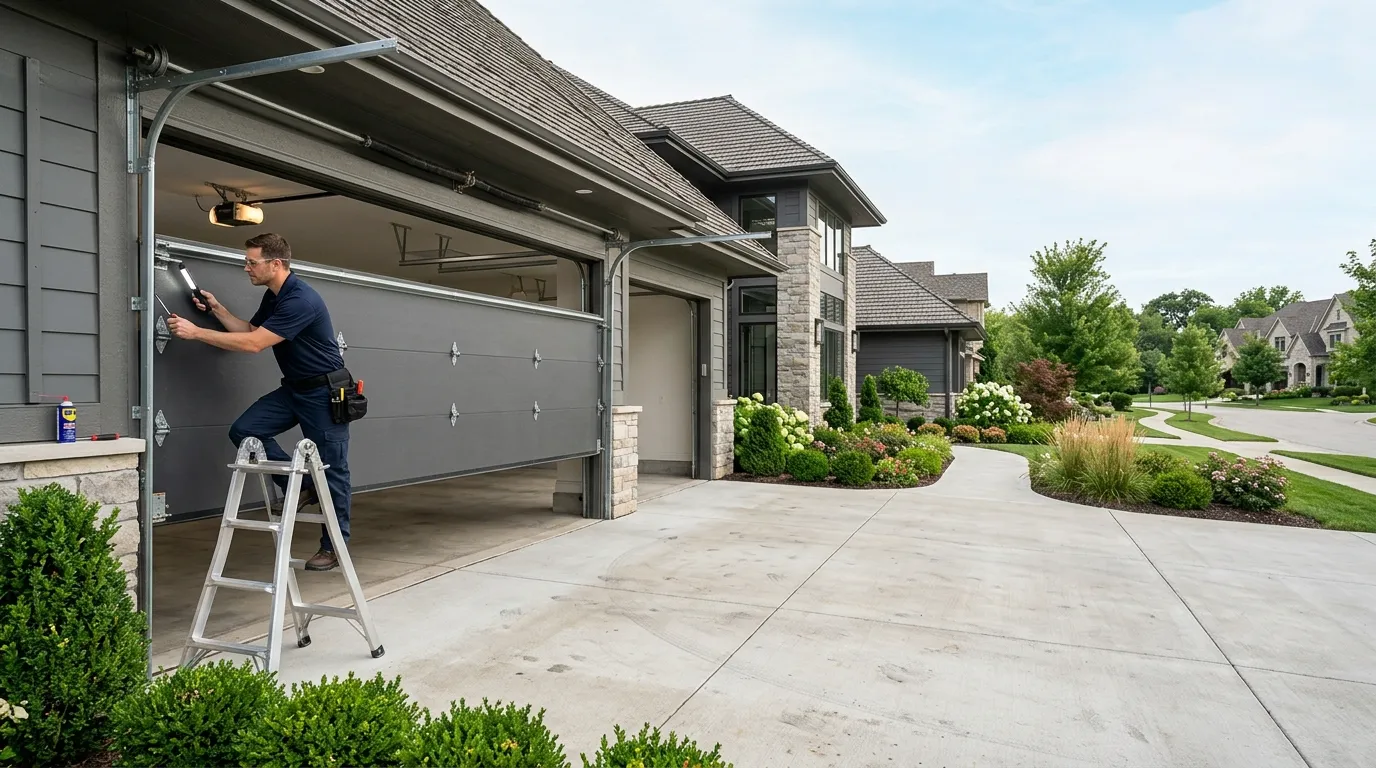
We travel from Burbank, about 7 miles out, so the drive itself isn't the long part of the job - diagnosis and parts availability are. A snapped spring on standard modern hardware is often a same-visit fix once we're on-site. A snapped spring on original 1950s-era torsion hardware can turn into a longer job if the drum or shaft needs matching parts that aren't stocked on the truck, in which case the door gets secured safely closed on the visit and the repair finishes on a second trip once the part is in hand. We'd rather tell you that up front than promise a one-visit close on hardware we haven't seen yet.
The Symptom
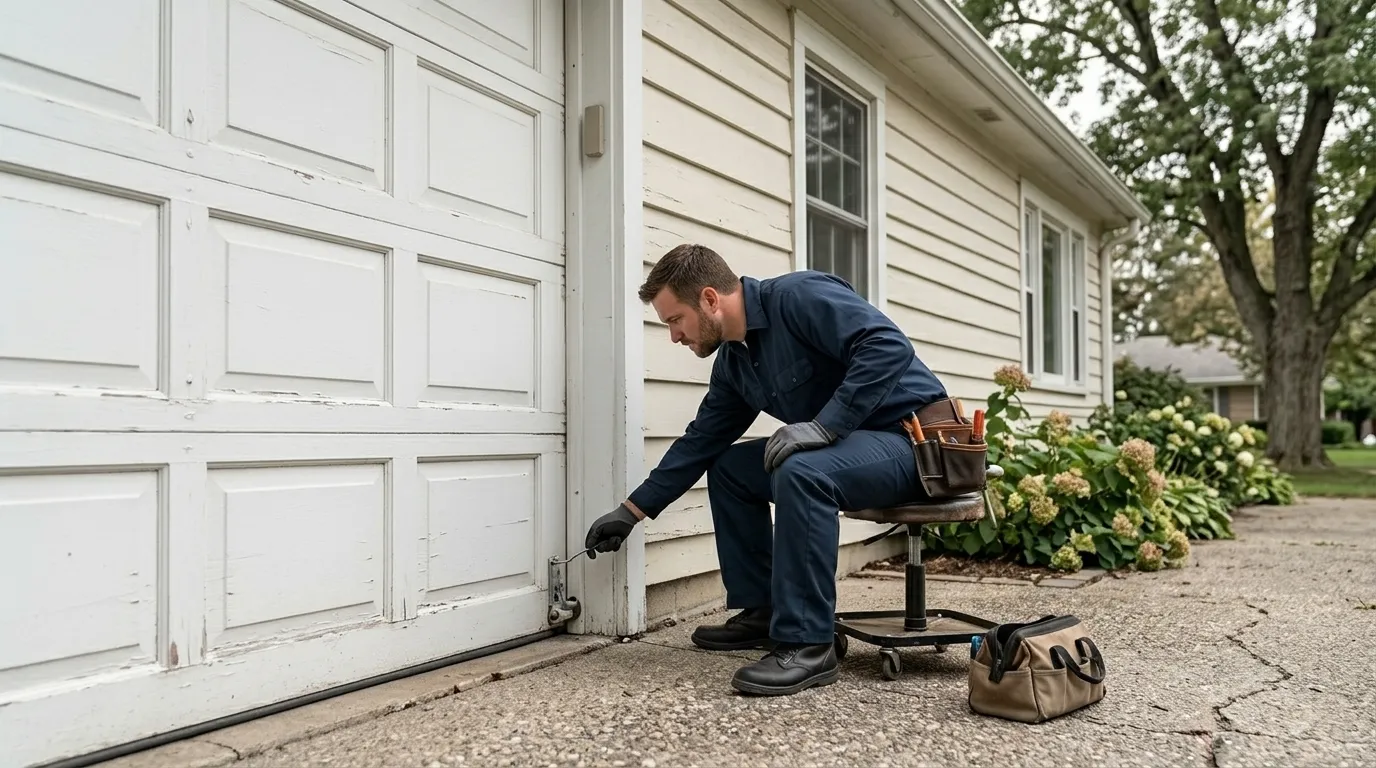
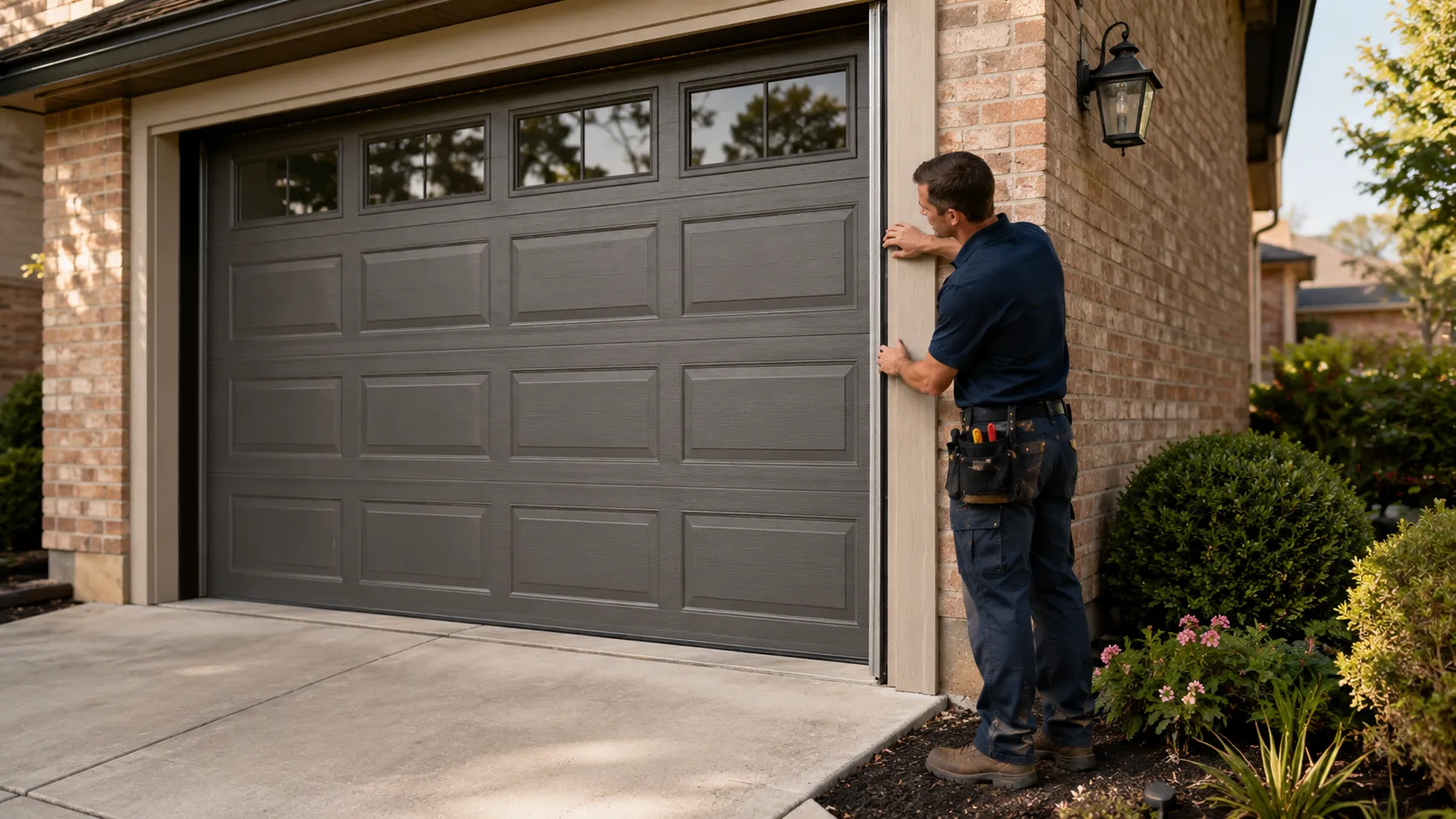
The symptom that shows up most on La Cañada Flintridge calls is a door that drops suddenly instead of easing down - the signature of a torsion spring finally going after decades on original hardware rather than a slow decline you'd notice coming. A door that reverses right after the floor, or one that's suddenly loud in a way it wasn't last week, is usually a roller or track issue on the same older stock, wearing at a pace newer nylon rollers don't. If your opener runs but the door won't move, or moves and then stops partway, that's very rarely the opener itself on a house this age - it's almost always the door fighting its own weight against a spring that's already lost tension. Don't try to force it by hand or run the opener repeatedly against resistance; that's how a bent track or a pulled cable turns a spring call into a track call.