What Can Go Wrong
Median year built here is 1957, which puts most doors in La Cañada Flintridge on original or first-generation steel rollers running in steel track - hardware built for a door that's now well past 60 years old. Steel rollers wear the track from the inside as they age; you get a groove worn into the rail that a brand-new roller still won't ride smoothly through.
The area sits in a moderate heat climate band, so we're not dealing with the kind of daily temperature swing that cracks nylon rollers from expansion and contraction the way you'd see in a harsher zone. That's a small mercy - it means roller failure here is almost always plain mechanical wear, not weather damage. The other common issue on doors this age is a roller stem that's bent slightly from decades of use, which throws the panel off-square in the track even after the roller wheel itself is replaced.
What we don't see much of, given the housing stock's age, is a door young enough to have factory nylon rollers failing under warranty - most of what rolls out from this town's driveways predates that as a stock option.
How Long You Are Without the Door
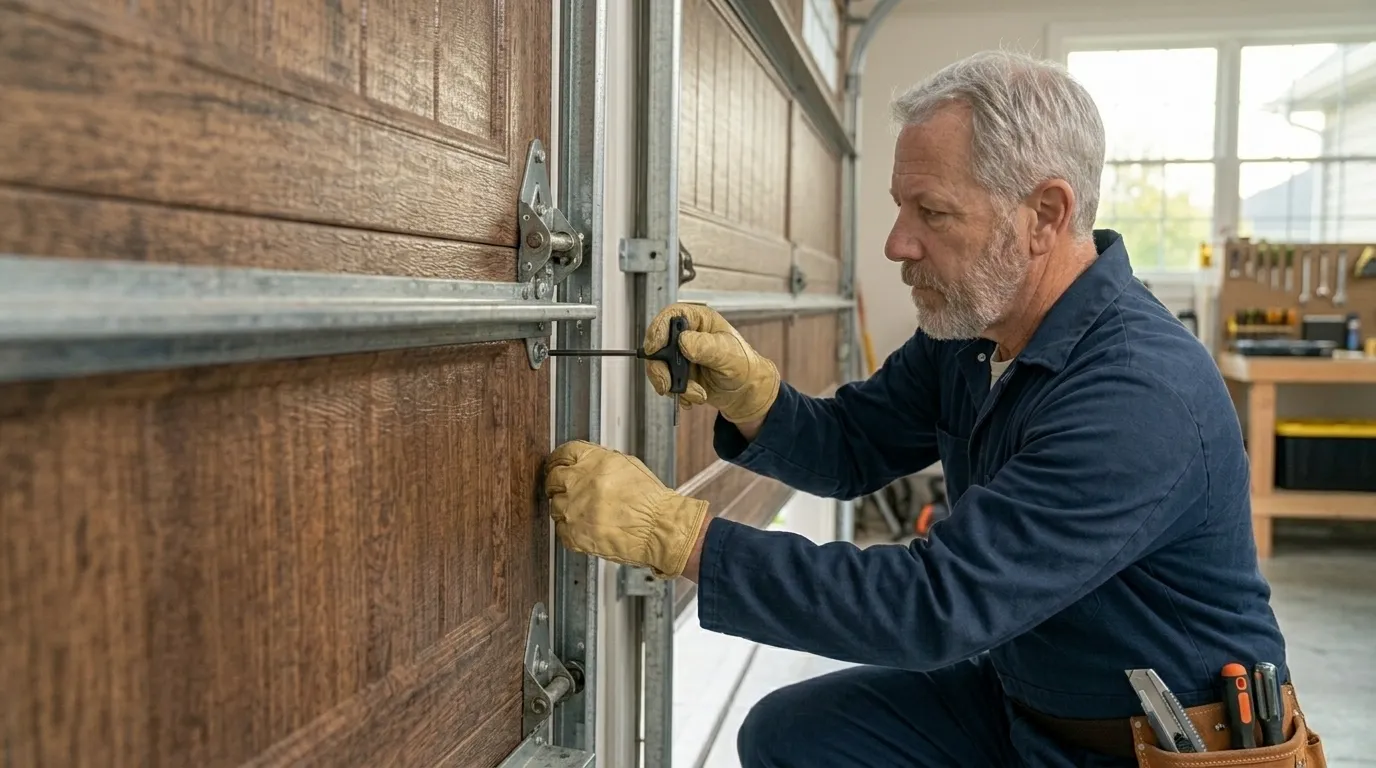
We work this town from Burbank, seven miles out, and roller replacement is not a parts-order job - the rollers themselves are stock hardware, so there's no waiting on a special-order part to show up before the truck can finish. The door goes back to full operation the same visit, same day.
What can stretch the visit is diagnosis, not parts. If a roller's failure turns out to be a symptom of a bent track section - common on doors from the 1950s that have taken a bump or two over the decades - the tech needs to check and correct that track before the new rollers go in, or you'll be back to the same grinding noise in a few months. That adds time to the job but doesn't turn it into a multi-day repair.
We don't quote a specific arrival window for this town in writing here, since the truck comes from Burbank and traffic on any given day varies - that's a scheduling conversation, not a fact we can print.
The Symptom
The complaint that brings us out for this is almost always the same: a grinding or squealing noise that happens at the same point in the door's travel every time, not randomly. On a door from this town's typical 1957-era build, that's steel rollers that have worn flat spots or lost their bearing lubrication decades ago and are now just metal scraping metal in the track.
A second version of the complaint is the door catching or hesitating partway up or down, rather than gliding. That's usually a roller that's worn enough to bind in a groove it's cut into the old track, rather than rolling through it. Either symptom, on a door this age, points to the rollers first - not the opener, not the spring - and that's good news, because roller replacement is one of the more straightforward jobs a garage door does. The one thing worth flagging: if the noise comes with visible sag on one side of the door, that's a spring or cable issue layered on top, and rollers alone won't fix it.