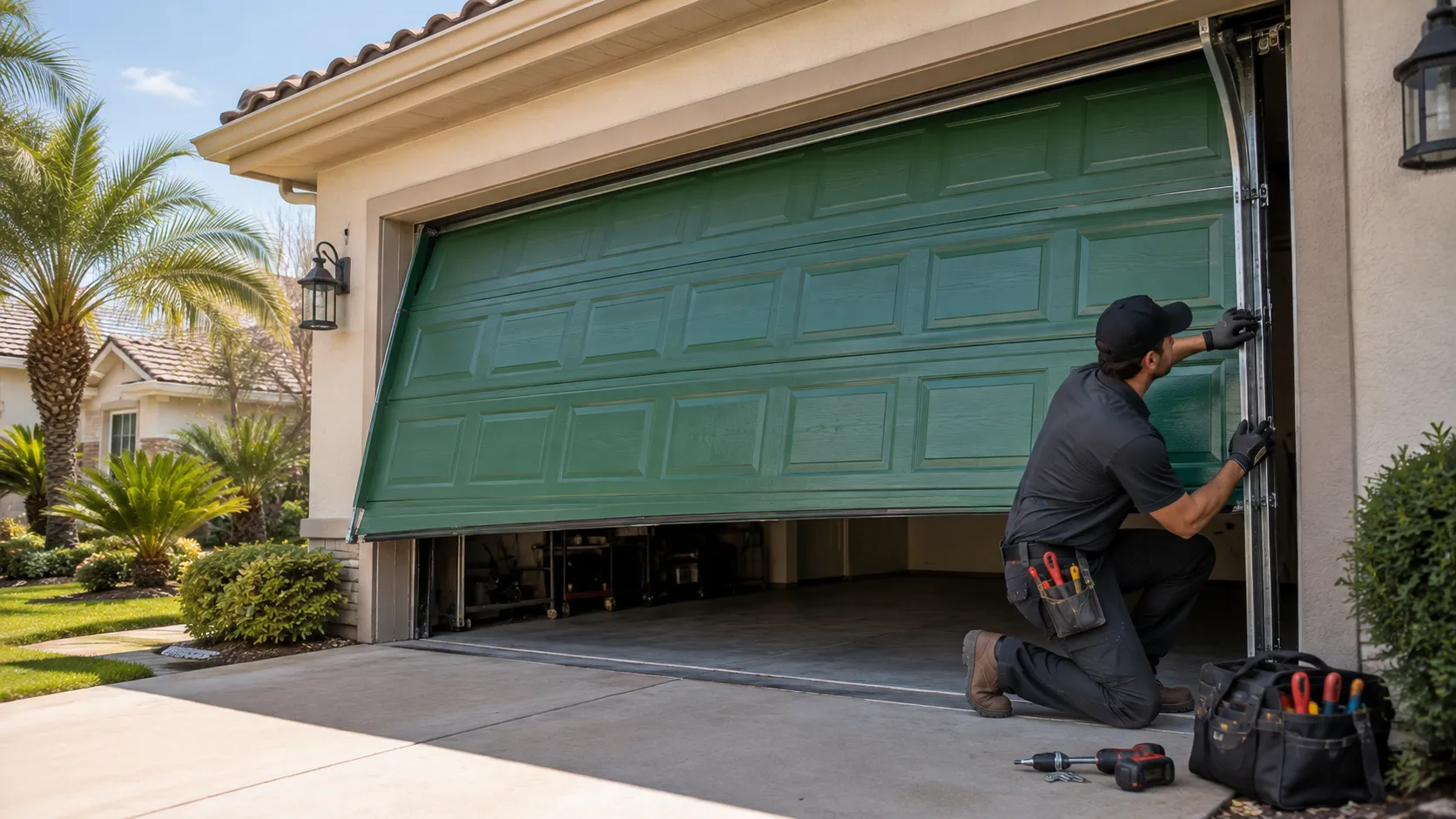
What Can Go Wrong
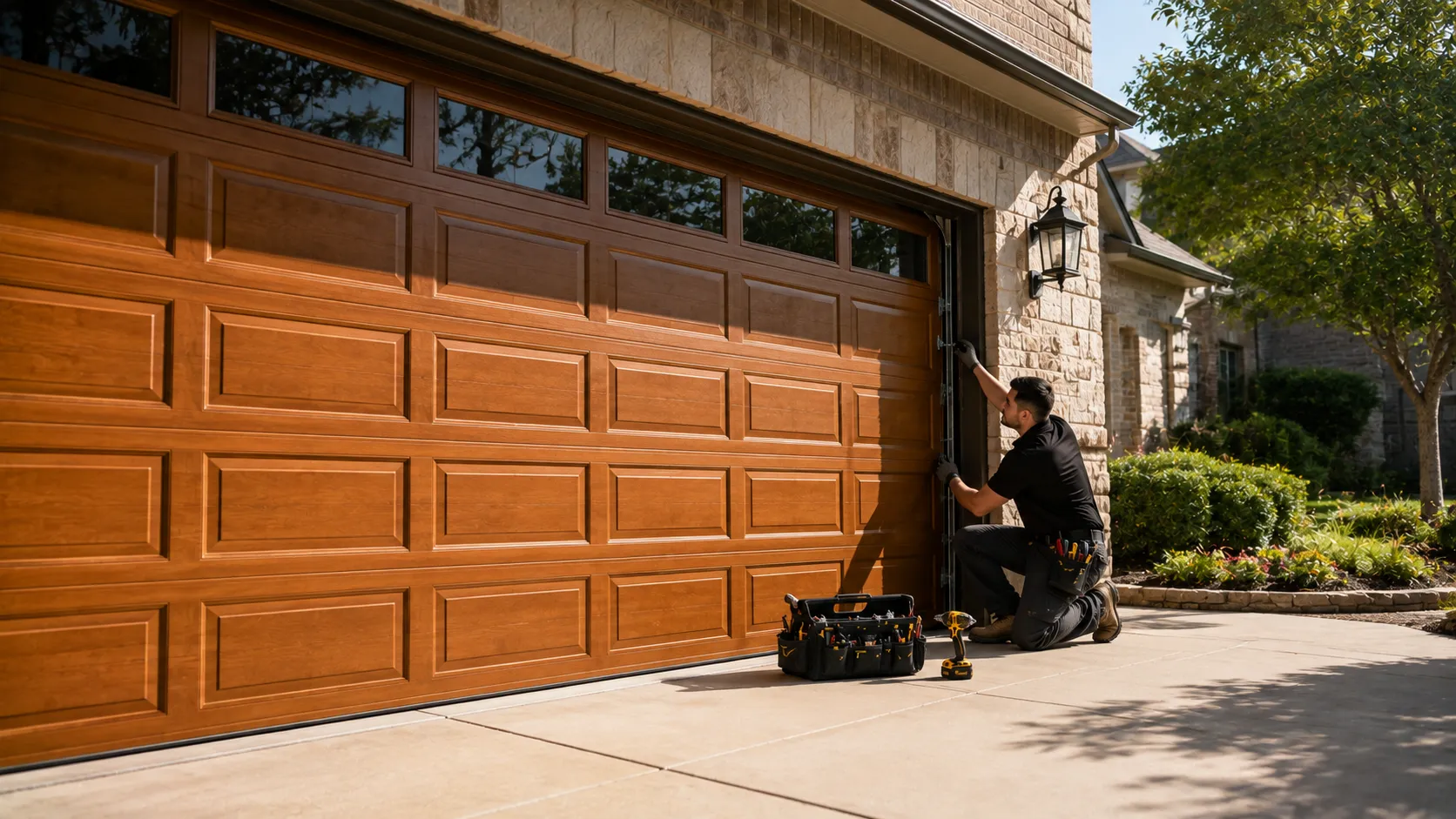
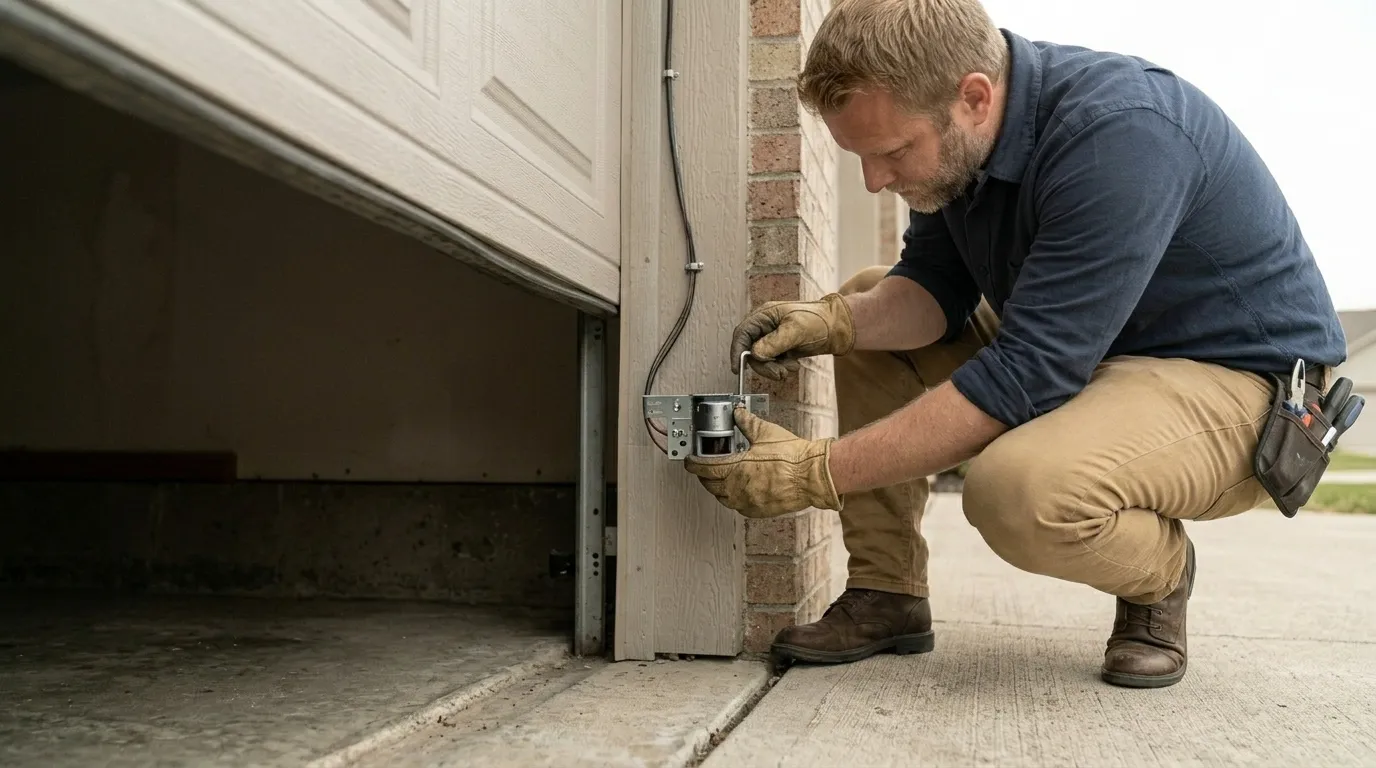
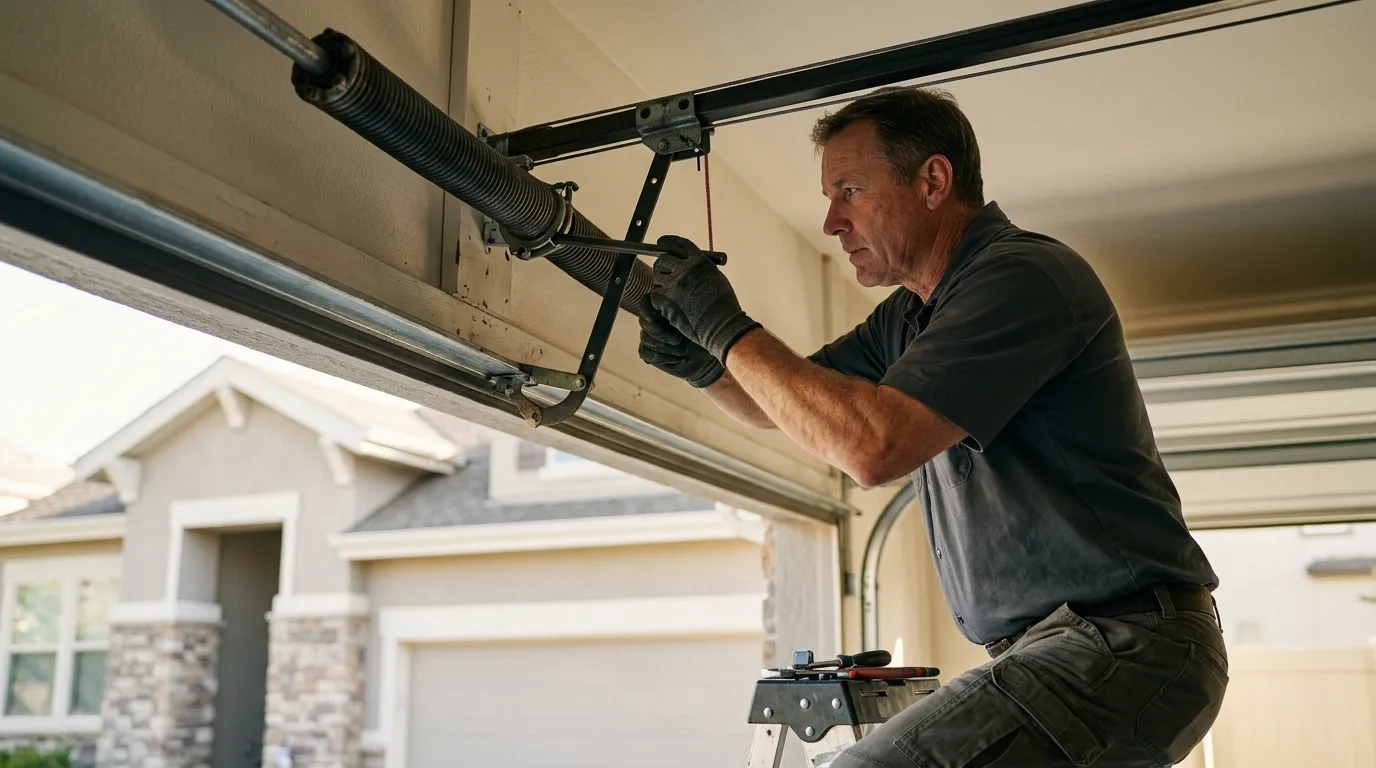
Houses in this part of the service area were mostly built around the same year, 1957, which means a lot of doors are running original torsion hardware that predates the safety cable and current spring-winding standards. A snapped torsion spring on a heavier wood or early steel door from that era puts more stored force into the system than most people expect - the spring doesn't just stop lifting the door, it can whip the winding cone loose if it's been under load a long time without service.
The other common failure on houses this age is a spring that's the wrong size for the door. Over decades, doors get re-skinned, insulated, or swapped for a heavier replacement, and nobody recalculates the spring to match. That mismatch shows up as a door that slams down or one that won't stay up on its own - not a broken spring yet, but headed there. We check the size against the door weight every time, not just replace what's already on the shaft.
How Long You Are Without the Door
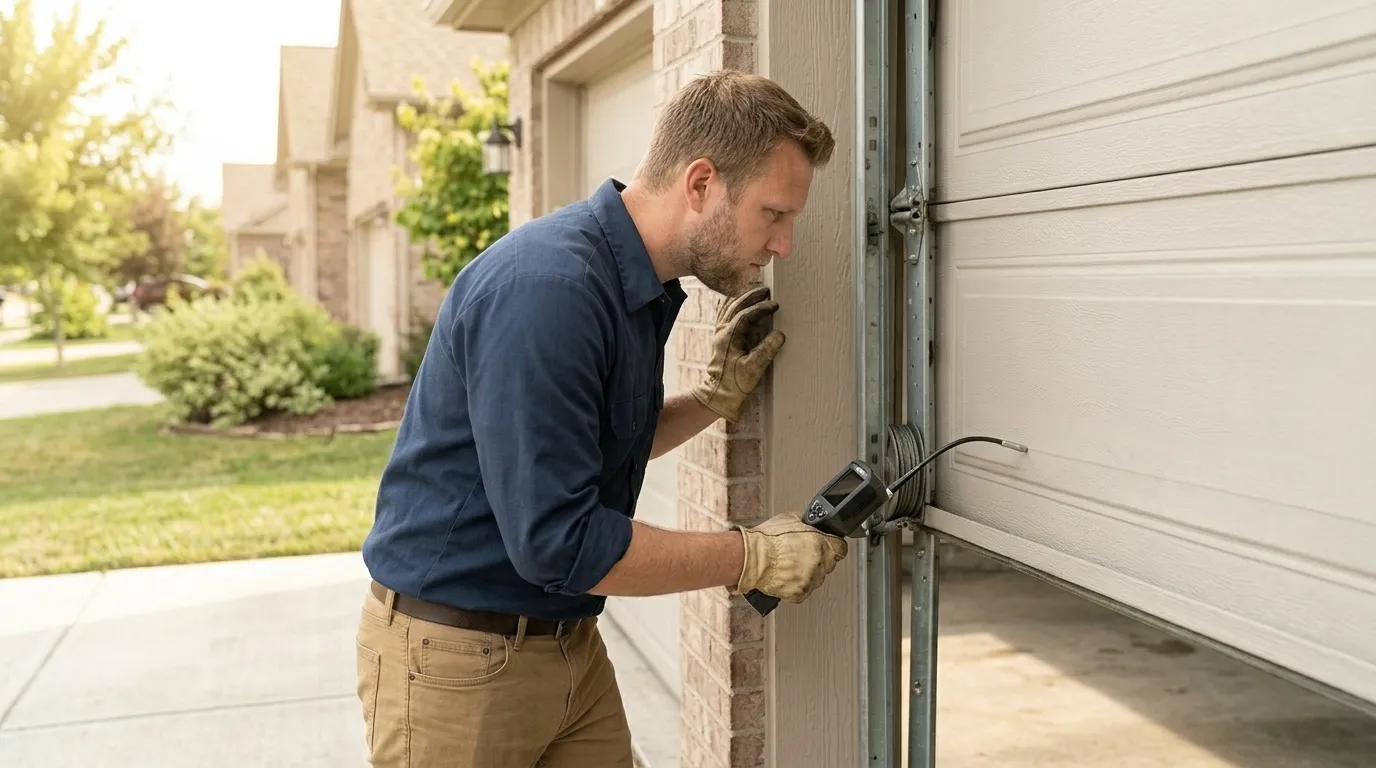
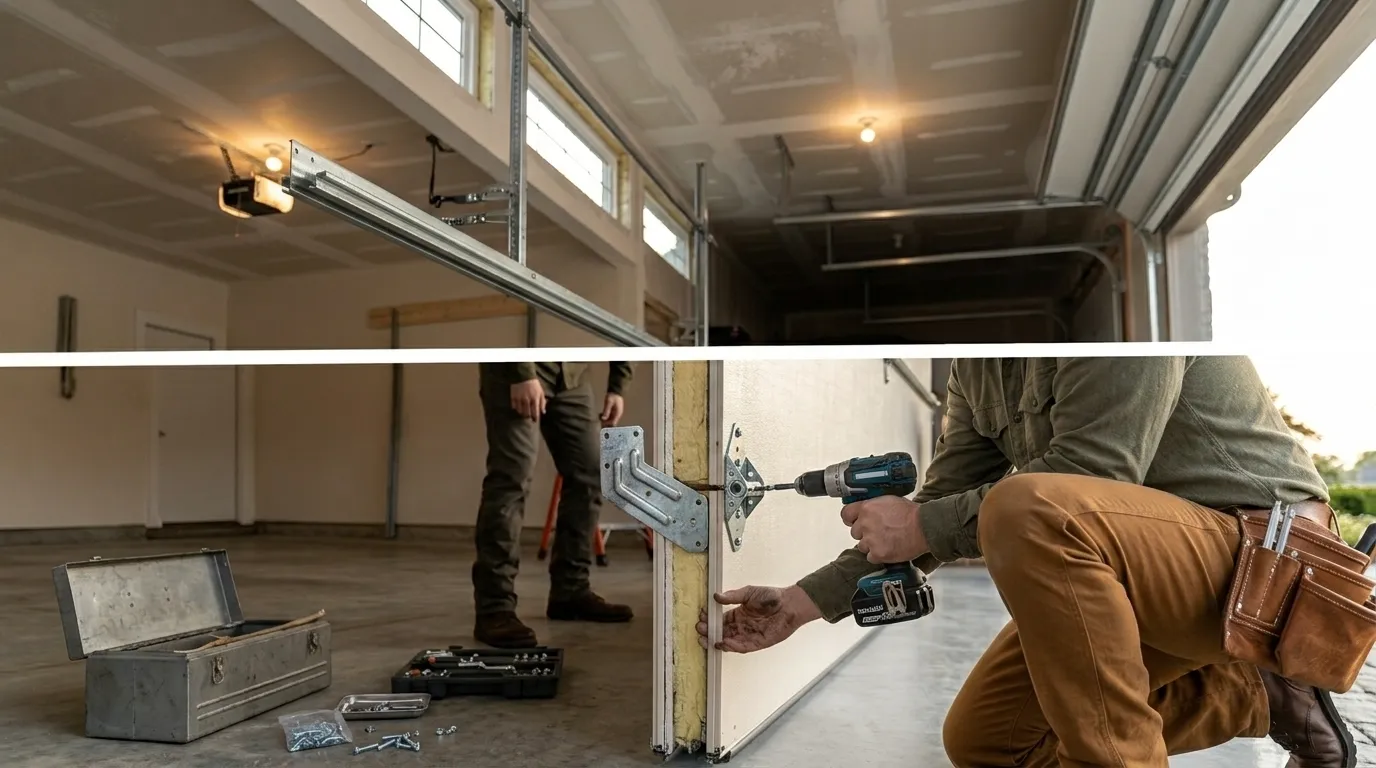
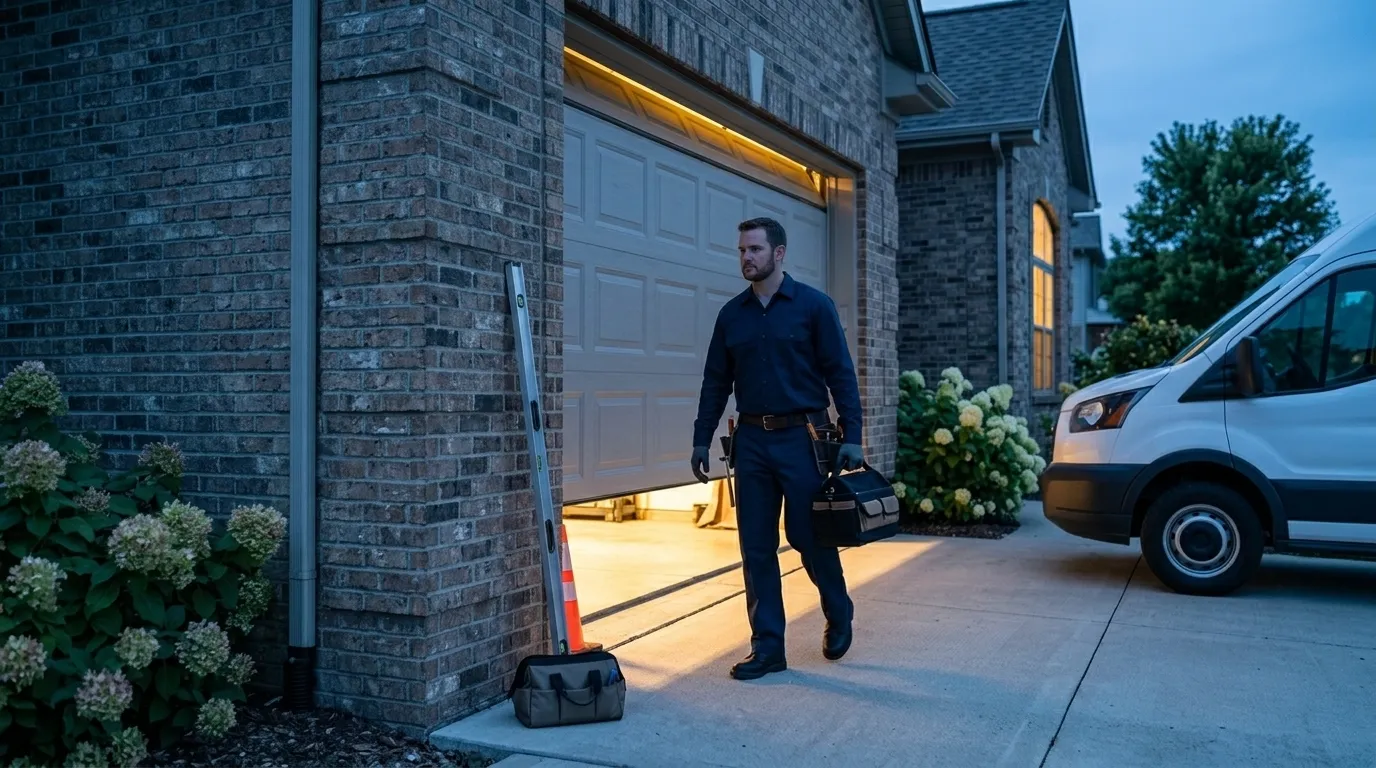
We run out of Burbank, about 7 miles from La Cañada Flintridge, so the door isn't sitting broken while a local crew gets scheduled - it's a matter of getting a truck across town with the right spring size loaded. Most torsion spring jobs, once we're on site, take under two hours: the door comes off safe travel, we swap the spring and check the cable and drums while it's apart, then run it through a full cycle before we leave.
What we can't promise is a same-day fix on every call. If the spring size on your door isn't one we carry as standard stock, we may need to source it, and that can push the job to the next day. We'd rather tell you that up front than promise a window we can't hit.
The Symptom
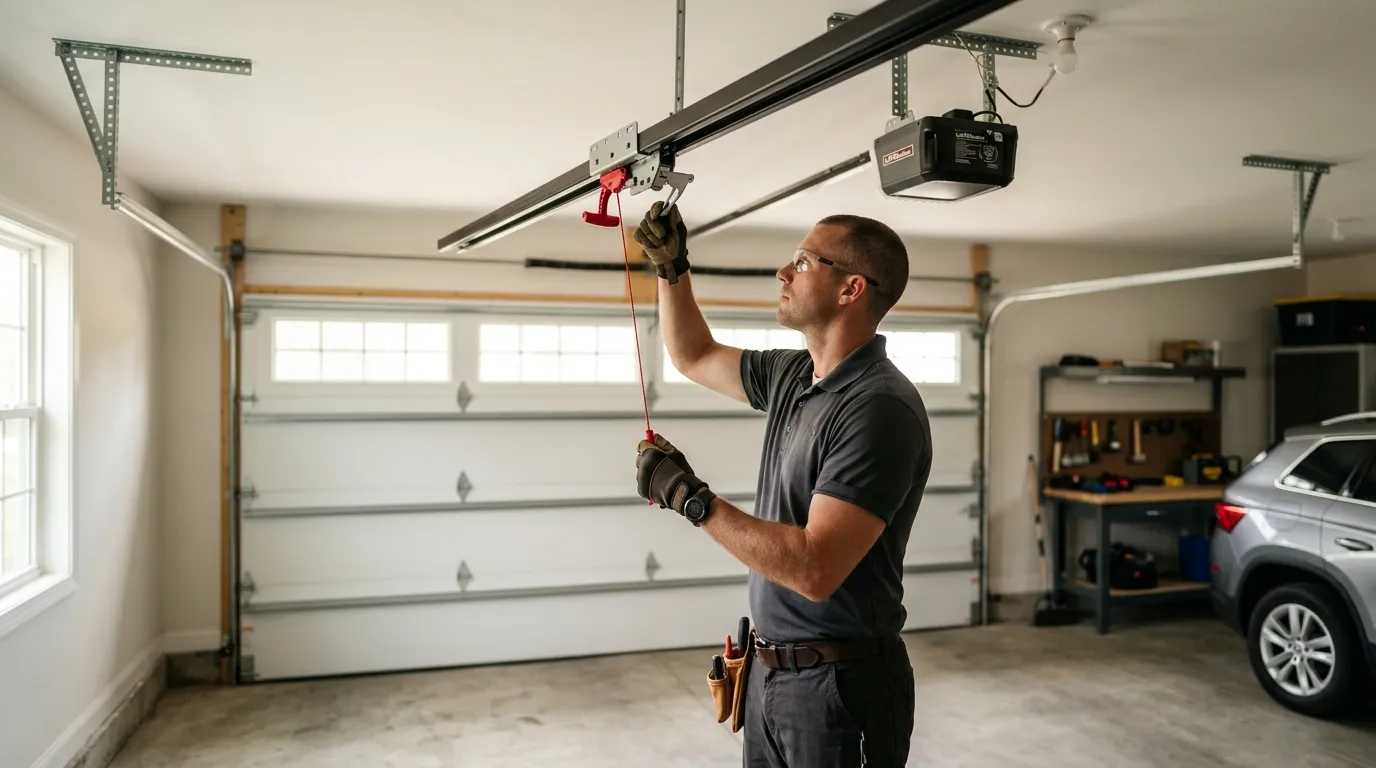
The tell is almost always the same: the door won't budge, or it drops fast the last foot instead of settling. If you hear a loud bang from the garage - like a gunshot - that's the spring itself failing, and the door will be dead weight until it's replaced; the opener isn't strong enough to lift a door with no spring tension, and trying anyway can burn out the opener motor.
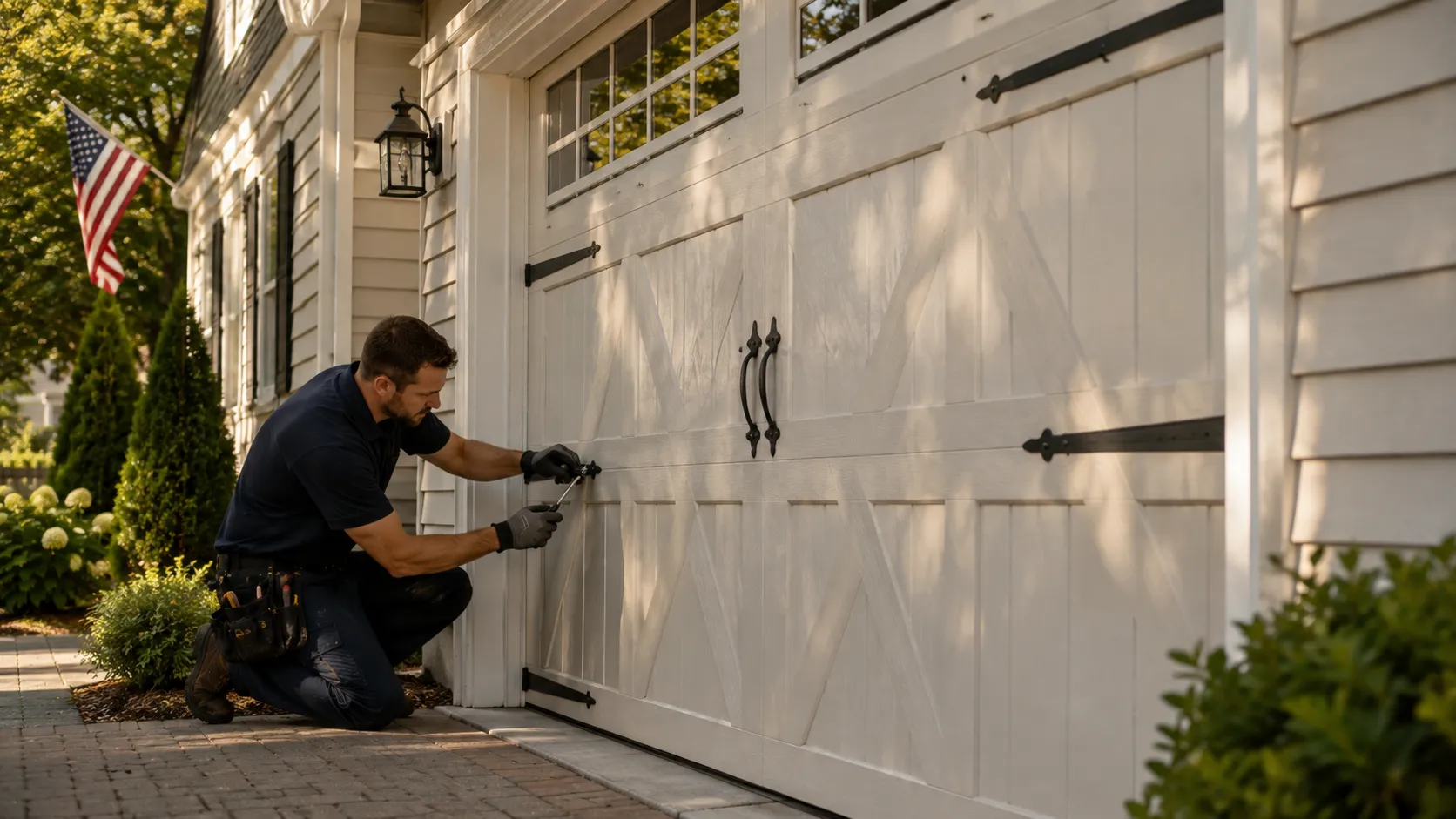
A slower version of the same symptom is a door that gets noticeably harder to lift by hand over a few weeks before it fails outright - that's a spring losing tension gradually rather than snapping. Either way, don't try to force the door open or closed once you notice it. On a heavier original door from the 1957 era, the stored force in a torsion spring is enough to cause a real injury if it lets go while someone's working near it.