Start with your ears before you start with a wrench. A rhythmic squeak on every roll usually points to dry rollers or a dry hinge - normal wear, cheap fix, five minutes with the right lubricant. A loud metallic bang, once, usually on the way down or right after the door sits closed overnight, is a different animal: that's a spring losing tension or a cable seating wrong on the drum.
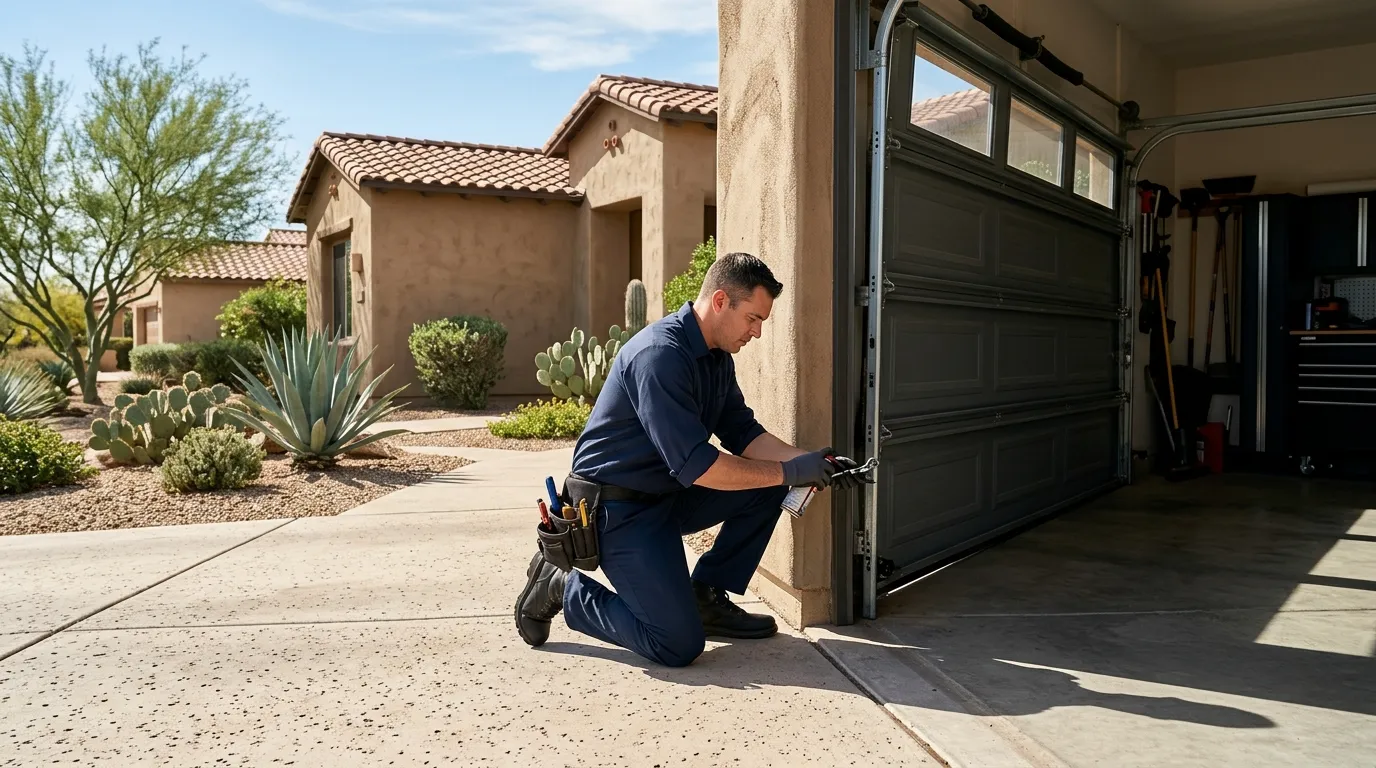
Burbank's housing stock runs 1943 to 2012 with a median build year of 1959, and most of the named neighborhoods in this service area are still carrying pre-1960 stock. That matters here because a door on a house built in 1959 has had a lot more years to accumulate stretched cable, worn rollers, and hardware that's been replaced piecemeal rather than as a matched set. Mismatched replacement parts on an old track are a common source of noise nobody can diagnose by ear alone.
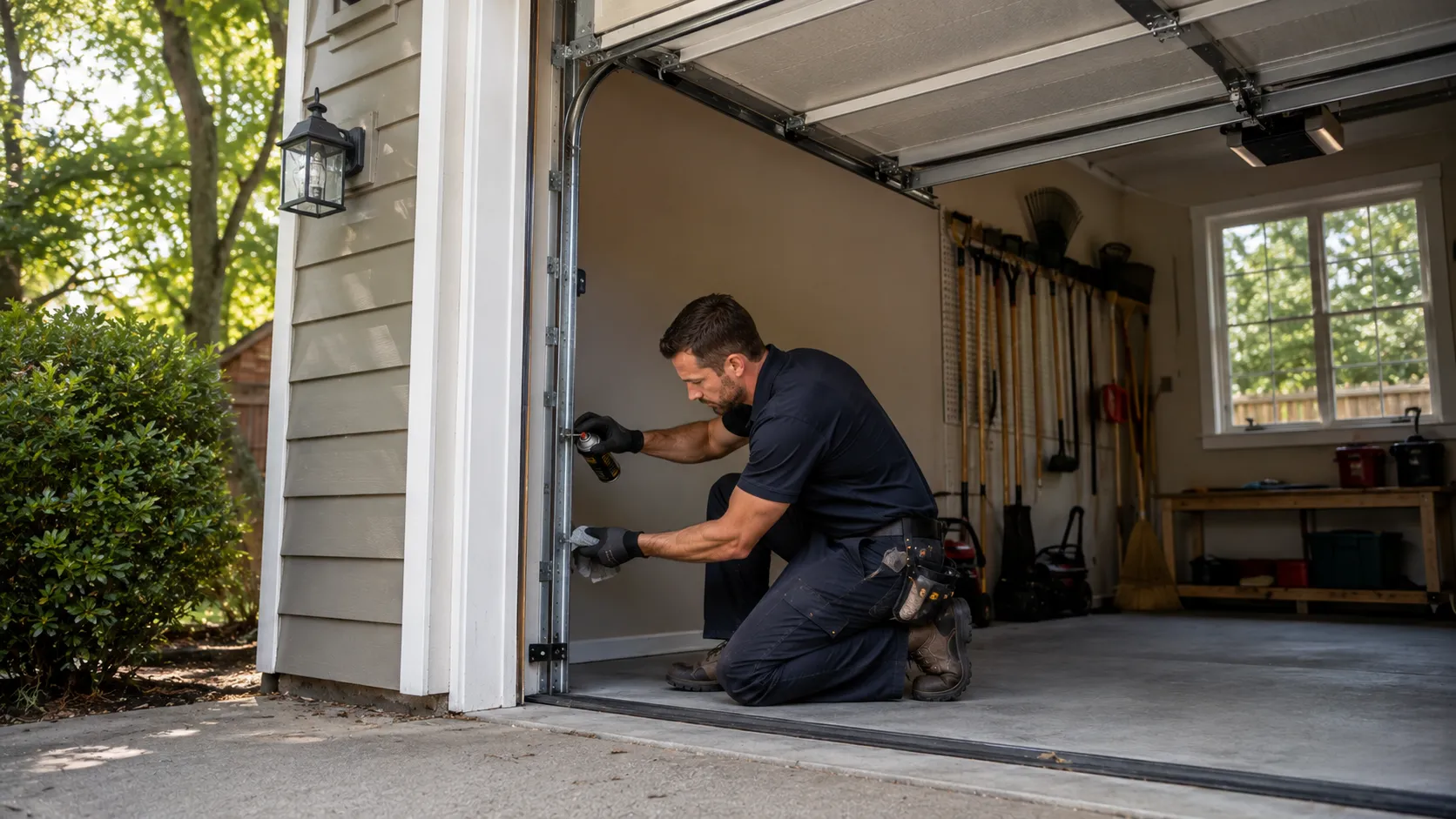
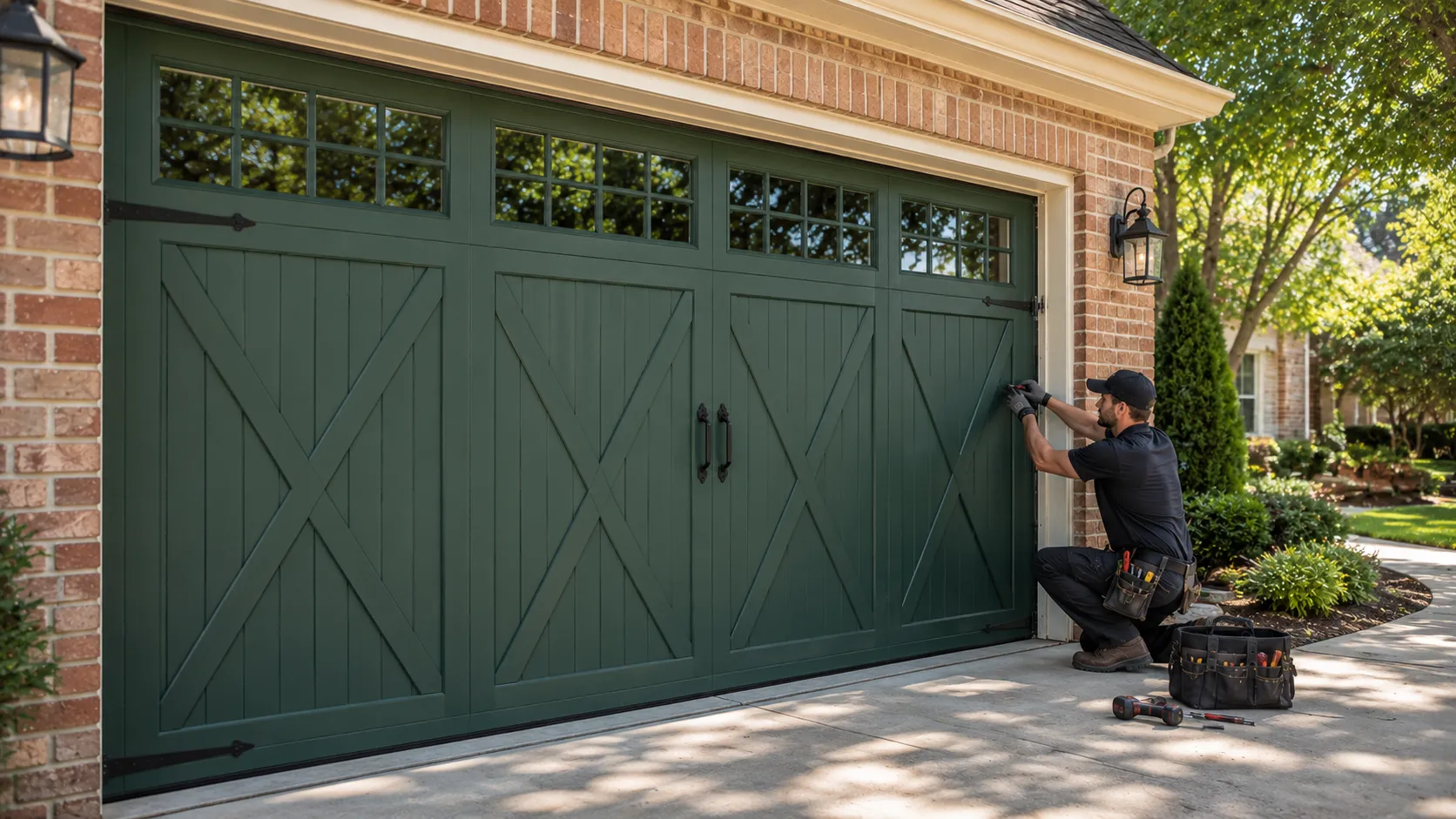
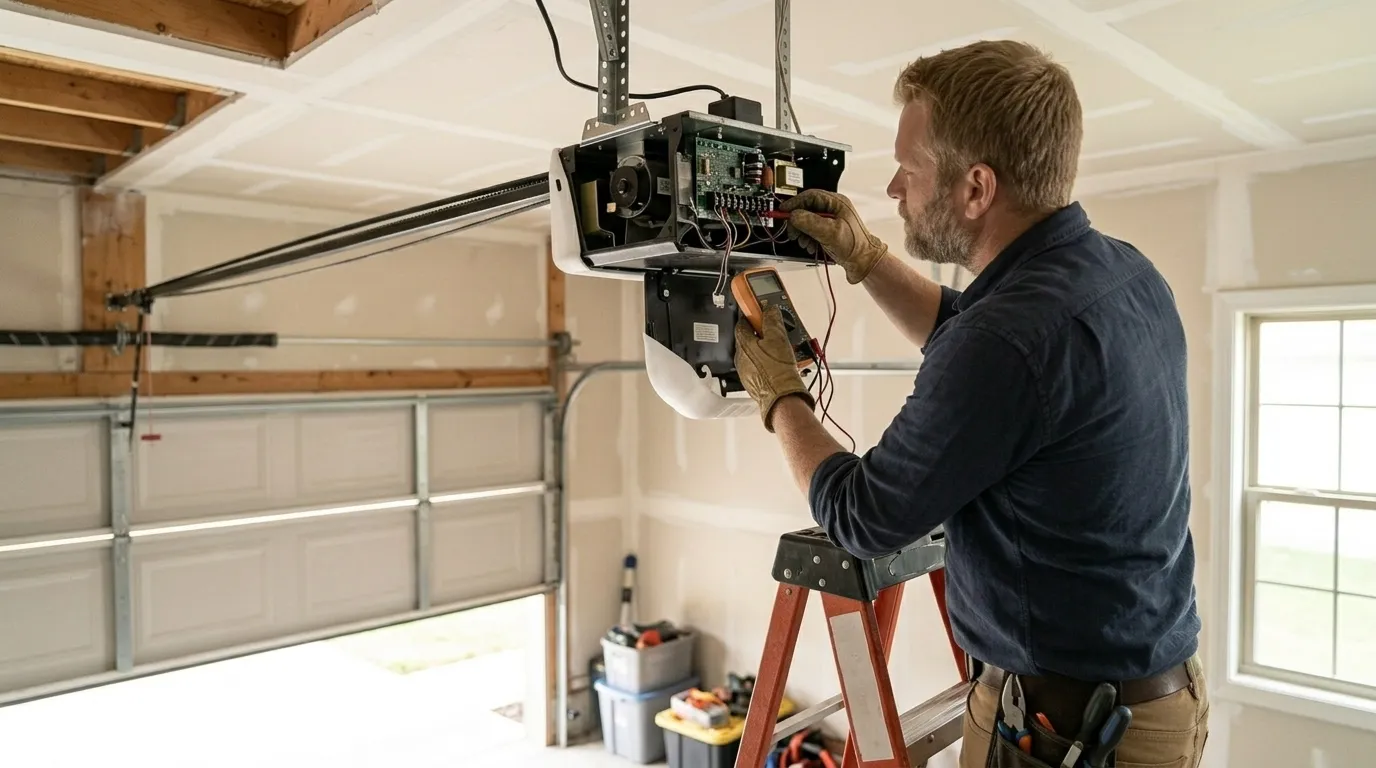
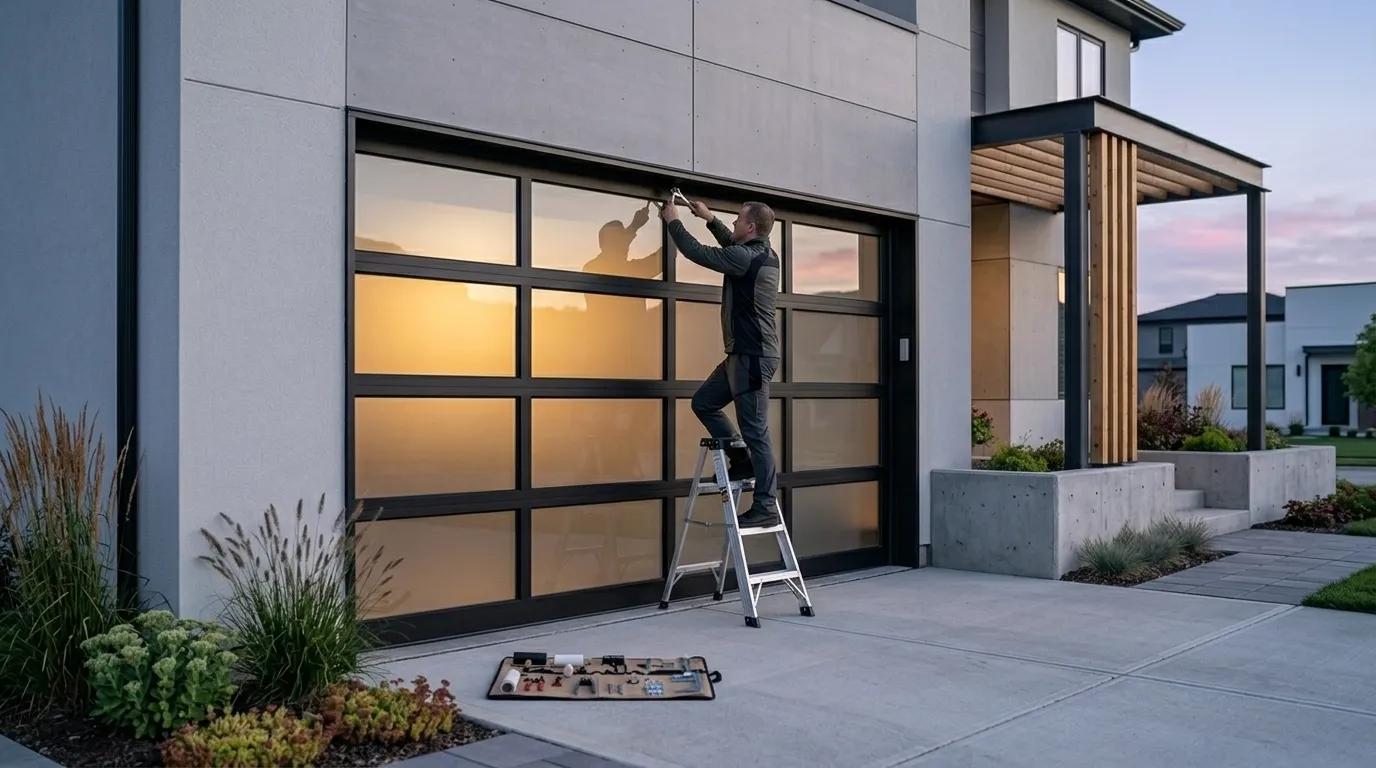
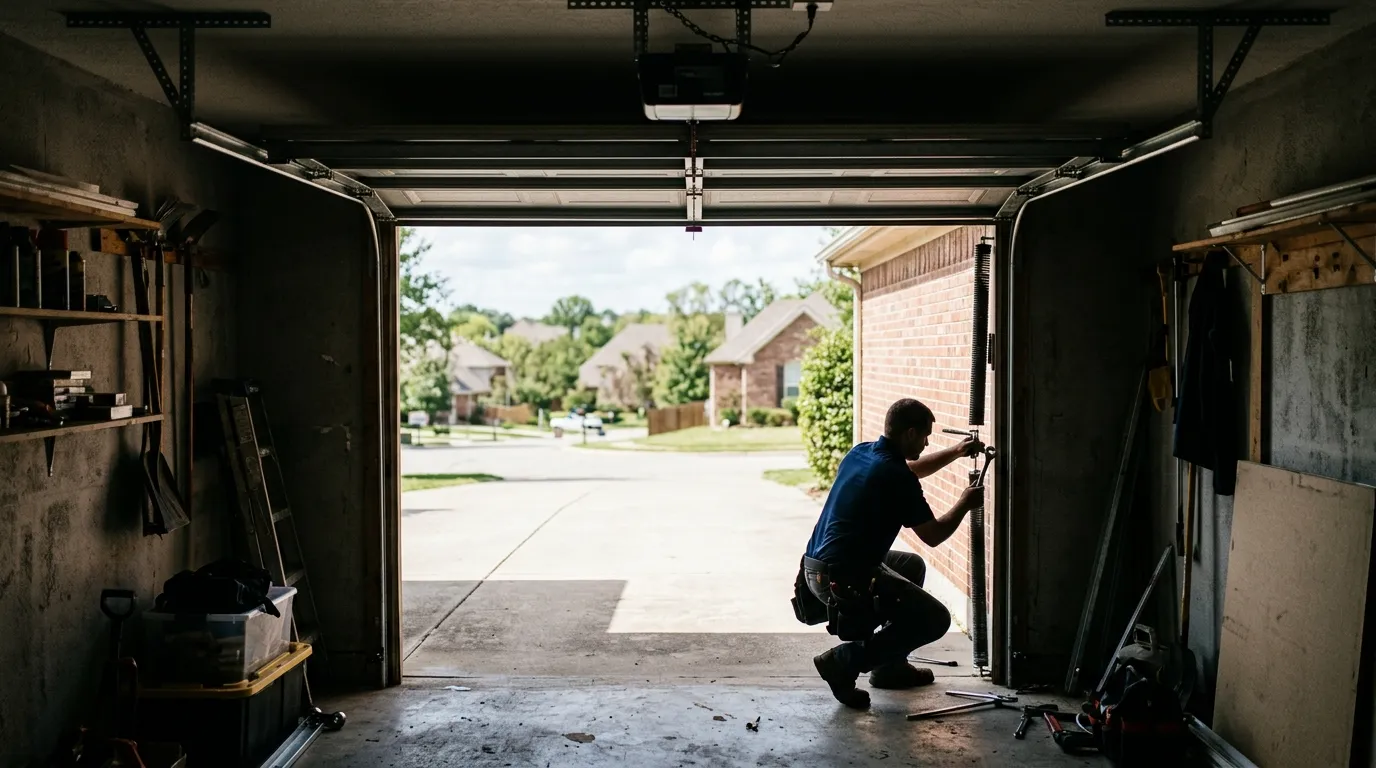
What you can check yourself: tighten loose bolts on the track brackets, look for a roller that's visibly cracked or flat on one side, and watch the cables for fraying near the bottom bracket. What you shouldn't touch: the torsion spring itself. That's not a caution line for liability - it's genuinely the one part on this door that can hurt you.
The Problem
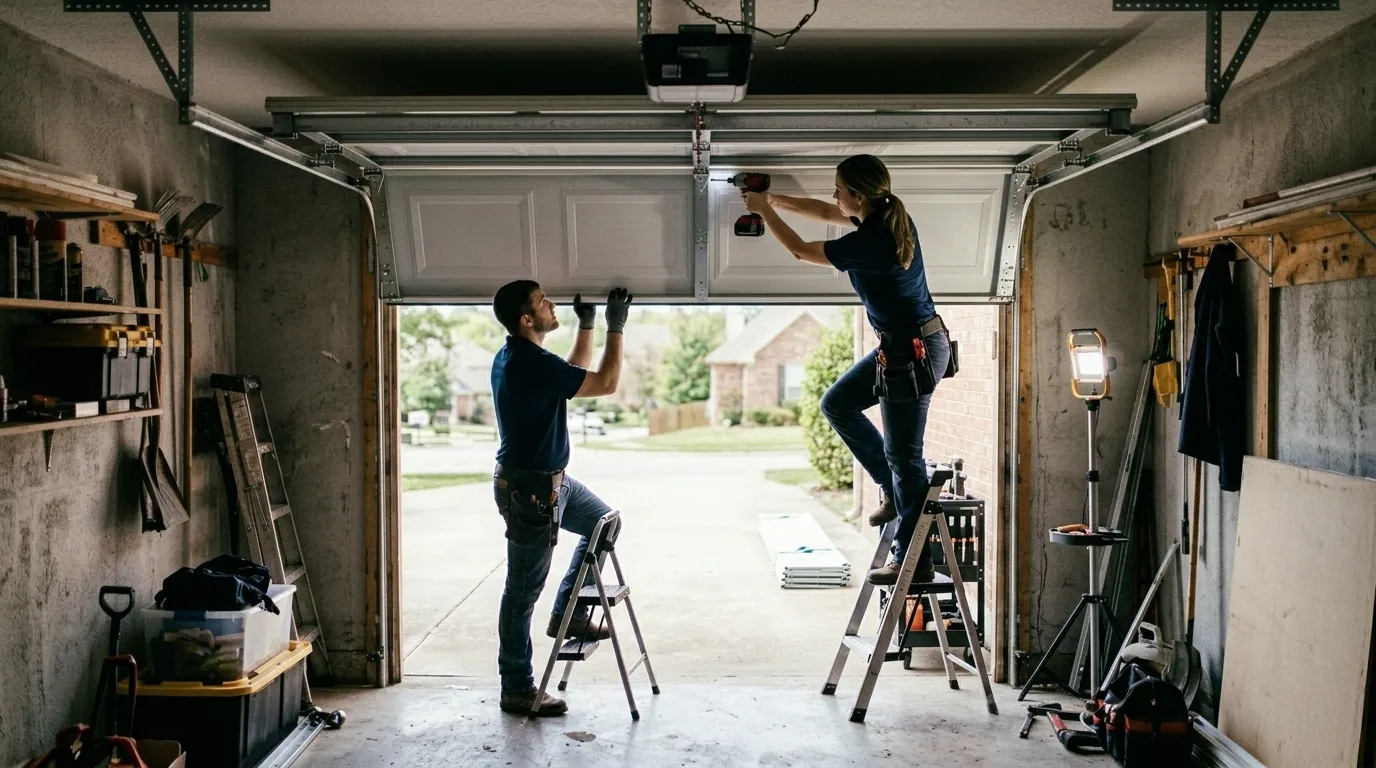
On original one-piece and early sectional doors from the pre-1960 wave, the noise is rarely one thing. It's usually two or three small failures stacking up - a roller that's been dry for a year, a track bracket that's worked loose from decades of thermal cycling, and hardware that was never designed to be serviced separately because it was installed as a matched original set.
The HEAT band here is moderate, not extreme, but it's still enough that steel track and aluminum panel expand and contract every day, season after season. On a door pushing fifty or sixty years of that cycling, the fasteners loosen faster than lubricant alone can compensate for. That's why a squeak you oiled last spring comes back by fall - the noise isn't the problem, it's a symptom of metal that's moved slightly out of alignment again.
The honest limitation: I can't tell you which specific part is failing from a description over the phone. A grinding noise could be a bearing, a bent track, or a spring coil rubbing against its own winding cone, and guessing wrong means paying for a part that wasn't the issue.
Doing Nothing For Now
Not every noise needs a same-week call. If it's a dry squeak and the door still opens smooth and level, lubricating the rollers and hinges yourself and watching it for a couple of weeks is a reasonable choice - that's not a repair being deferred, that's routine maintenance being done on schedule.
What's not reasonable to sit on: a bang, a door that jerks or hesitates partway through its travel, or a noise that's gotten louder over a month rather than staying steady. On houses from the 1959 median era, torsion springs are usually original or one replacement removed from original, and a spring that's starting to go doesn't usually give much warning before the second failure - the one where it lets go entirely with the door up.
The math on this is simple: a $10 can of the right lubricant and twenty minutes now costs a lot less than a cable snapping under a half-open door later. If the noise is new, mild, and mechanical-sounding rather than metallic and sharp, give it two weeks of watching before you call anyone.
What Local Conditions Do
The moderate heat band this area sits in doesn't produce the dramatic damage you'd get somewhere with real freeze-thaw cycles, but it does something quieter and more persistent: steady daily expansion and contraction of track bolts, spring winding cones, and panel seams, day after day, for as long as the door has been up. On a house built in 1959 - the median here - that's over sixty years of that cycle working fasteners loose a fraction of a turn at a time.
Across the 45 named areas in this service territory, most of the housing predates 1960, which means most of the doors being asked about noise issues are carrying hardware that was never designed with modern rollers or nylon-cased bearings in mind. Retrofitting one new quiet roller onto an old steel track sometimes trades one noise for another, because the rest of the system wasn't built to match it.
That's the pattern worth knowing before you troubleshoot: on a door this age, in a climate that cycles metal every day without ever freezing it, noise is almost always loose metal talking, not broken metal failing outright - until it is.
How it works
From “it’s stuck” to “it’s fixed”
01
Tell us what’s wrong
Describe the symptom - won’t open, loud bang, opener runs but the door won’t move.
02
On-site diagnosis
A technician tests the door under power and by hand and finds what actually failed.
03
Clear, up-front plan
You get the fix that’s needed and what drives the cost - before any work starts.
04
Repaired & tested
The repair is done, the door is set true and tested, and the work area left clean.
Next step
Serving Burbank, CA - tell us what your door’s doing and we’ll take it from there.
Straight answers about garage door repair in Burbank. Still unsure? Ask us directly.
My garage door squeaks every time it opens but works fine otherwise. Do I need to worry?
Not urgently. A steady squeak with no jerking or hesitation is almost always dry rollers or hinges, especially on a door this age. Lubricate the moving metal parts, not the track itself, and give it a couple of weeks. If the squeak stays steady rather than growing louder or changing pitch, you're fine to wait.
Is a loud bang when the door closes serious?
Yes, treat it as a call-now issue. A bang usually means a spring shifting tension or a cable seating wrong on the drum. On older torsion hardware, that's often the warning sign before a full failure, and a door with a failing spring can drop unexpectedly with real weight behind it.
Why does my door get noisier in the afternoon than the morning?
Metal track and panel expand slightly as the day heats up, which can tighten or shift a marginal connection just enough to make noise that wasn't there earlier. It's a sign something's already loose, not a new problem caused by the heat itself - the heat is just exposing it.
Can I just replace the noisy roller myself?
You can, and it's often the right small fix. The limitation is that on an old matched hardware set, one new roller sometimes runs slightly differently than the worn ones around it, which can shift the noise rather than end it. If that happens, the track alignment is worth a second look.