Burbank homes built between 1943 and 2012, most before 1960, drift sensors as slabs settle and metal brackets react to steady heat. Here's what that means for your door.
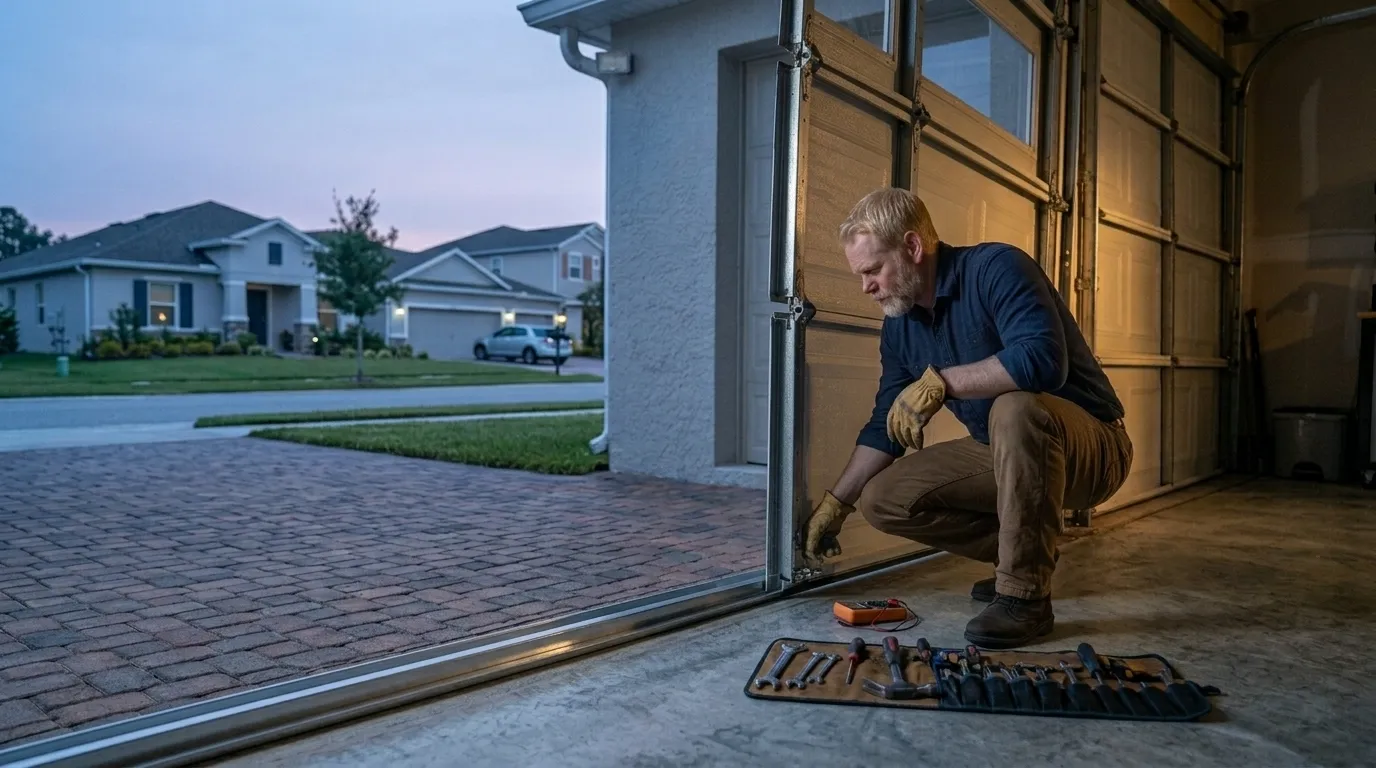
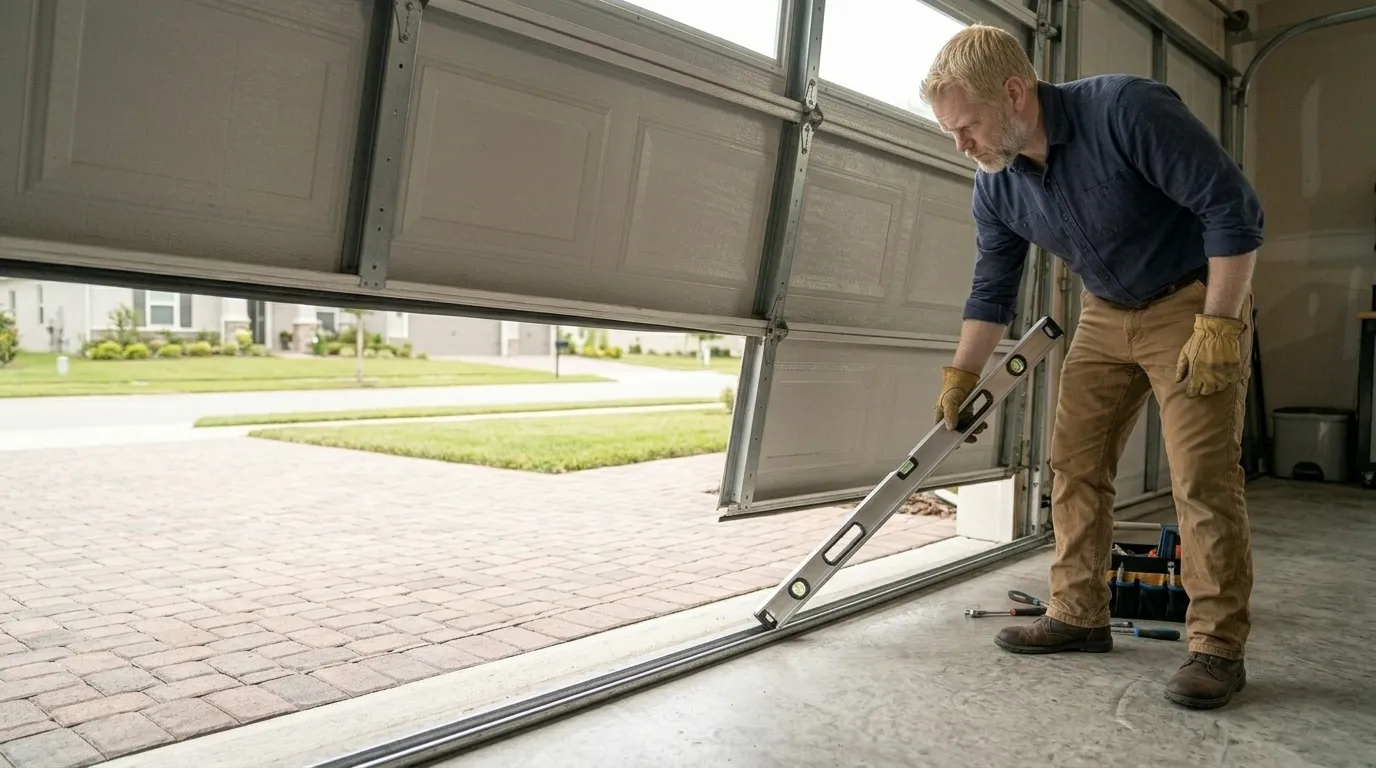
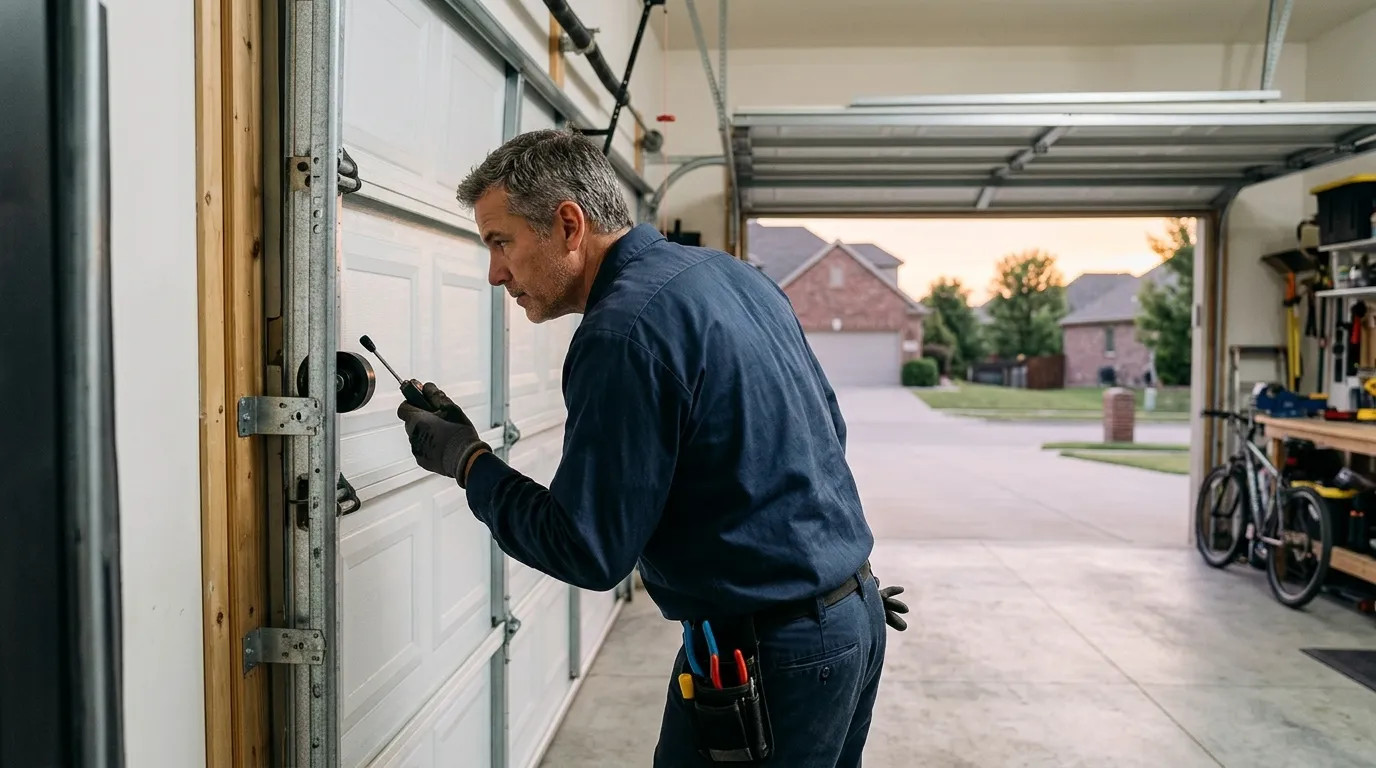
Look at the two small boxes low on each side of the track, a few inches off the slab. Each has a light - one solid, one blinking or solid depending on brand - and they need to stare straight at each other across the opening. If either light is dark or flickering, the beam is broken.
Wipe both lenses first. Dust and pollen build up fast here and get mistaken for alignment trouble. Then check the mounting bracket itself: is the screw loose, is the bracket bent, does it wiggle if you press on it. On a house from the 1959 median build era for this area, that bracket is often screwed into an original wood jamb or an old metal track that's shifted slightly over the decades, so a sensor that lined up fine last year can be off by a fraction now.
If you nudge one sensor gently and the light goes solid, you've found your problem and it's a five-minute fix. If both lenses are clean, both lights are on, and the door still won't close, stop testing and call - that points to the opener logic board or the wiring, not the sensors themselves, and that's not a DIY repair.
The Problem
Sensor drift isn't random. It happens because the two brackets holding your sensors are bolted to a track and a slab that move independently of each other over time, and in a housing stock built between 1943 and 2012 - most of it going up before 1960 - that slab has had a lot of years to settle unevenly. Even a quarter-inch of settling on one side throws the beam off by more than it sounds like it should.
Heat plays a smaller but steady role too. Burbank sits in a moderate heat band, not an extreme one, so we don't get the violent daily swings that crack brackets outright. What we get instead is slow, repeated expansion and contraction of the metal track and bracket screws - small movements, thousands of times over a decade, that work screws loose and nudge brackets a degree or two off true. On an older bracket that's already slightly bent from age, that's often enough to break the beam.
Neither of these is a dramatic failure. That's why sensor drift gets ignored - nothing snapped, nothing's obviously wrong. The door just quietly stops closing all the way, or reverses for no visible reason.
Doing Nothing For Now
A door that won't close because of a drifted sensor is a safety system doing its job, not failing at it. So the honest answer is: leaving it alone for a few days while you sort out a repair isn't dangerous by itself. The door defaults to staying open or reversing, which is the safe failure mode.
What you shouldn't do is force the issue by disconnecting or bypassing the sensors so the door will close anyway. On some openers that's physically possible, and it defeats the entire reason the sensors exist - if a kid, a pet, or a bike is under the door when it comes down, there's nothing to stop it.
We won't tell you every drifted sensor needs an emergency call. If the fix is realignment, it's genuinely a small job and there's no reason to treat it as urgent. Where it does become worth a call sooner rather than later: if the bracket itself is bent or cracked, not just misaligned, because a bracket that's failing physically will keep drifting no matter how many times you nudge it back.
What Local Conditions Do
Two things about this area push sensor drift specifically here. First, the housing itself: with construction spanning 1943 to 2012 and a median around 1959, a large share of the garages in Burbank and the surrounding named areas are original structures with original or early-replacement track hardware, not new builds with fresh mounting points. Older brackets, older screws, older slabs - more years for small shifts to accumulate.
Second, the climate band here is moderate heat, not desert extreme and not coastal mild. That means the metal in your sensor brackets and track goes through a daily warm-up and cool-down cycle nearly every day of the year, rather than the occasional sharp swing you'd get somewhere with real seasonal extremes. It's a low-grade, constant cycle - not damaging on its own, but it's exactly the kind of repeated small movement that loosens a bracket screw over years rather than months.
Put those two together and you get a lot of doors in this area where the sensors were fine for a decade and then start drifting slightly every few months. That's not a defect. It's what happens to this specific mix of older hardware and steady heat cycling over time.
How it works
From “it’s stuck” to “it’s fixed”
01
Tell us what’s wrong
Describe the symptom - won’t open, loud bang, opener runs but the door won’t move.
02
On-site diagnosis
A technician tests the door under power and by hand and finds what actually failed.
03
Clear, up-front plan
You get the fix that’s needed and what drives the cost - before any work starts.
04
Repaired & tested
The repair is done, the door is set true and tested, and the work area left clean.
Next step
Serving Burbank, CA - tell us what your door’s doing and we’ll take it from there.
Straight answers about garage door repair in Burbank. Still unsure? Ask us directly.
Why did my sensors work fine for years and now suddenly drift every few months?
It's usually accumulated movement, not a sudden failure. Older brackets on pre-1960-era garages have had years of small slab settling and daily heat expansion working screws loose a fraction at a time. Once a bracket gets close to the edge of tolerance, small shifts start showing up as blinking lights more often, even though nothing actually broke.
Can I just point the sensors closer together to stop the drifting?
You can tighten alignment, but moving the brackets closer than the track allows can create a false compliance where the beam isn't actually covering the full door width. Realign to the manufacturer's intended spacing, not just to whatever makes the light turn solid - that's the safer fix even if it takes a second try.
Does Burbank's climate actually affect garage door hardware?
Yes, but modestly. The moderate heat band here means steady daily warm-up and cool-down cycles on metal brackets and track, rather than extreme swings. Over years that steady cycling loosens screws and nudges brackets slightly, which is a common driver of sensor drift in older housing stock in this area.