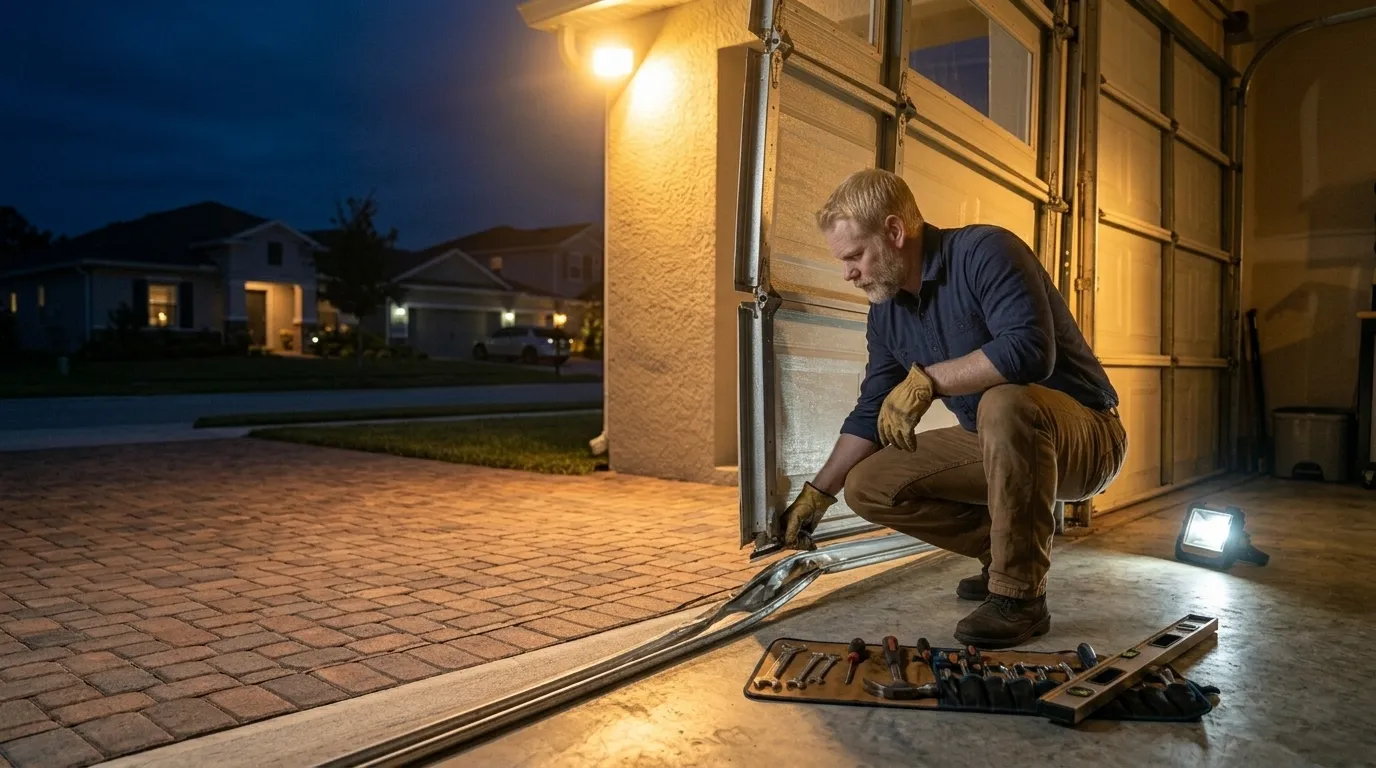
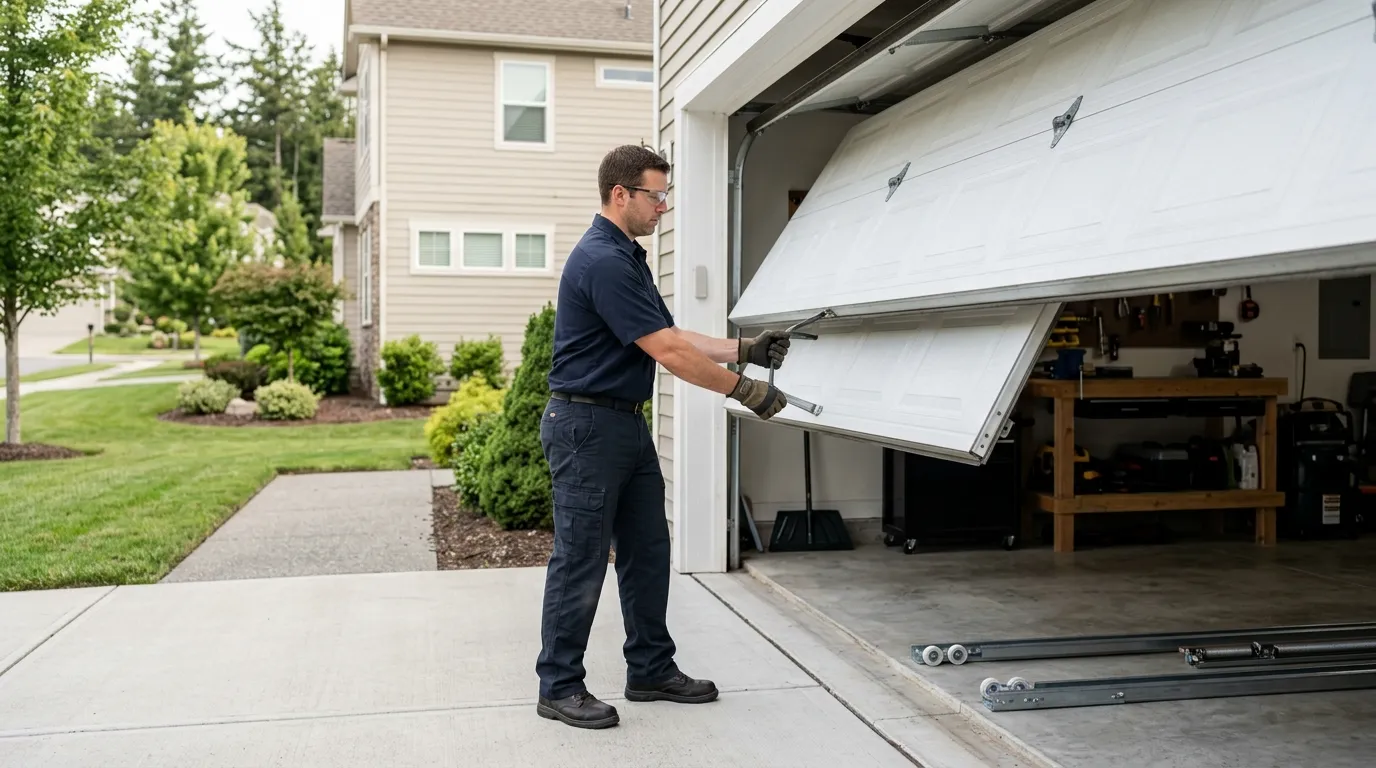
Burbank housing runs from 1943 up through 2012, but the median build year sits at 1959, which means a big chunk of garages in this town still have whatever door and hardware went in when the house was framed. Before you call anyone, look at three things. First, the track: if it's a single piece bent into an L along the ceiling with rollers set into slots stamped by hand, that's original-era hardware, not a modern retrofit. Second, the spring: a single thick coil bolted above the door on each side, stretching when the door lowers, is an extension spring setup, the standard before torsion systems took over. Third, look at the panels themselves for rust bubbling from the inside out along the bottom foot, which is where moisture sits longest. None of this tells you whether to fix or replace, but it tells you what you're dealing with before a tech shows up. A door built to 1959-era hardware standards isn't automatically bad. It's just old enough that the parts on it aren't the parts on the shelf at most suppliers anymore.
The Problem
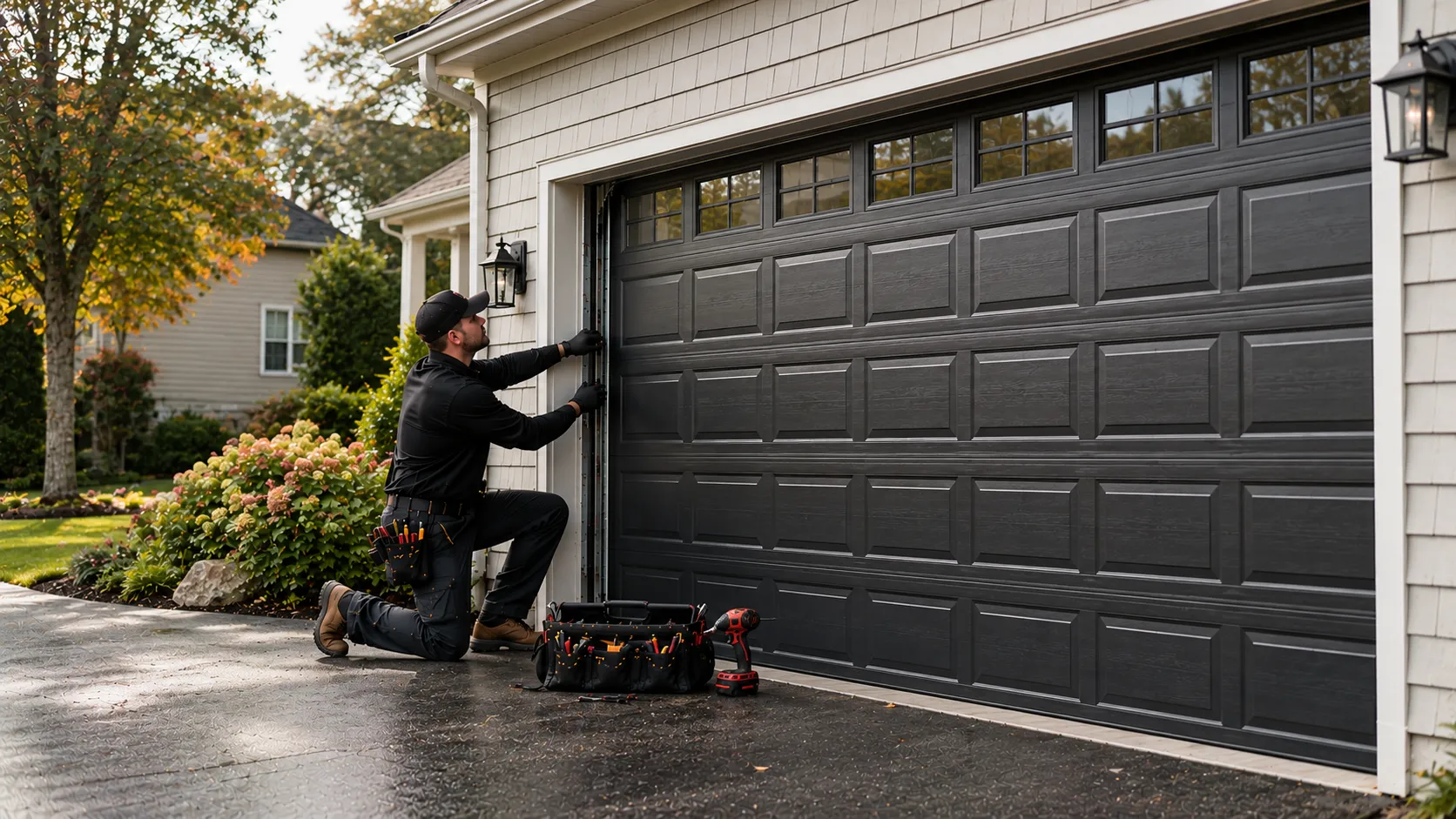
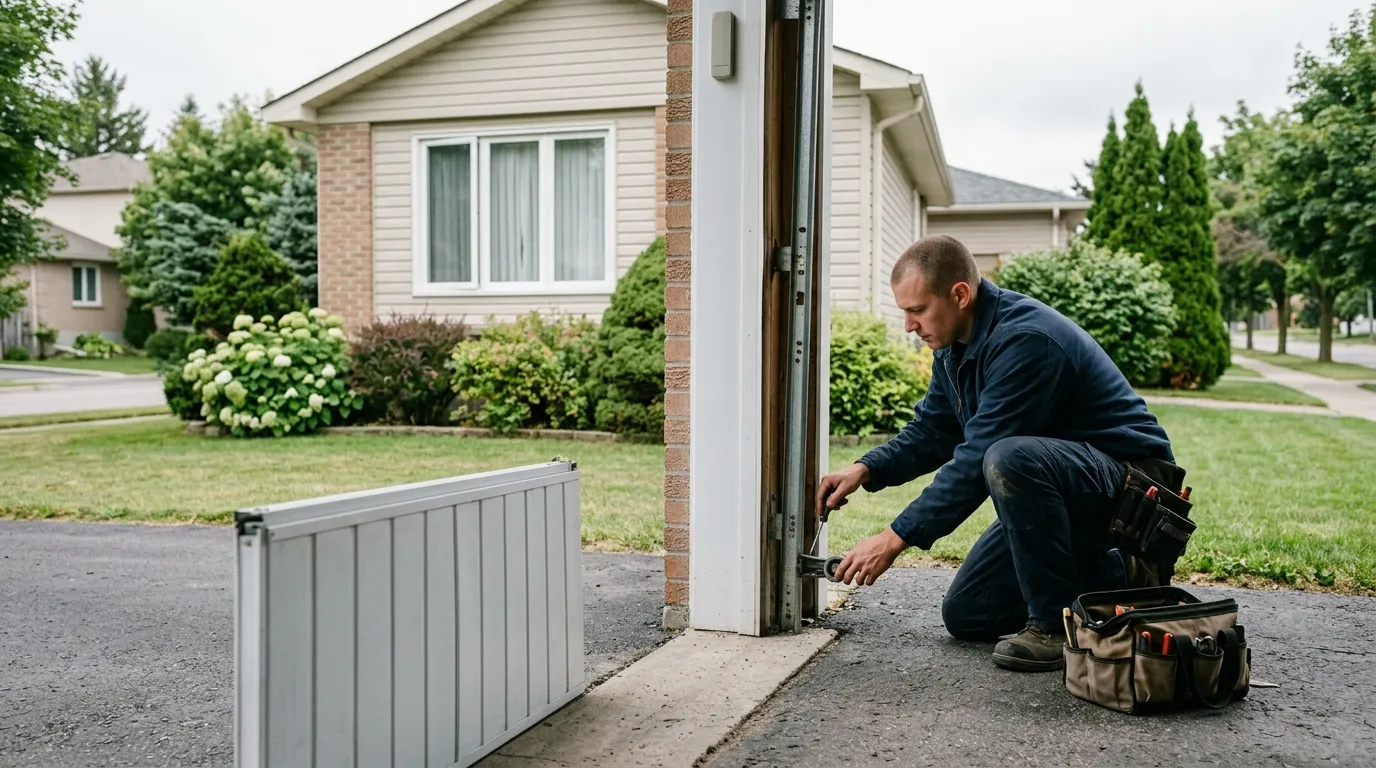
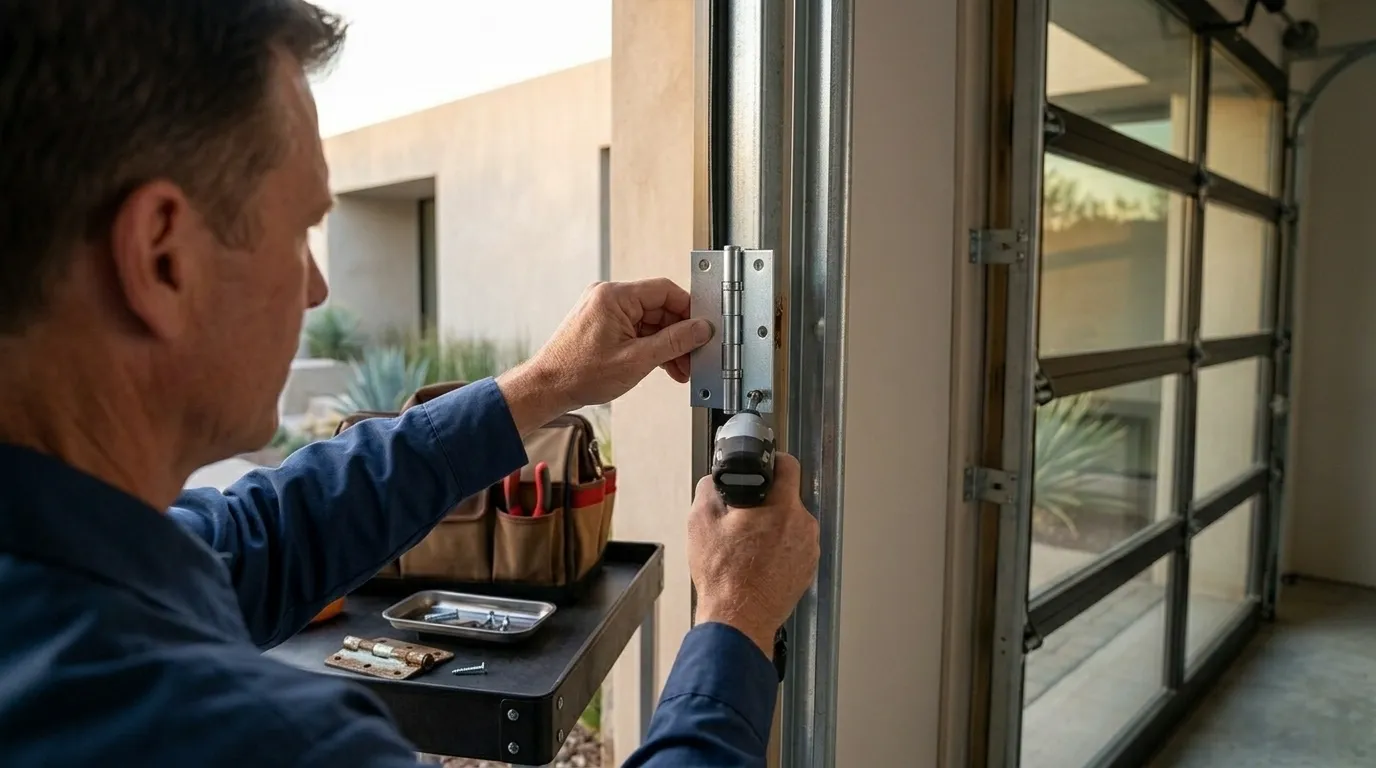
The problem with a Burbank door from this era isn't usually the door itself. Steel panels from the 1950s and 60s were often heavier gauge than what goes into a new door today, and they hold up fine if they've been painted and kept dry. The problem is everything bolted to the panel: the hinges, the roller brackets, the spring cones. Those parts were sized for a specific door weight and a specific opener bracket pattern, and neither matches what's sold new. When a roller seizes or a hinge cracks on a door like this, a shop either has to source an old-stock replacement, which takes time, or replace the whole hardware run, which starts pushing the repair bill toward what a new door costs. That's the actual decision point on an older Burbank house, not whether the door still looks fine from the driveway. A door can look straight and close square while running on a spring rated for a panel weight that's ten pounds off from what's actually hanging on it, and that mismatch is what eventually snaps a cable or drops a door on its track.
Doing Nothing For Now
Doing nothing is a real option, and for a lot of doors in Burbank's older housing stock it's the right one for a while longer. If the door still opens and closes without grinding, and the panels aren't rusted through, waiting costs you nothing but the risk of a spring going without warning, which usually just means a stuck door until someone comes out, not a safety event if nobody's under it. Where waiting stops making sense is once you're replacing the same part twice in two years, or once a tech has told you the spring is rated wrong for the door weight. At that point you're paying for labor twice instead of once. I'll say plainly what I won't do: I'm not going to tell a homeowner to replace a door that's still working fine just because it's from 1959. A door that age with sound panels and a hardware run in decent shape can run another decade. The honest answer is usually to fix the failed part and leave the rest alone until it actually fails.
What Local Conditions Do
Burbank sits in a moderate heat climate band, not the freeze-thaw belt that cracks concrete and snaps cold-brittle springs further north or at higher elevation. What moderate heat does here is slower and less dramatic: it dries out the lubricant in an old roller bearing years faster than a cooler climate would, and it hardens the rubber seals along the bottom of the door and around old panel edges until they crack rather than compress. On a door built to 1959 hardware standards, that means the rollers are usually the first thing to go noisy, well before the spring or the panel itself gives out. It's also why a torsion spring on an older Burbank door can look fine and still be near the end of its cycle life - dry heat doesn't rust a spring the way damp cold does, it just fatigues the metal quietly. None of this is dramatic weather. It's slow wear that adds up over a 1943-to-2012 housing stock where a lot of doors have never had the hardware touched since installation.
How it works
From “it’s stuck” to “it’s fixed”
01
Tell us what’s wrong
Describe the symptom - won’t open, loud bang, opener runs but the door won’t move.
02
On-site diagnosis
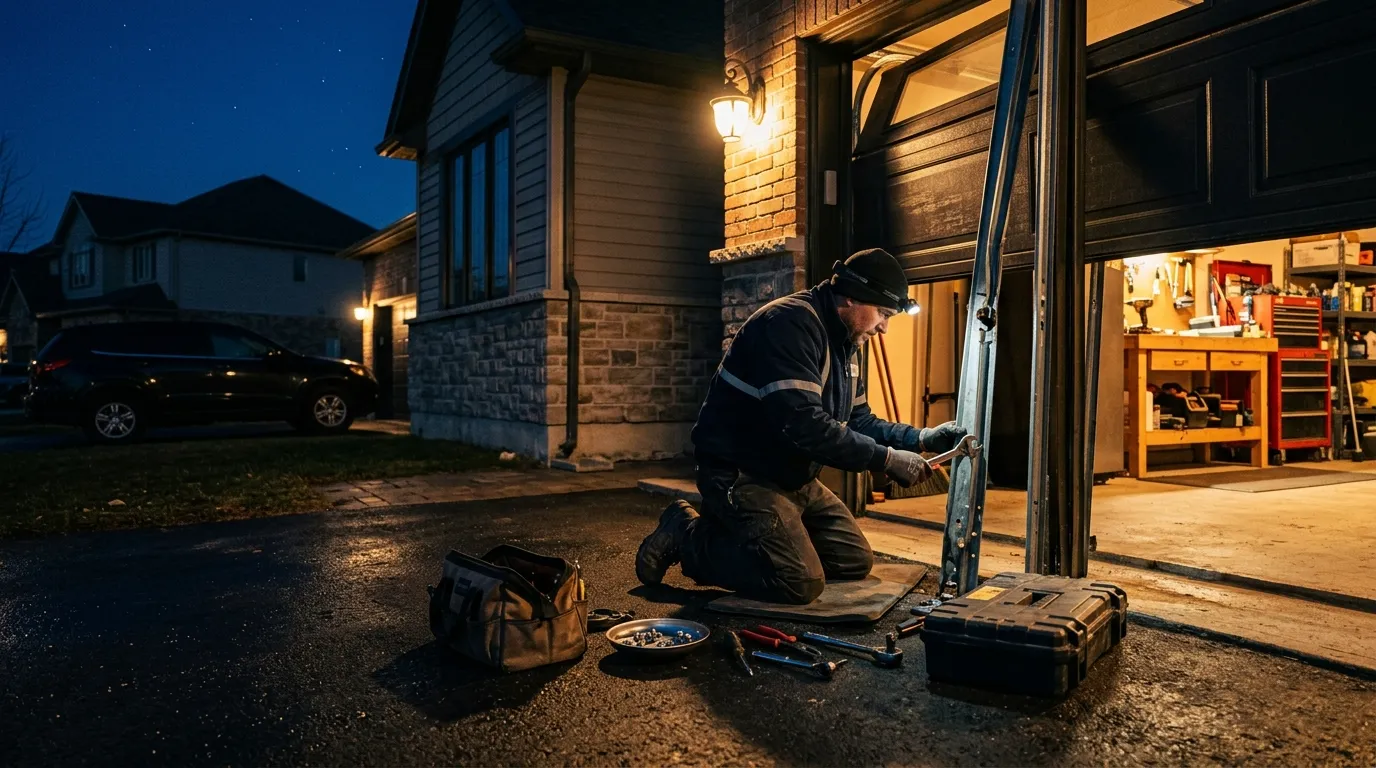
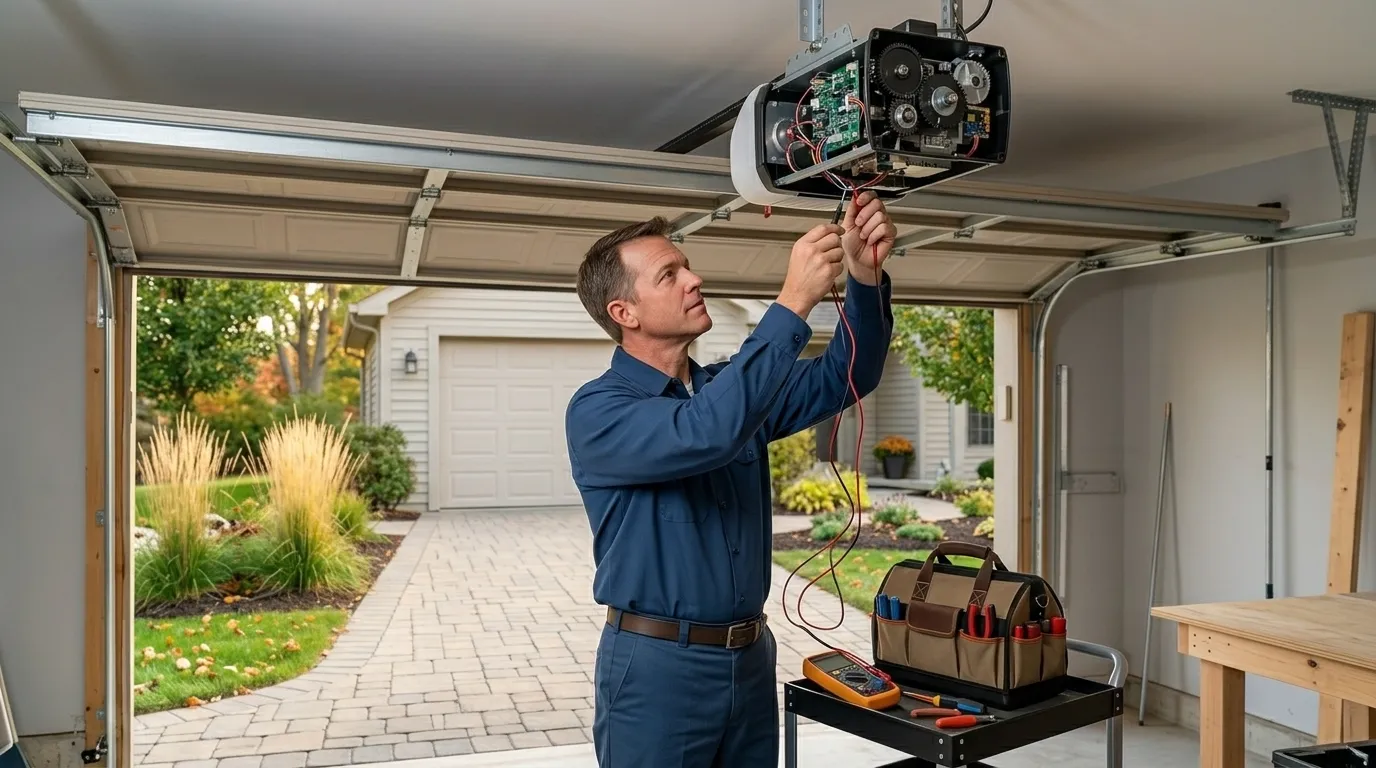
A technician tests the door under power and by hand and finds what actually failed.
03
Clear, up-front plan
You get the fix that’s needed and what drives the cost - before any work starts.
04
Repaired & tested
The repair is done, the door is set true and tested, and the work area left clean.
Next step
Serving Burbank, CA - tell us what your door’s doing and we’ll take it from there.
Straight answers about garage door repair in Burbank. Still unsure? Ask us directly.
My house was built in the 1950s. Is my garage door original?
It's possible. Burbank's median build year is 1959, and a lot of houses from that era still have the door and hardware that went in originally. Check the track and spring type: a single L-shaped track with a coil spring stretching above the door on each side points to original-era hardware rather than a later retrofit.
Is it worth fixing an old garage door or just replacing it?
Depends what's broken. A cracked hinge or seized roller on an otherwise sound door is worth fixing. If you're replacing the same hardware repeatedly, or the spring is rated wrong for the door's actual weight, the repair cost starts closing in on replacement cost, and that's when replacing makes more sense.
Why do rollers on my old door wear out faster than expected?
Burbank's moderate heat climate dries out roller lubricant faster than a cooler region would. On an older door with original hardware, that usually shows up as a noisy roller years before the spring or panel gives any trouble.
Can you still get parts for a door from the 1950s or 60s?
Sometimes, but not always off the shelf. Original hardware from that era doesn't match what suppliers stock today, so a repair can mean sourcing an older part or replacing the hardware run. That's worth asking about before you commit to a fix.