Why a Door Goes Off Track (And What Burbank Homes Have to Do With It)
Burbank's pre-1960 housing stock and mild heat load both play into why doors jump track. Here's what to check before you call Burbank Garage Door Pros.
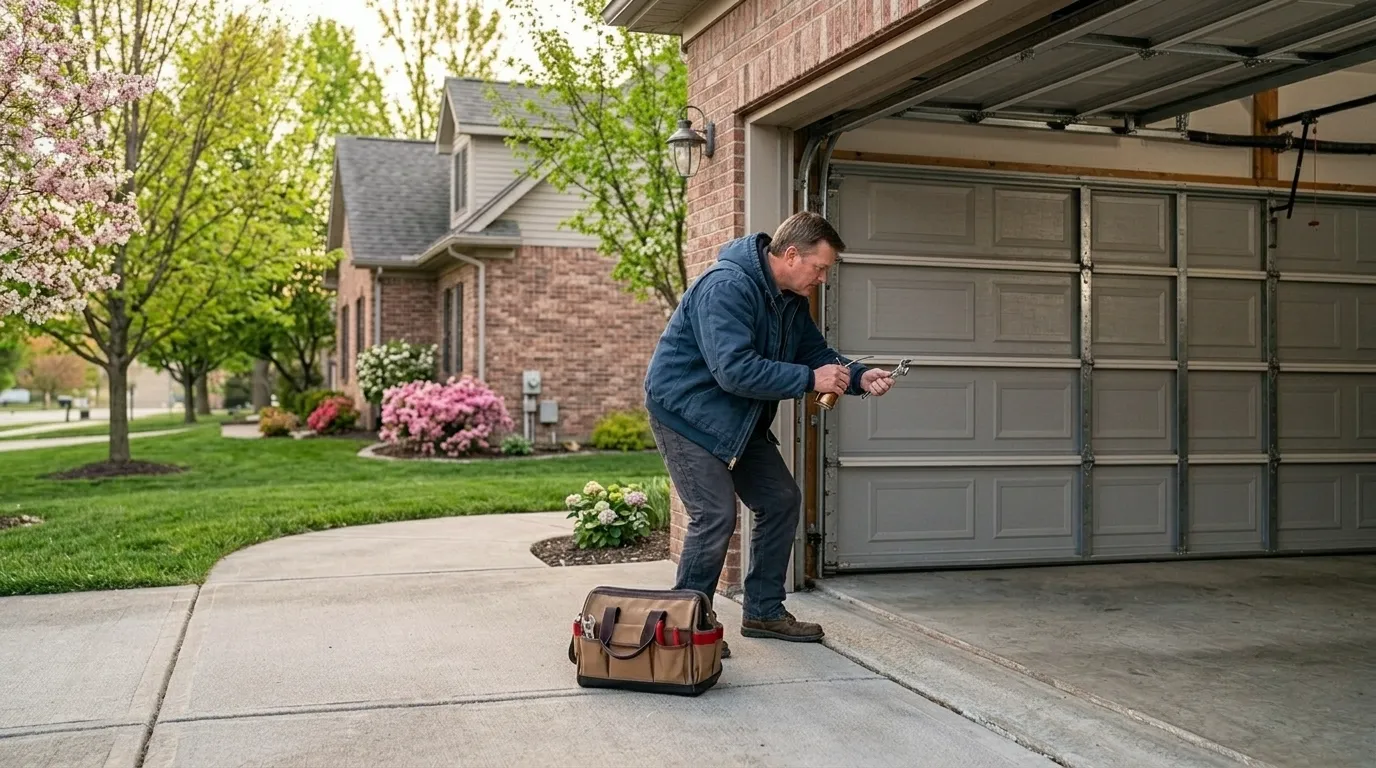
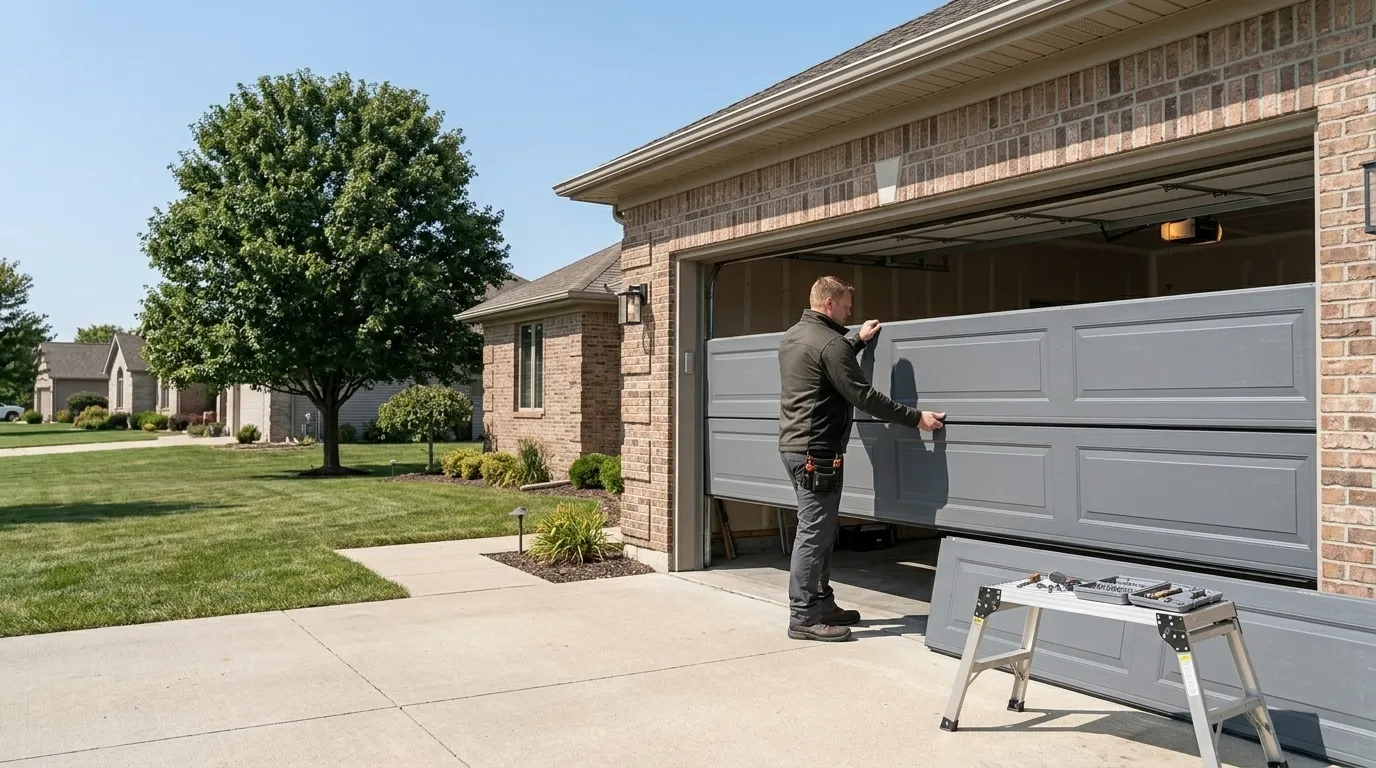
Before you assume the worst, look at the track itself. Stand inside the garage with the door down and run your eyes along both vertical rails, then the curved sections where they bend toward horizontal. A track that's pulled away from the wall bracket, even a quarter inch, will let rollers walk out of the channel on the next open cycle. Check the brackets - the L-shaped pieces bolted to the framing - for looseness. On houses built in the 1940s and 50s, which make up a lot of Burbank's stock, those brackets are often original and anchored into wood jambs that have shrunk over seventy-plus years, giving the lag screws less to grip.
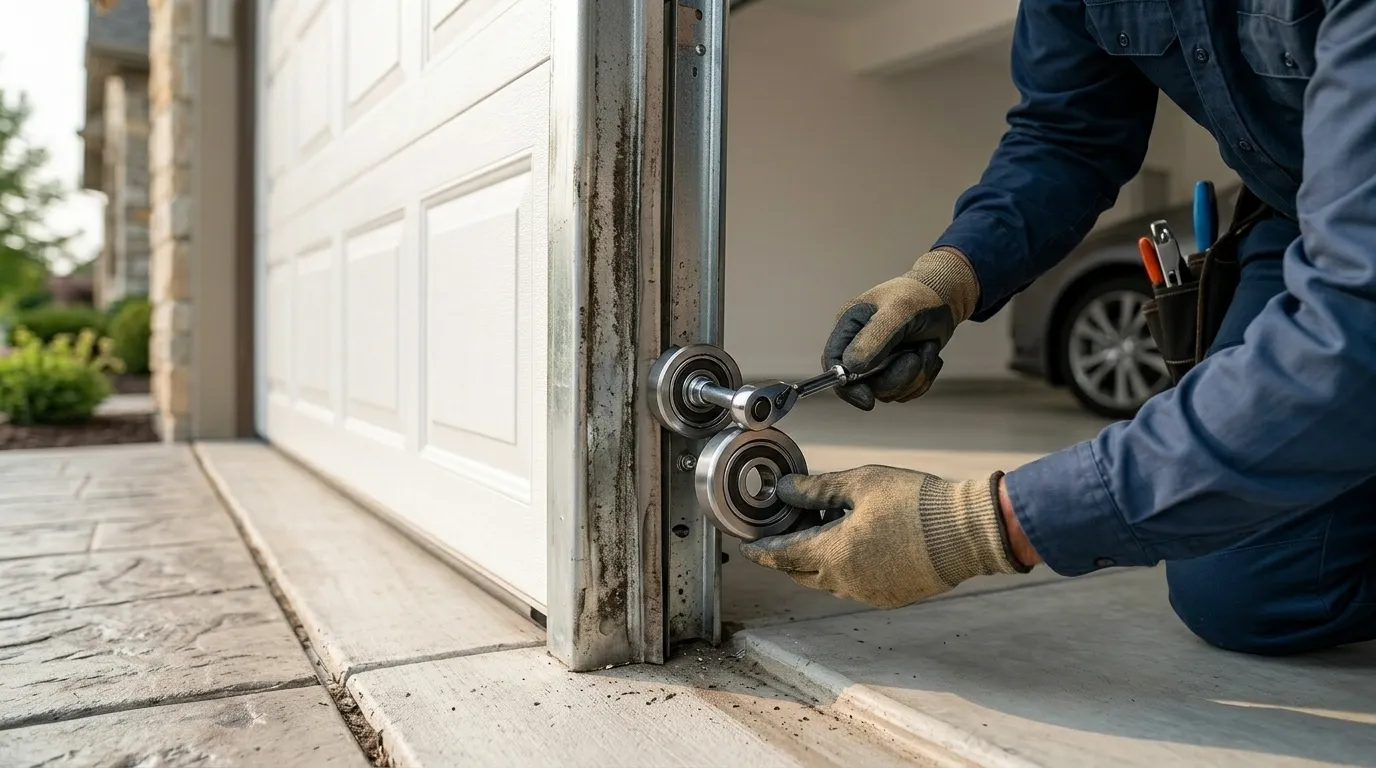
Also look at the bottom rollers. If one is chewed up or cracked, it can bind and yank the door sideways as it travels. Run the door open and closed a couple of times with your hand on the wall track - if you feel a hard knock partway through, stop and don't run it again until someone looks at it. Doors don't derail evenly; they usually go on one side first, and if you keep cycling it, you bend the track further and turn a $150 fix into a full track replacement.
The Problem
Most doors that jump track in Burbank aren't failing because of one dramatic event. They're failing because the hardware and the house have drifted apart over decades. Median build year here is 1959, and a large share of the housing is pre-1960 - which means original track brackets, original jamb wood, and in some cases doors that have had openers added on later without the track ever being re-shimmed to match. That mismatch is the actual root cause behind a lot of the off-track calls we get: not a broken part, but a track that was never quite aligned to begin with, or that's worked loose from framing that's moved with the house.
A second driver is roller wear. Old steel rollers on old track develop flat spots and rough edges, and once that happens the door doesn't ride smooth - it hops. A hop is what turns a straight track into a bent one the first time the door catches an edge instead of rolling over it.
Doing Nothing For Now
If the door still opens and closes, even roughly, you can wait - for a little while. Burbank sits in a moderate-heat climate band, which means we don't get the freeze-thaw cycling that snaps hardware in colder regions, so a slightly misaligned track isn't racing against winter damage. That buys you some room to schedule a repair instead of treating it as an emergency.
What it doesn't buy you is unlimited time. Every cycle on a door that's rubbing or catching wears the roller and the track a little more. What starts as a $150-200 bracket tightening becomes a track replacement, and a track replacement on an older opening sometimes means custom-fitting new rail to hardware that doesn't match anything sold today. We won't tell you it's urgent if it isn't, but we also won't pretend a door that's already jumping the track once is going to fix itself.
What Local Conditions Do
Two things about this area matter more than people expect. First, the age of the housing: with median construction around 1959 and most of the stock built before 1960, a lot of garages still have their original track hardware, sized and mounted for the doors and openers of that era. When a heavier modern steel door or a stronger opener gets installed on that original track, the hardware is carrying more than it was built for, and misalignment shows up sooner.
Second, the climate here is on the moderate end of the heat scale, not the extreme end - so we're not dealing with the metal expansion and contraction that causes track problems in hotter desert climates, or the ice buildup that causes them in cold ones. That means when a Burbank door goes off track, it's almost always a mechanical or installation issue tied to the house's age, not a weather event. Worth knowing before anyone tells you it's the heat.
How it works
From “it’s stuck” to “it’s fixed”
01
Tell us what’s wrong
Describe the symptom - won’t open, loud bang, opener runs but the door won’t move.
02
On-site diagnosis
A technician tests the door under power and by hand and finds what actually failed.
03
Clear, up-front plan
You get the fix that’s needed and what drives the cost - before any work starts.
04
Repaired & tested
The repair is done, the door is set true and tested, and the work area left clean.
Next step
Serving Burbank, CA - tell us what your door’s doing and we’ll take it from there.
Straight answers about garage door repair in Burbank. Still unsure? Ask us directly.
Can I push the door back onto the track myself?
Don't. The track holds tension from the springs even when the door looks still, and pushing on it while it's off can snap a cable or drop the door on your hands. Kill the opener, leave the door where it is, and get someone to look at the bracket and roller before it moves again.
Is this covered by a home warranty?
That depends on your policy, not on us - we don't have visibility into what your warranty covers. Check your documents for garage door hardware exclusions before you call around; a lot of policies treat track and roller wear as maintenance, not a covered failure.
Will a new opener fix an off-track door?
No. An opener has nothing to do with track alignment - it just drives the door along whatever path the track gives it. If the track's bent or the brackets are loose, a new opener will run the door into the same problem, just with more force behind it.