What Actually Happens During a Burbank Garage Door Service Call
A Burbank garage door service call covers springs, tracks, rollers, and opener checks, tuned to homes built mostly before 1960 in a moderate-heat climate.
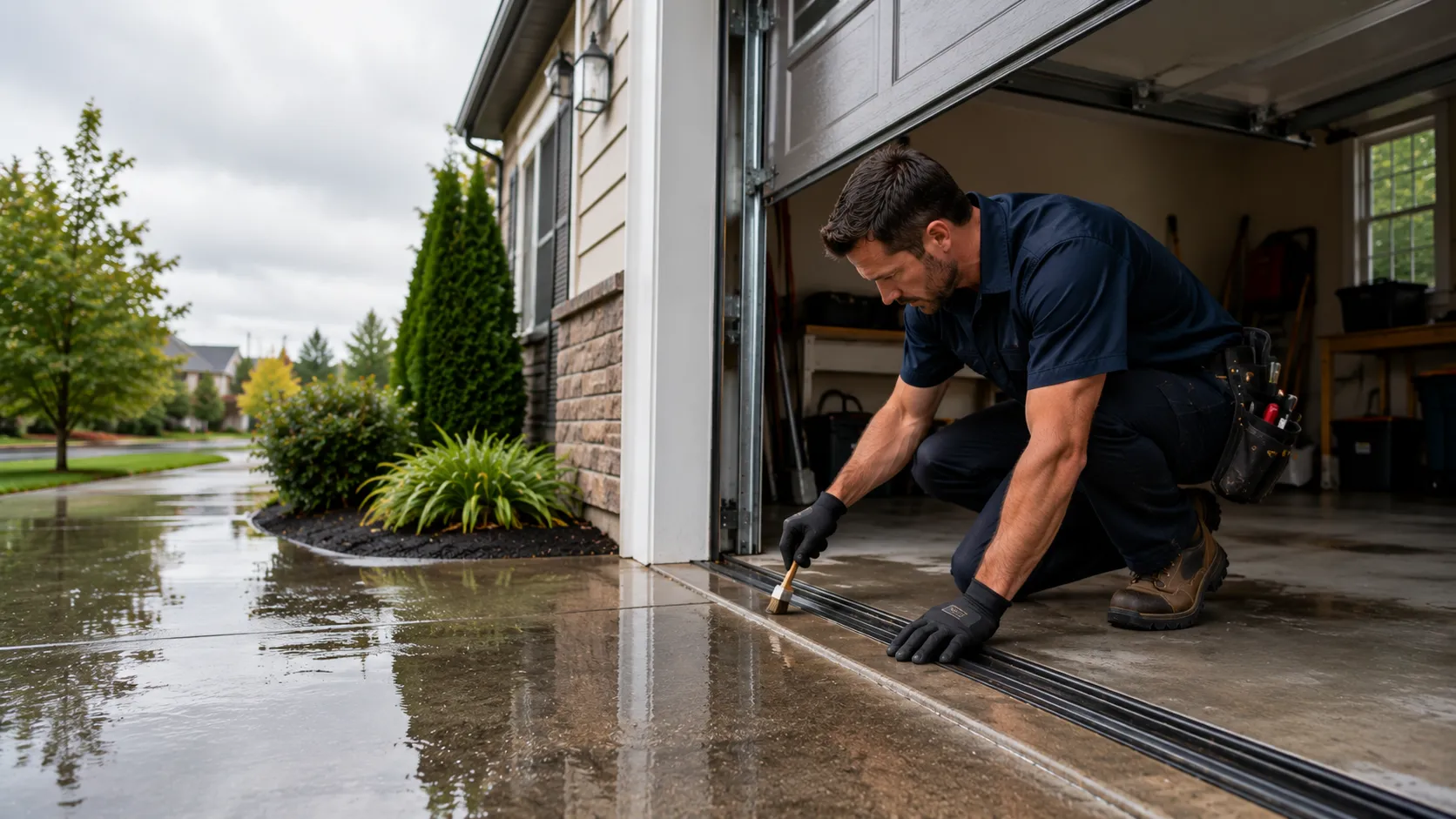
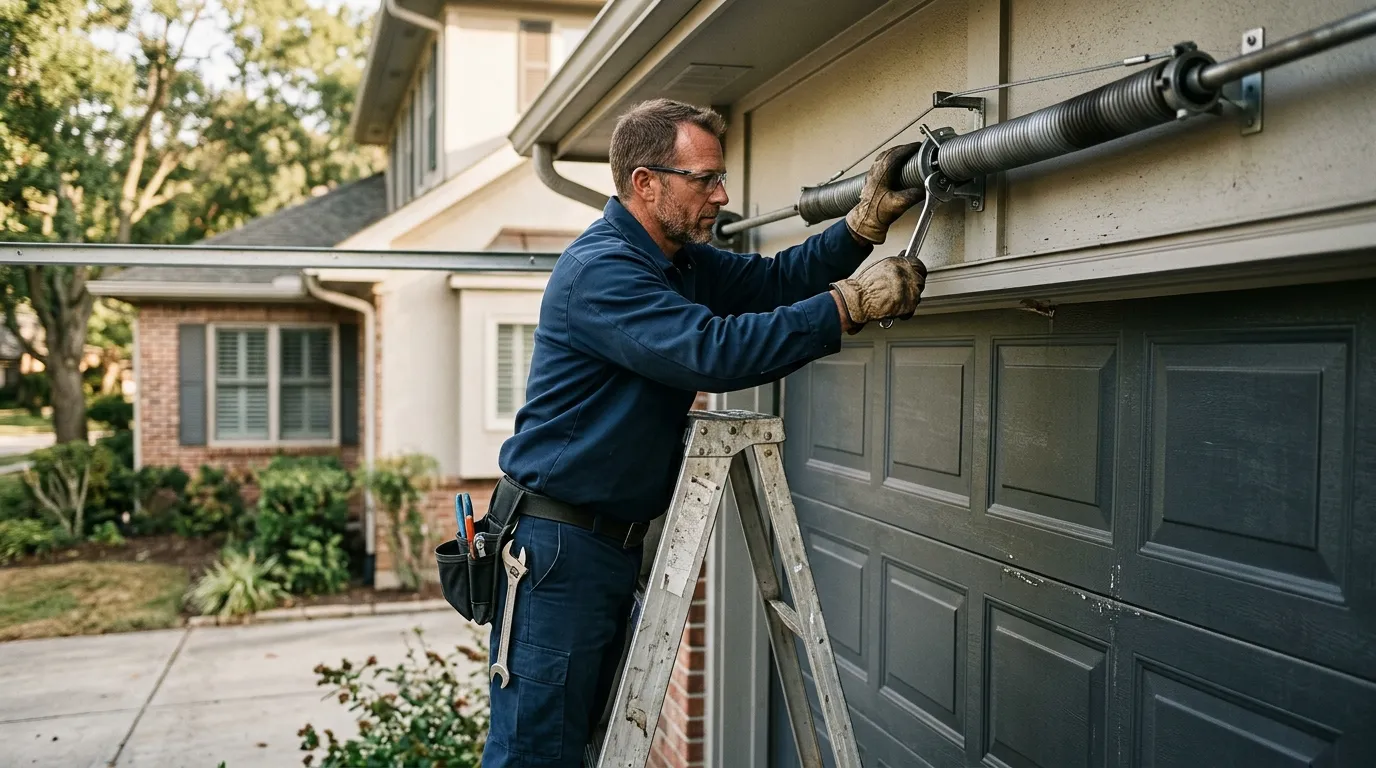
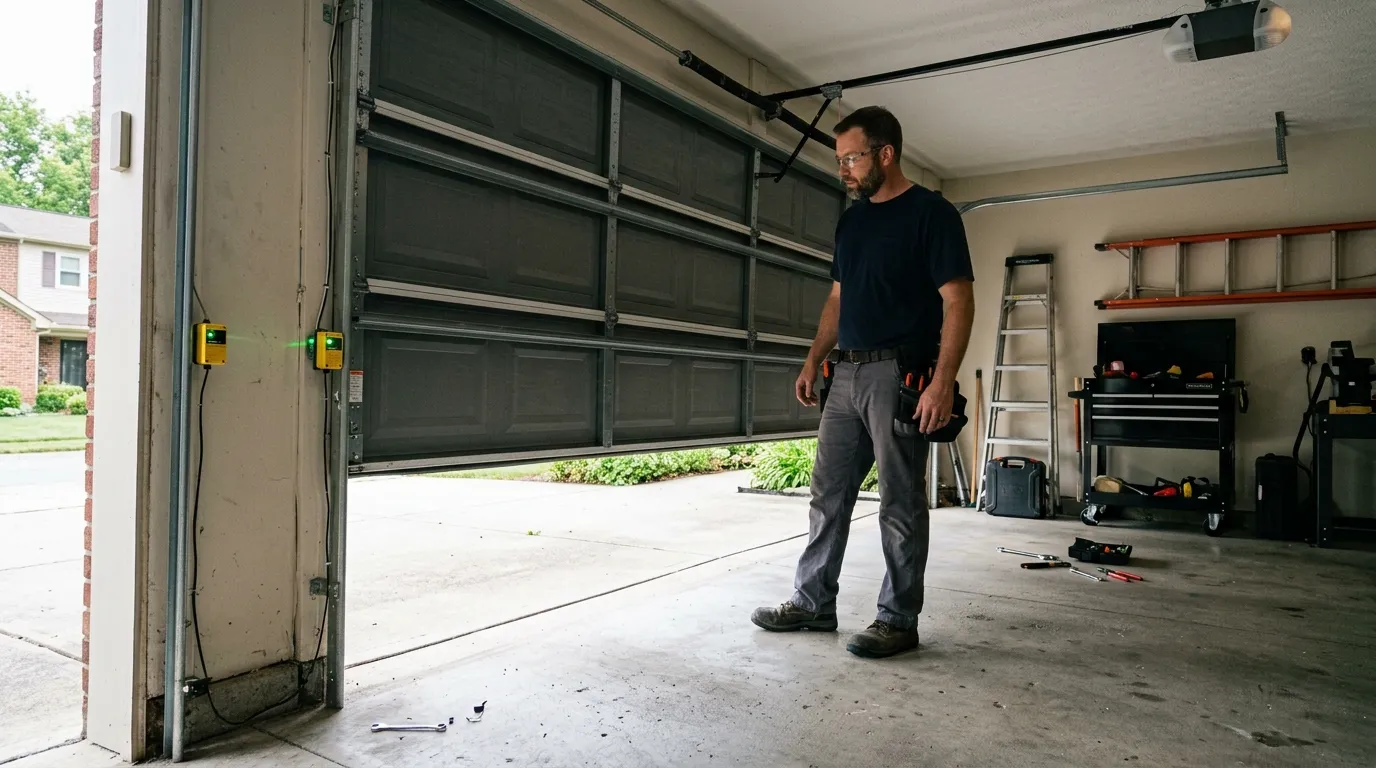
Before you call anyone, walk out and look at the door with the opener disconnected. Pull the release cord and lift the door by hand - it should move with even resistance and stay put about halfway up. If it slams down or you can barely lift it, the torsion spring is losing tension, which is common on the original one- and two-car doors still hanging in houses built here in the 1943-1959 stretch. Check the tracks for rust bloom or a horizontal kink where the door's been forced. Look at the rollers: on doors this old they're often the original steel roller on a stamped bracket, not the nylon ones sold today, and they wear a groove that throws the door off-line. None of this tells you whether a part needs replacing versus adjusting - that's the judgment call a tech makes on site - but it tells you what to describe on the phone. If the door reverses randomly or won't close at all, stop lifting by hand and just call; you could be dealing with a broken cable under load, and that's not a DIY fix.
The Problem
Burbank's housing stock runs from 1943 up through 2012, but the median build year sits at 1959, and a lot of that older stock still carries its original garage hardware because nobody's had a reason to touch it. A service call on one of these houses usually starts with a torsion spring sized for a lighter, older wood-panel door now supporting a heavier insulated replacement panel installed at some point without re-rating the spring. That mismatch is what actually breaks - not one part wearing out on its own, but two generations of hardware bolted together. The tech has to check spring wire size against door weight, track plumb against the original framing (which has usually settled some over sixty-plus years), and opener force settings against a door that doesn't weigh what the opener was calibrated for. That's the actual work: matching mismatched pieces, not swapping a single failed part.
Doing Nothing For Now
A moderate-heat climate like Burbank's doesn't crack a slab or freeze a track, but it does bake the lubricant out of hinges and rollers faster than a cooler climate would, and it dries out the wood on original panel doors from the pre-1960 stock, which then warp at the bottom corners where they sit closest to the concrete. Waiting on a stiff spring or a dry roller usually just means a louder door for a few more months before something gives - but a cable that's starting to fray on an older drum won't announce itself the same way, and it can let go without warning. Here's the honest limit: if the panels are original wood and warped past a certain point, we're not going to plane and refinish them back into square. At that stage repair isn't the economical call, and we'll say so instead of running up a bill on a door that needs replacing.
What Local Conditions Do
Two things shape almost every service call in this area: the age of the housing stock and the heat. With median construction at 1959 and most of the surrounding named areas carrying pre-1960 stock, a tech is more often matching parts to old hardware than installing something factory-fresh. The moderate heat band means the failure mode here is dry-out and thermal expansion in metal track brackets, not rust-through or freeze cracking - so a lubrication and re-tension visit does more good here than it would somewhere with hard winters. With roughly 145,743 owner-occupied houses across the service area and a median household income near $86,956, most calls end in a repair rather than a full replacement quote, since the budget and the age of the house both point toward fixing what's there before swapping the whole door.
How it works
From “it’s stuck” to “it’s fixed”
01
Tell us what’s wrong
Describe the symptom - won’t open, loud bang, opener runs but the door won’t move.
02
On-site diagnosis
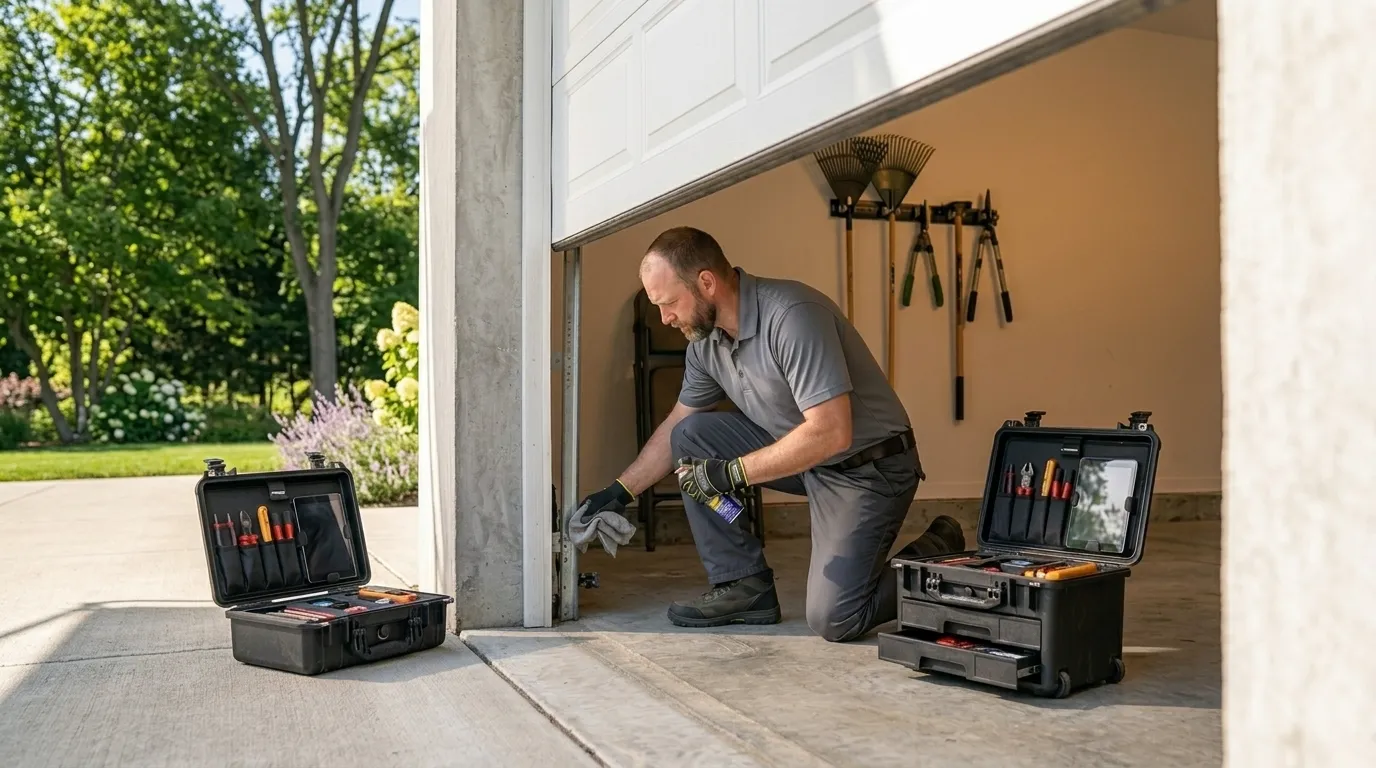
A technician tests the door under power and by hand and finds what actually failed.
03
Clear, up-front plan
You get the fix that’s needed and what drives the cost - before any work starts.
04
Repaired & tested
The repair is done, the door is set true and tested, and the work area left clean.
Next step
Serving Burbank, CA - tell us what your door’s doing and we’ll take it from there.
Straight answers about garage door repair in Burbank. Still unsure? Ask us directly.
How do I know if it's the spring or the opener?
Disconnect the opener and lift the door by hand. If it's heavy, uneven, or won't hold halfway up, the spring is losing tension - that's a hardware problem, not an opener problem. If the door moves fine by hand but won't respond to the remote or wall button, the issue is in the opener or its wiring, not the spring.
Why does my door get noisier in summer?
Heat dries out grease on rollers and hinges faster than cooler weather does, and metal track brackets expand slightly, which can throw alignment off by a hair. That combination is a common cause of new noise showing up in warmer months on older hardware.
Is it worth fixing an original wood panel door from the 1950s?
Sometimes. If the panels are still square and just need new hardware, a repair makes sense. If the wood has warped at the bottom corners from years of sun and moisture, refinishing usually costs more than it's worth, and replacement is the more honest recommendation.