Garage Door Repair for Burbank's Older Housing Stock
Burbank homes built mostly before 1960 still run original torsion springs and tracks. We fix what actually breaks on these doors, fast, in Burbank, CA.
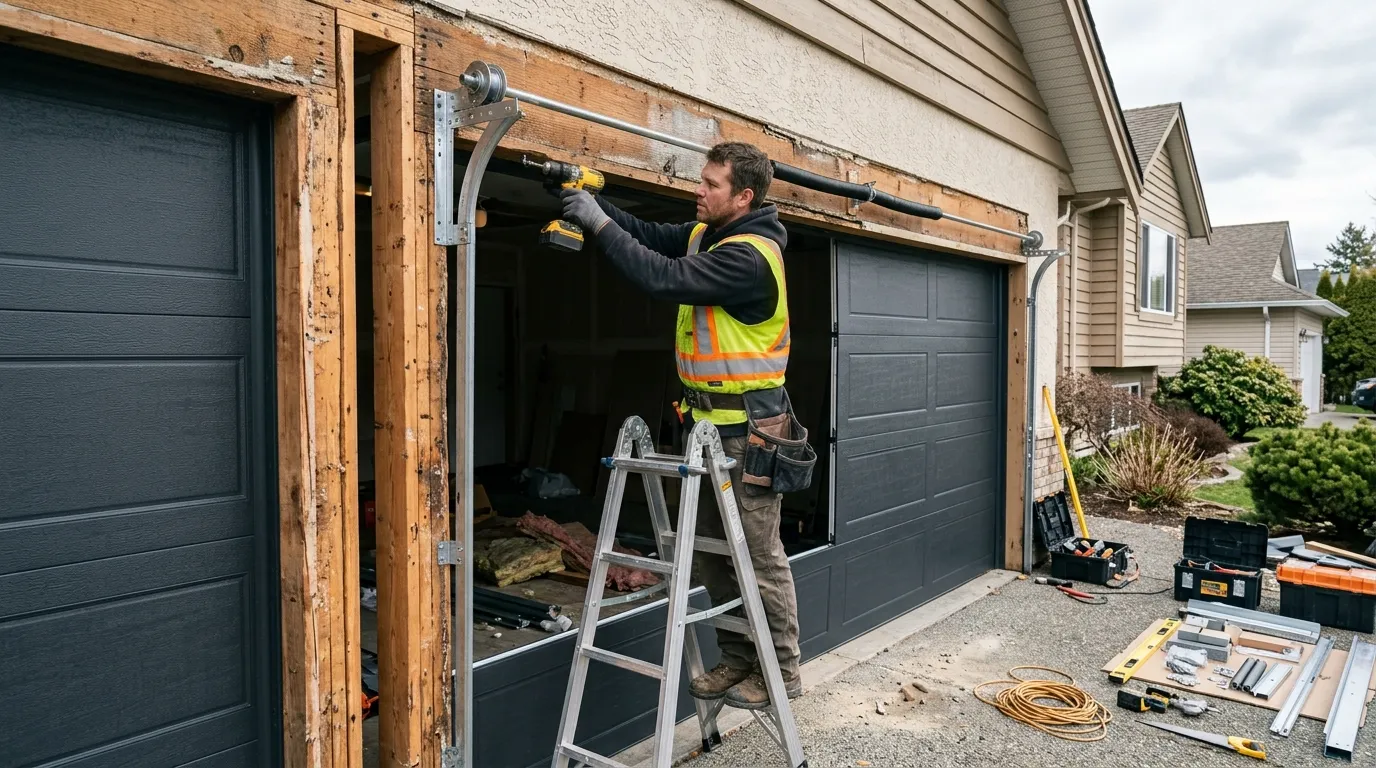
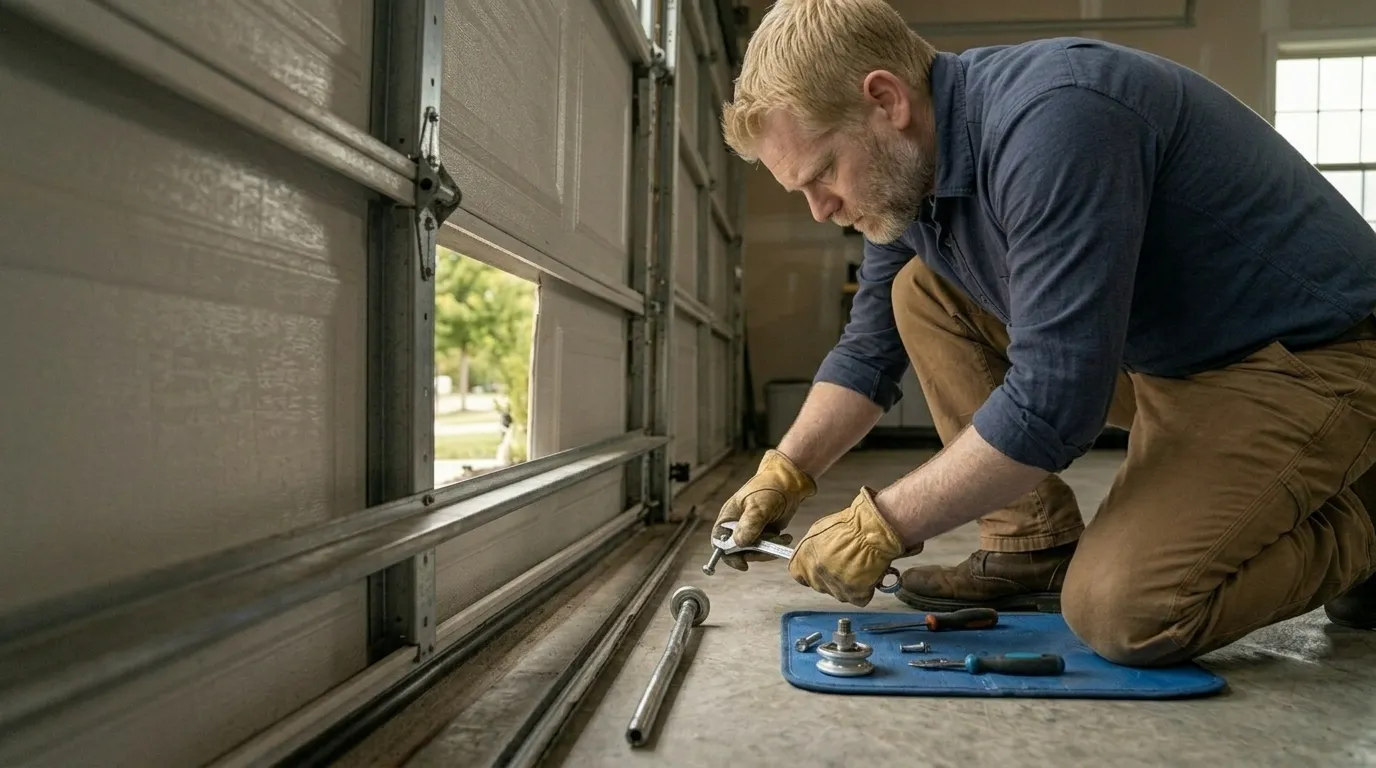
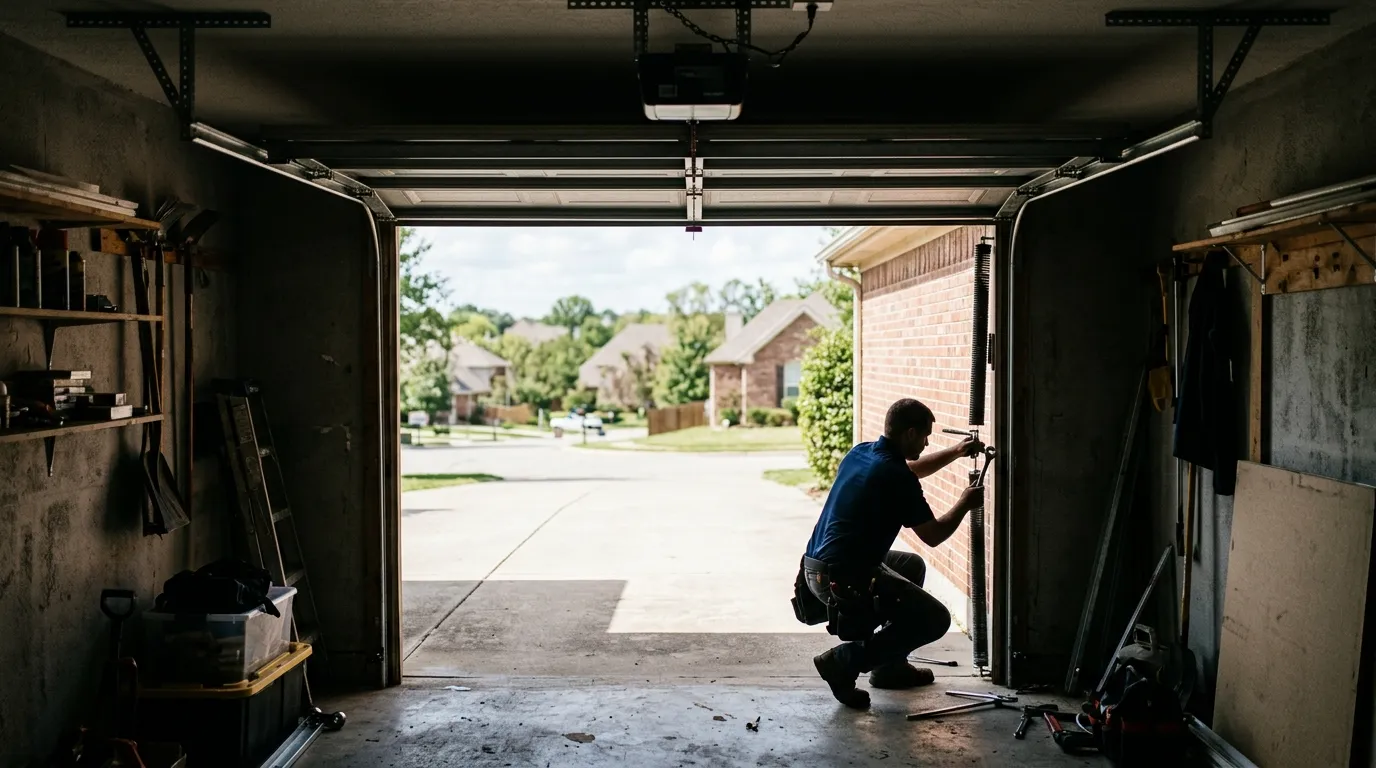
A garage door that won't open isn't just an inconvenience in Burbank - for a lot of households it's the only way the car gets in or out, since older lots here weren't built with a second driveway apron or side gate wide enough for daily use. When a torsion spring snaps or a cable jumps its drum, the door is stuck wherever it stopped, usually down, and it stays that way until someone with the right bar and clamps gets under it.
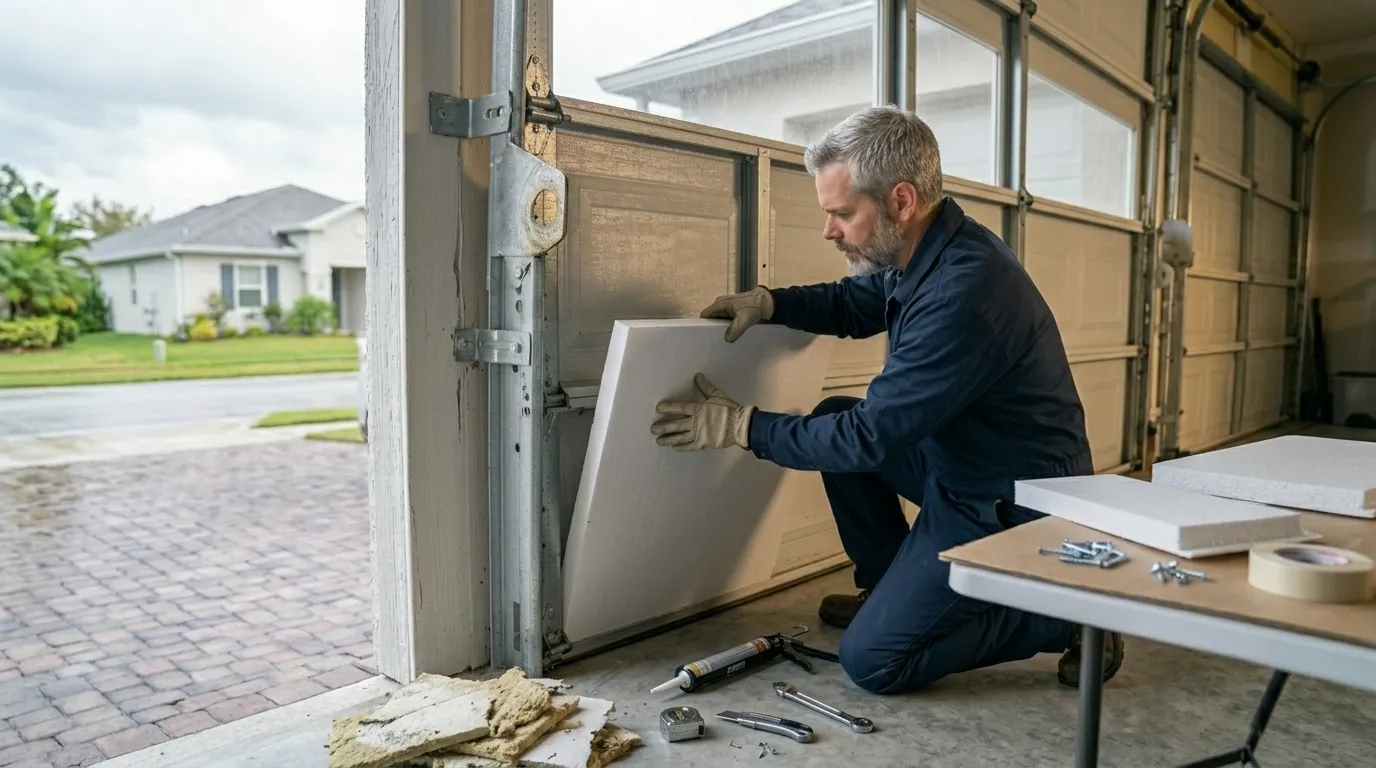
We don't quote a fixed hours-until-fix number here because it depends on what's actually broken and what's already on the truck. A broken spring on a standard torsion setup is usually a same-visit fix once we're on site. A stripped opener gear or a bent track from someone backing into it takes longer, especially if the part isn't a stock size - and on houses built well before 2000, it often isn't. That's the honest limitation: we carry common spring sizes and standard track sections, but a door original to a 1950s build sometimes needs a part ordered in, and we'll tell you that up front instead of promising same-day when it isn't realistic.
The Symptom
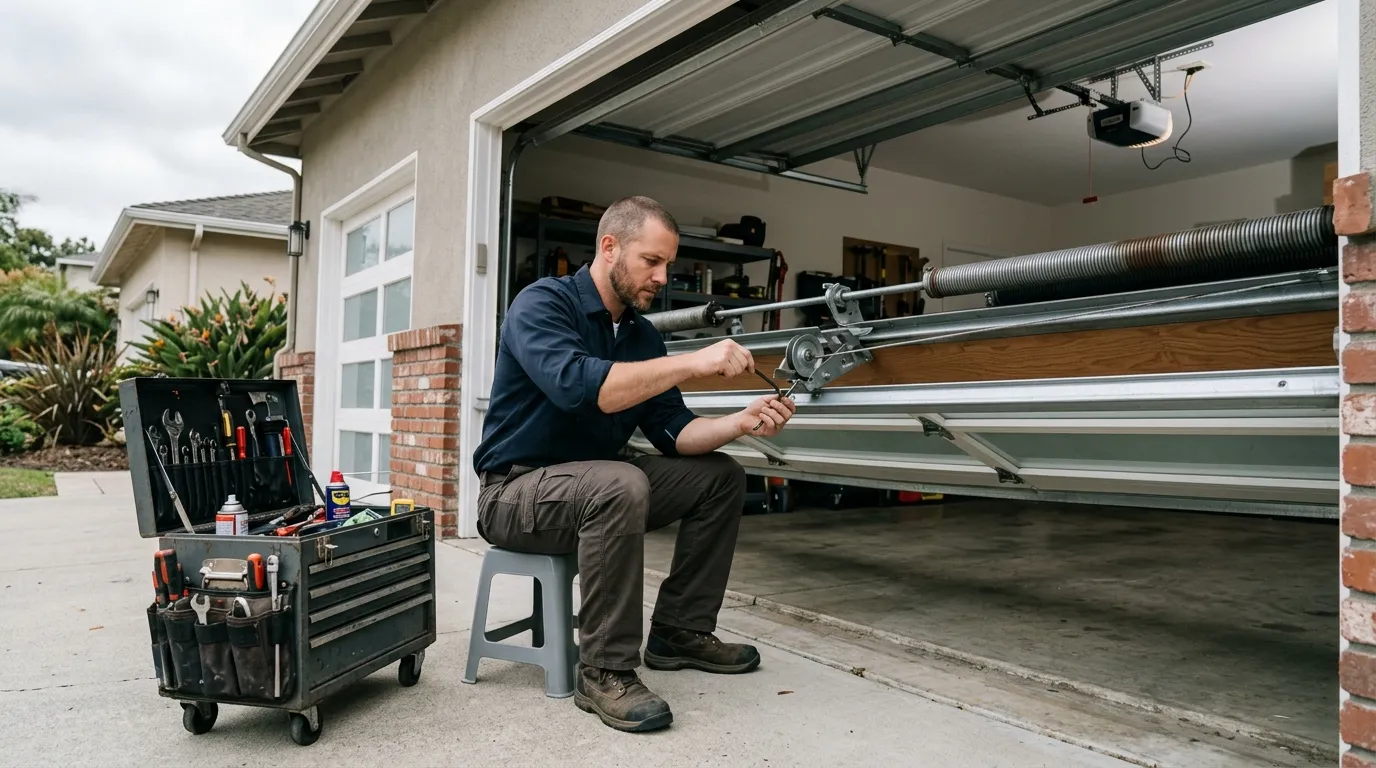
The complaint we hear most in Burbank is a door that slams down the last foot instead of settling, or one that won't budge past waist height before the opener strains and reverses. Both point to the same part: a torsion spring that's lost tension or broken outright. On a house from the 1950s or 60s - which describes a large share of what's here, since the median build year across this stretch of the Valley is 1959 - that spring has likely been recoiling on the same shaft for decades longer than any spring is rated for.
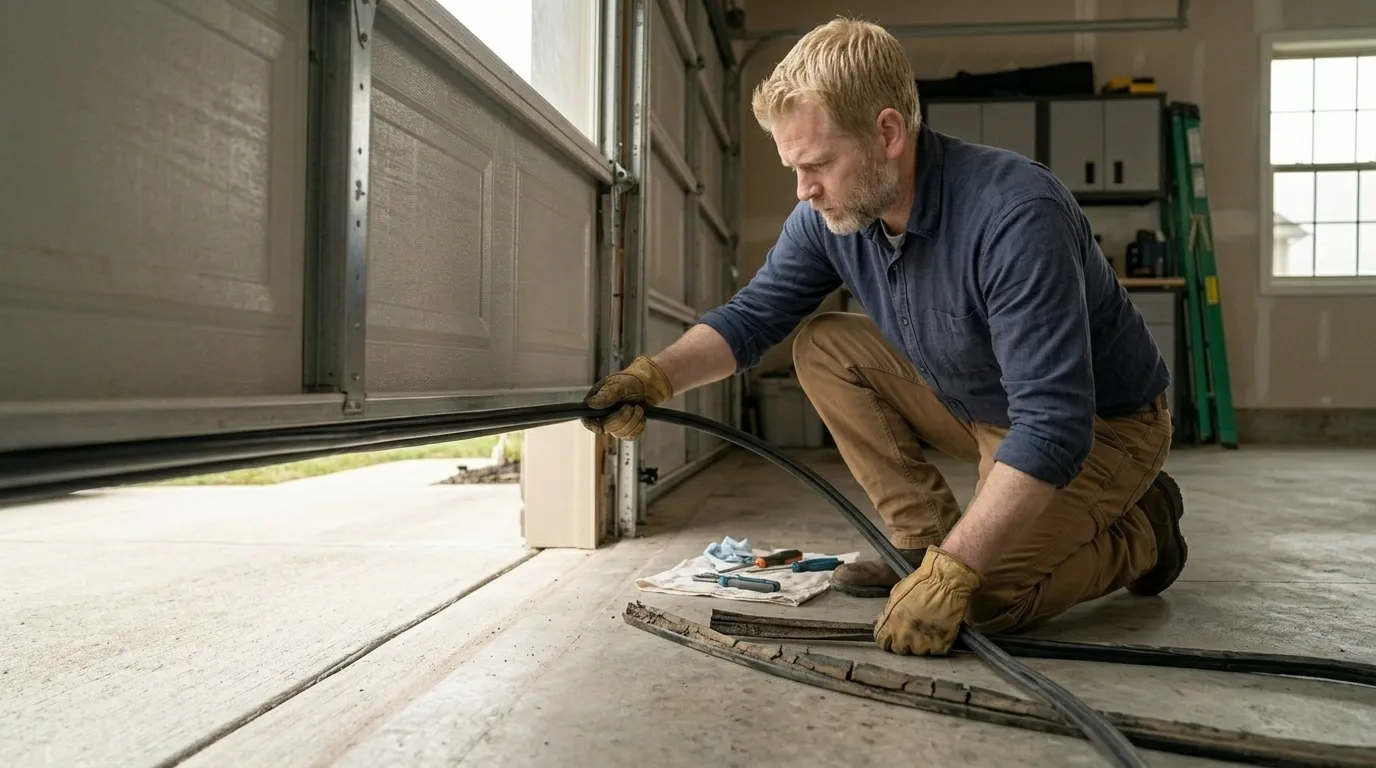
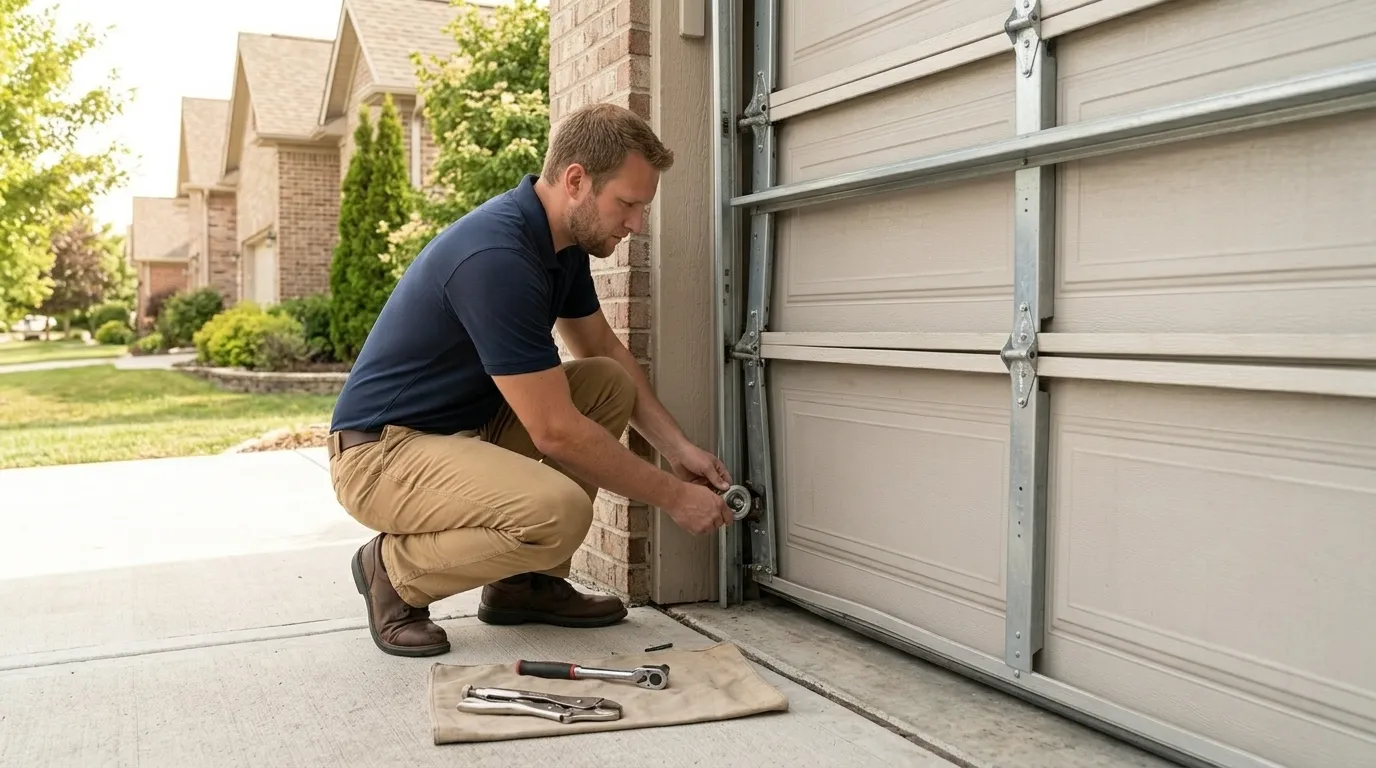
A second common symptom is a cable that's frayed or jumped its drum, usually on doors where the spring was replaced once already but the cable never was. Owners describe it as the door going crooked, one side dropping faster than the other. That's a cable or a bottom bracket issue, not the opener, and it's not safe to keep running the door in that state - a jumped cable under tension can let the door fall unevenly.
What It Costs
We don't have a set price to publish here, because a snapped spring on a standard steel door and a stripped opener gear on a 25-year-old belt drive aren't the same job, and quoting one number for both would be a guess dressed up as a fact. What we can tell you is what drives the cost either way: spring size and cycle rating, whether the track needs realignment along with the repair, and whether the opener itself is original to the house or already a replacement.
Homes built earlier in Burbank's range - some go back to 1943 - sometimes carry doors and openers old enough that a repair costs close to what a full opener swap would run, and in that case replacing makes more sense than patching. We'll say that plainly on site rather than nickel-and-diming a repair on hardware that's already near the end of its life. If your household income and budget planning matters here, know that we price the job in front of you before touching anything, not after.
Why It Happens Here
Burbank's housing didn't all go up at once - the range runs from 1943 to 2012 - but the bulk of it, like most of the 45 named areas across this part of the Valley, clusters pre-1960. That matters for garage doors specifically: torsion springs are rated in cycles, not years, and a 65-year-old spring on an unchanged shaft has usually gone through more open-close cycles than its rating allows, whether or not the owner ever noticed a problem before the day it lets go.
Burbank sits in a moderate-heat climate band, not an extreme one, so the failure mode here isn't sudden cracking from heat spikes the way it might be somewhere with harsher summers. It's slower - steady thermal expansion and contraction on hardware installed decades ago, cycling season after season until the metal fatigues. That's a different problem than a brand-new door would have, and it's why repair calls in this area skew toward spring and cable failure on original equipment rather than opener electronics or sensor faults.
How it works
From “it’s stuck” to “it’s fixed”
01
Tell us what’s wrong
Describe the symptom - won’t open, loud bang, opener runs but the door won’t move.
02
On-site diagnosis
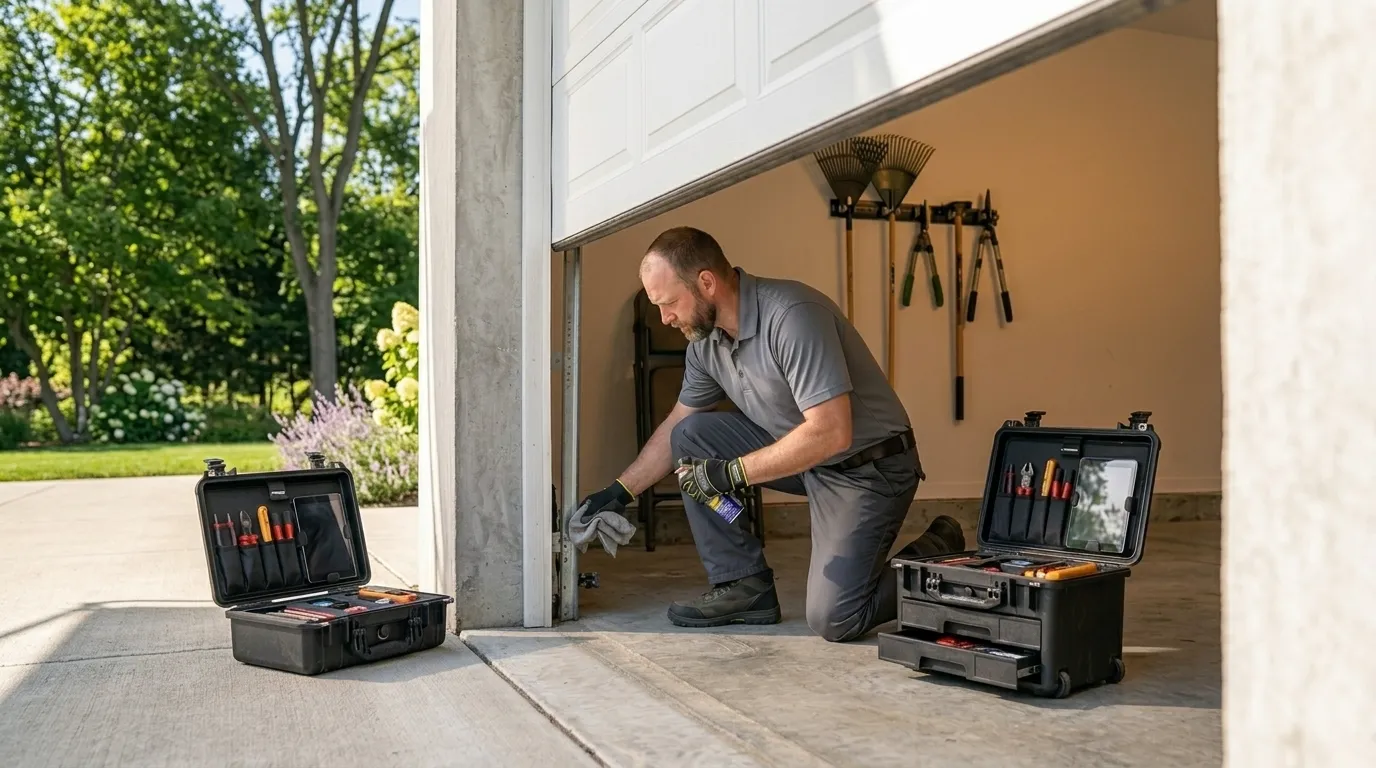
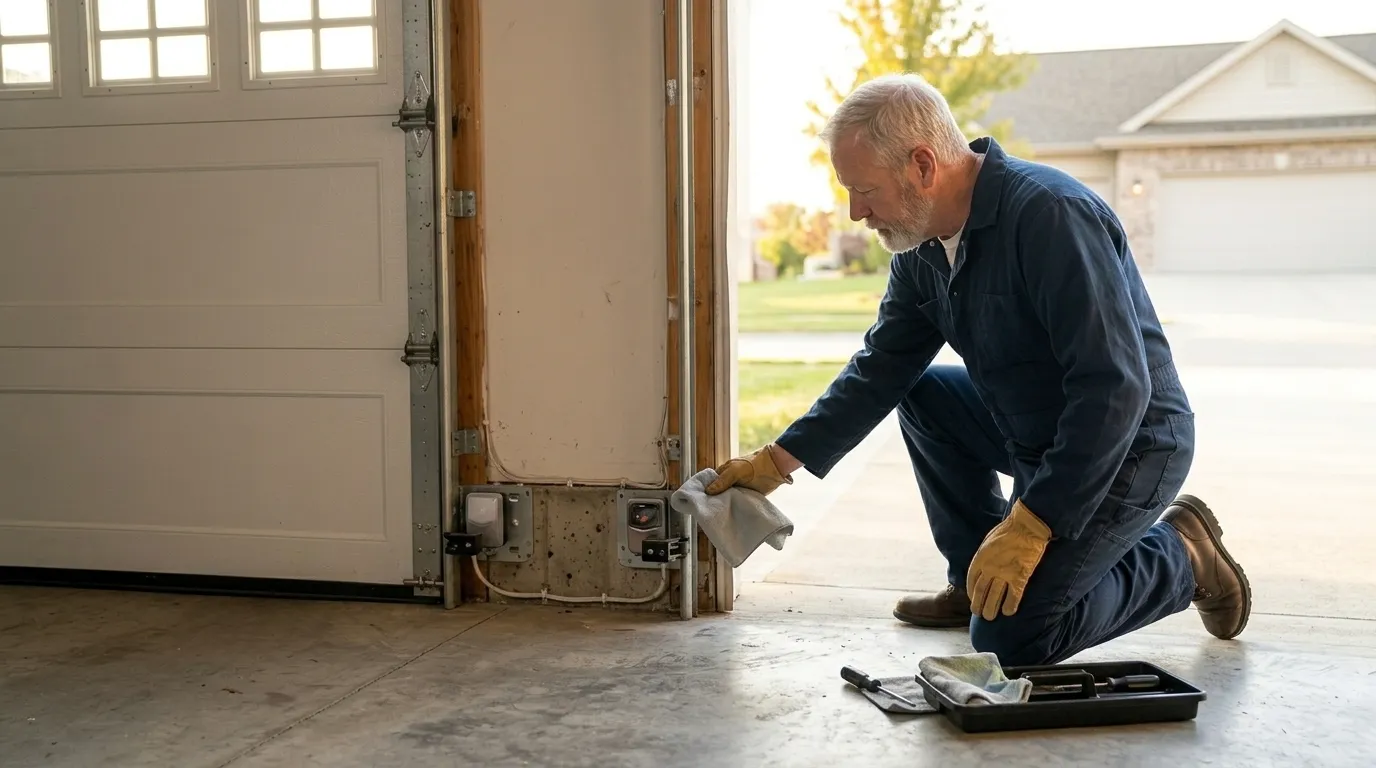
A technician tests the door under power and by hand and finds what actually failed.
03
Clear, up-front plan
You get the fix that’s needed and what drives the cost - before any work starts.
04
Repaired & tested
The repair is done, the door is set true and tested, and the work area left clean.
Next step
Serving Burbank, CA - tell us what your door’s doing and we’ll take it from there.
Straight answers about garage door repair in Burbank. Still unsure? Ask us directly.
Why do so many garage doors in Burbank need spring repair instead of opener repair?
Because a large share of Burbank's housing was built before 1960, and the torsion springs on those doors are original or close to it. Springs fail by cycle count, not age on the calendar, so a spring installed decades ago on an unchanged shaft is often past its rated life. Openers, which get replaced more often, fail less frequently by comparison.
Is it safe to keep using a garage door with a frayed cable?
No. A frayed or jumped cable can let one side of the door drop faster than the other, and under spring tension that's unpredictable. If you see the door going crooked as it moves, stop using it and get the cable and bracket checked before running it again.
Can you give me a price over the phone?
Not an exact one. Spring size, track condition, and whether the opener is original all change the job, and we'd rather look at the door than guess. We price it on site before starting any work, and if replacement makes more sense than repair, we'll say so.