What a Spring Failure Looks Like in an Older Burbank Garage
Burbank homes built in the late 1950s often still run original torsion springs, and Burbank's mild climate means age drives failure more than cold snaps.
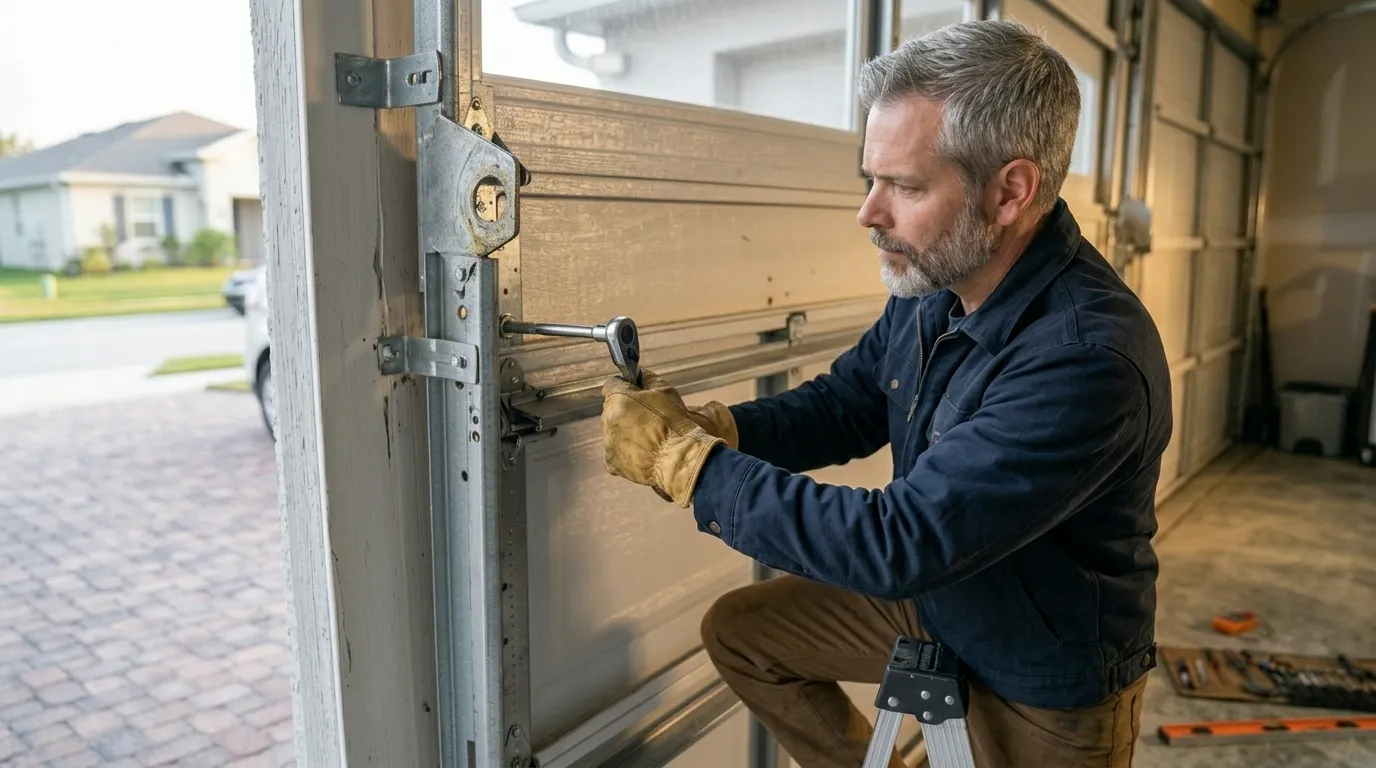
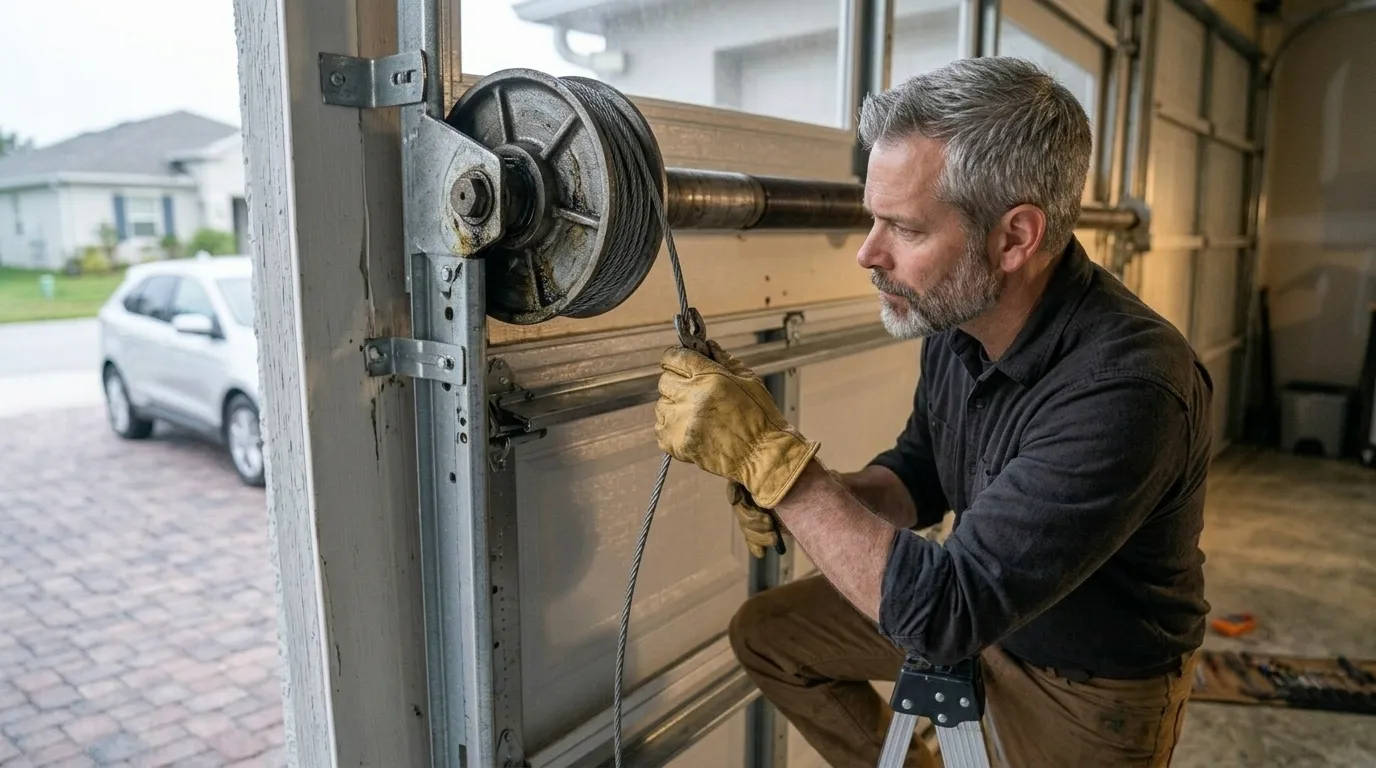
Stand under the closed door and look at the horizontal bar above it. Most houses in Burbank went up between 1943 and 2012, with a median build year of 1959, so what you're looking at is likely one or two torsion springs on the original header hardware - not the newer wound-cable systems you'd see on a door installed in the last decade. Check for a visible gap in the coil, a spring that looks stretched or uneven side to side, or a door that feels heavier on one corner when you lift it by hand with the opener disconnected. You can look. You should not touch. A torsion spring under tension holds enough stored force to break a hand or a wrist, and on the older single-spring setups common on houses this age, there's no backup if it lets go while you're standing under it. If you see a gap, a flat spot, or rust pitting along the coil, that's the sign to call it in rather than adjust it yourself. This is the one place where checking and fixing are two different jobs, and only one of them is safe to do without training.
The Problem
The springs on a Burbank garage door fail from cycle count and age, not from a hard freeze. Burbank sits in a HEAT moderate climate band - there's no deep winter cold snap here that makes steel brittle overnight the way it does in colder markets. What actually happens is slower: a spring wound in 1959 or 1968 has been through tens of thousands of open-and-close cycles, and the coil metal fatigues the same way a paperclip does after enough bends, regardless of the season. You'll notice it first as a door that doesn't quite reach full open, or one that drops the last foot on its own instead of gliding down. On the pre-1960 stock that makes up most of this area, that fatigue has often had sixty-plus years to accumulate, and a lot of that original hardware was never swapped out - it just kept working until it didn't. The problem isn't a single bad day of weather. It's a long, quiet wear cycle that ends the same way every time: the coil separates, usually with a loud bang, and the door either won't move or drops fast.
Doing Nothing For Now
A door that's sagging on one side or slow to lift isn't going to fix itself, and waiting usually just moves the failure from a controlled one to a sudden one. Once a torsion spring loses enough tension, the opener starts doing the spring's job - pulling a door that can weigh well over a hundred pounds on a standard double, which burns out the drive gear or the motor faster than it should. If the second spring on a double-torsion setup goes while the first is already weak, the door can drop without warning, and on the older single-spring installs still found across this housing stock, there's nothing to catch it. Across the wider service area - 45 named neighborhoods sharing this same postwar-era housing - this is the most common repair call: not a door that's broken outright, but one that's been dragging for weeks before it finally lets go. Putting it off doesn't save money. It usually adds a cable, a bent track, or opener damage to what would've been a straightforward spring swap.
What Local Conditions Do
Because Burbank's climate is on the mild side of moderate, the springs here aren't fighting frost the way they would somewhere with real winters. What they're fighting instead is age and use. With 145,743 owner-occupied houses across this service area and a median build year of 1959, a large share of the doors still in service were hung on hardware from that same postwar decade - springs, hinges, and rollers that have never been replaced, just kept moving. Heat plays a smaller but real part too: warm garage air dries out the light lubricant on a coil faster than a cooler climate would, which speeds up the surface wear that eventually turns into a stress crack. You see the same pattern in nearby areas that share this building boom - North Hollywood, Toluca Lake, and Valley Village all went up in roughly the same stretch of years. None of that means every old spring is a ticking clock, but it does mean a spring that's original to a 1959 build has had a long run, and a long run on old steel ends with a break, not a slow fade. That's the local math worth knowing before it happens on your door.
How it works
From “it’s stuck” to “it’s fixed”
01
Tell us what’s wrong
Describe the symptom - won’t open, loud bang, opener runs but the door won’t move.
02
On-site diagnosis
A technician tests the door under power and by hand and finds what actually failed.
03
Clear, up-front plan
You get the fix that’s needed and what drives the cost - before any work starts.
04
Repaired & tested
The repair is done, the door is set true and tested, and the work area left clean.
Next step
Serving Burbank, CA - tell us what your door’s doing and we’ll take it from there.
Straight answers about garage door repair in Burbank. Still unsure? Ask us directly.
How do I know if my garage door spring is original to the house?
If your house was built in the postwar decades common across Burbank - the median here is 1959 - and the spring has never been serviced, there's a good chance it's original. Look for a single spring on older single-door setups, heavier rust pitting, or a coil finish that looks dull and pitted compared to a newer galvanized spring. A tech can confirm it in a couple of minutes on site.
Does Burbank's weather affect how long a spring lasts?
Not the way cold does in other regions. Burbank sits in a moderate heat climate band with no hard freeze cycle to make steel brittle, so weather isn't the main driver of failure here. Age and cycle count are - a spring that's opened and closed a door tens of thousands of times over 60-plus years wears out from fatigue, not from a cold night.
Can I just replace the spring myself?
We'd rather you didn't. A wound torsion spring holds enough force to cause a serious injury if it releases while you're working on it, and the tools to wind it safely aren't something most homeowners keep around. Checking for wear and calling it in once you see it is the safer split of labor.
My door is slow to open but hasn't broken yet - is it worth fixing now?
Yes. A door that's sagging or slow usually means the spring has already lost tension, and the opener is compensating by working harder than it should. That's the stage where a spring swap is a simple job. Waiting for a full break usually means a cable or opener repair gets added to the bill.