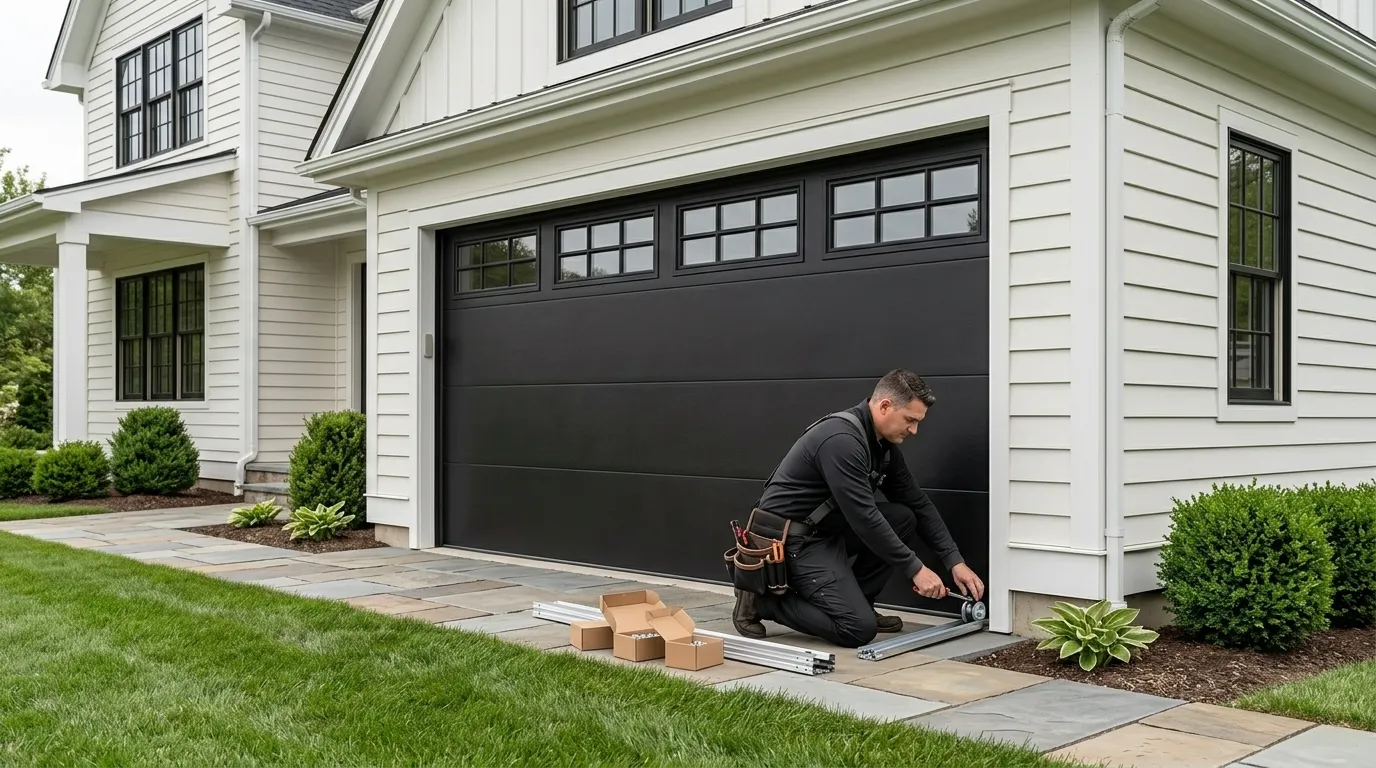
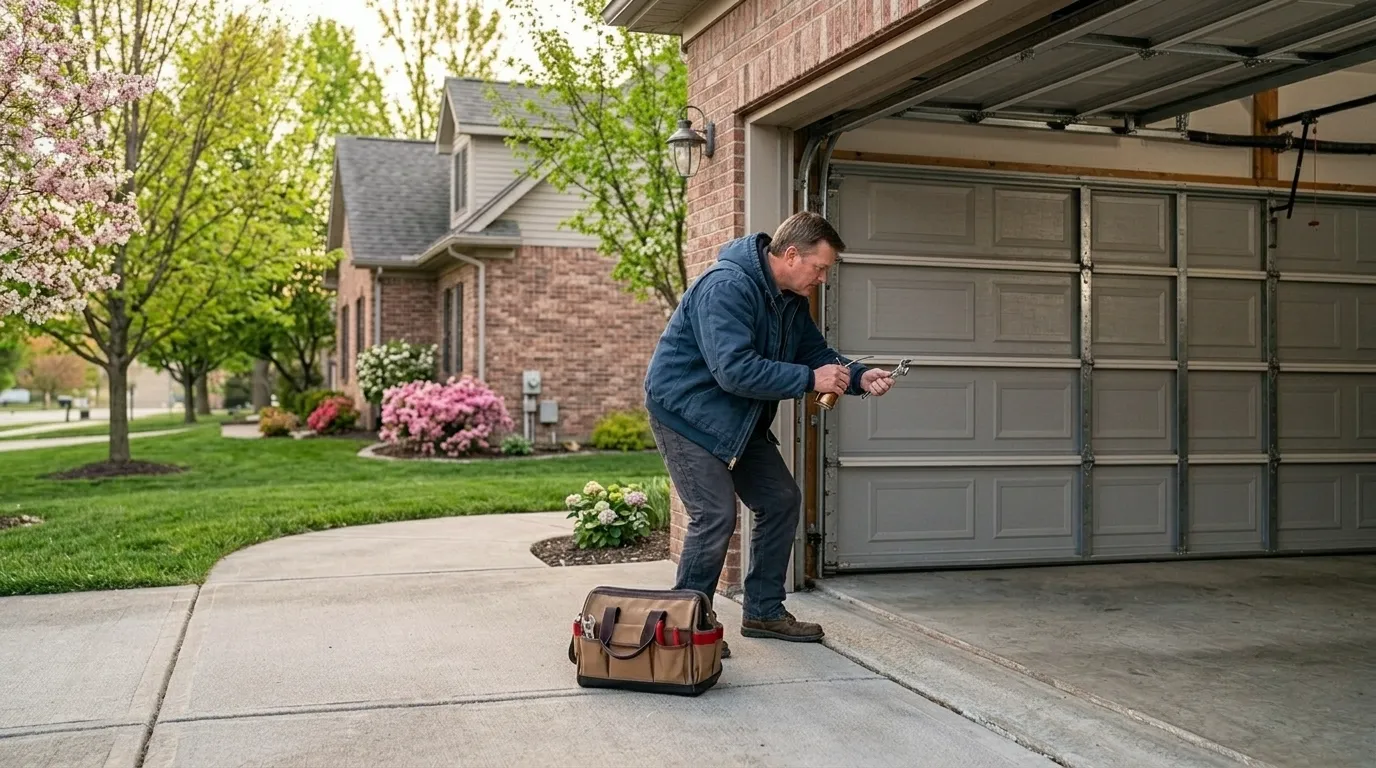
Serving Florence-Graham from Burbank, 16 miles out. Our crew knows the early-1950s door hardware common to this part of the service area and carries parts for it.
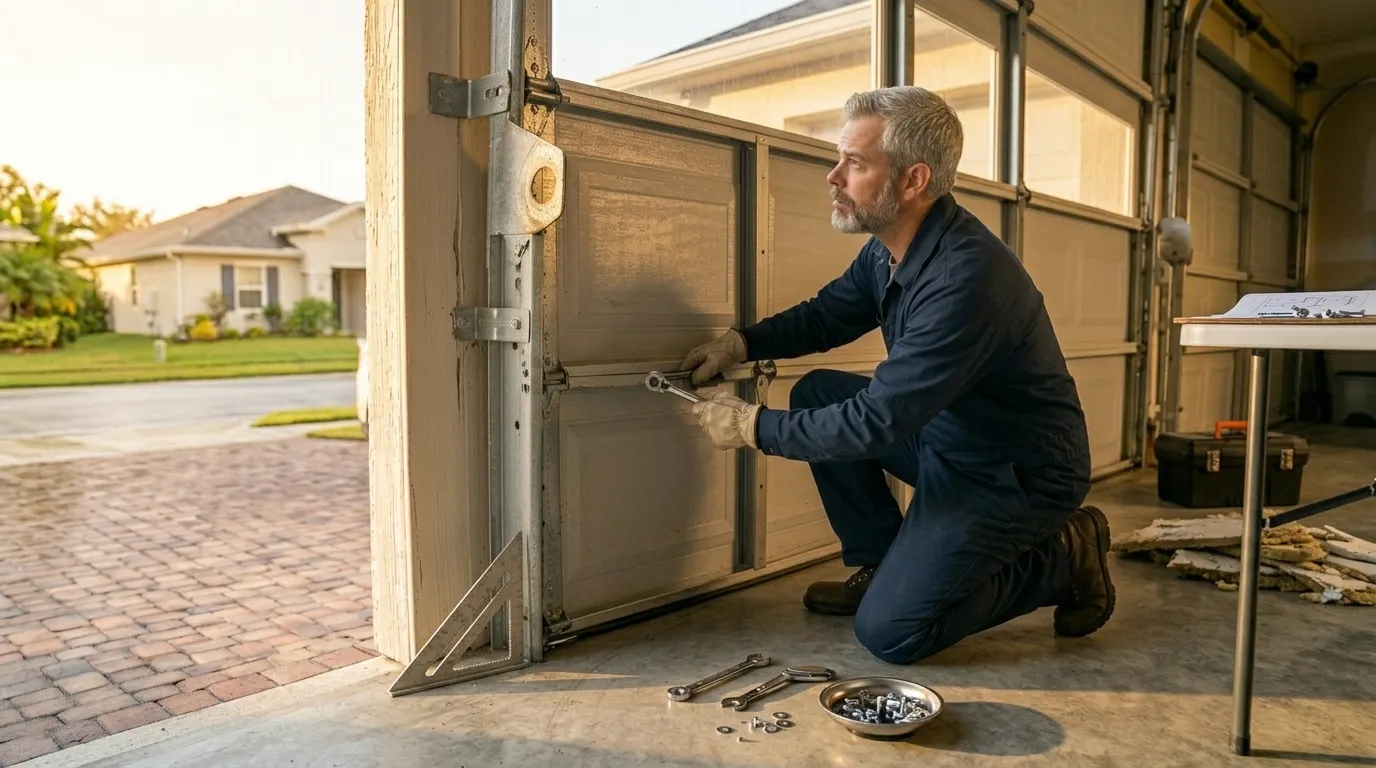
Florence-Graham's housing runs older than a lot of the areas we cover. The median year built here is 1952, which puts most of the neighborhood's garages a full decade or more ahead of the broader service-area median of 1959. That gap matters. A door and track system installed in 1952 was built for a different kind of hardware than what showed up in the 1960s and later - narrower rail profiles, lighter-gauge springs, and in a lot of cases doors that have been swapped once already but still ride on the original jamb brackets. Across the wider area we work in, the building stock spans 1943 to 2012, and most of the 45 named communities we serve lean pre-1960. Florence-Graham sits right in that older band, not the newer edge of it. If your garage still has its original wood or early steel door, the wear pattern is different from a house built in 1975: hinges elongate, the jamb wood softens where lag screws bite, and the track brackets were never meant to carry a heavier replacement panel. We look at the year the house went up before we look at the door itself, because it tells us what we're probably dealing with underneath the paint.
How We Get to You
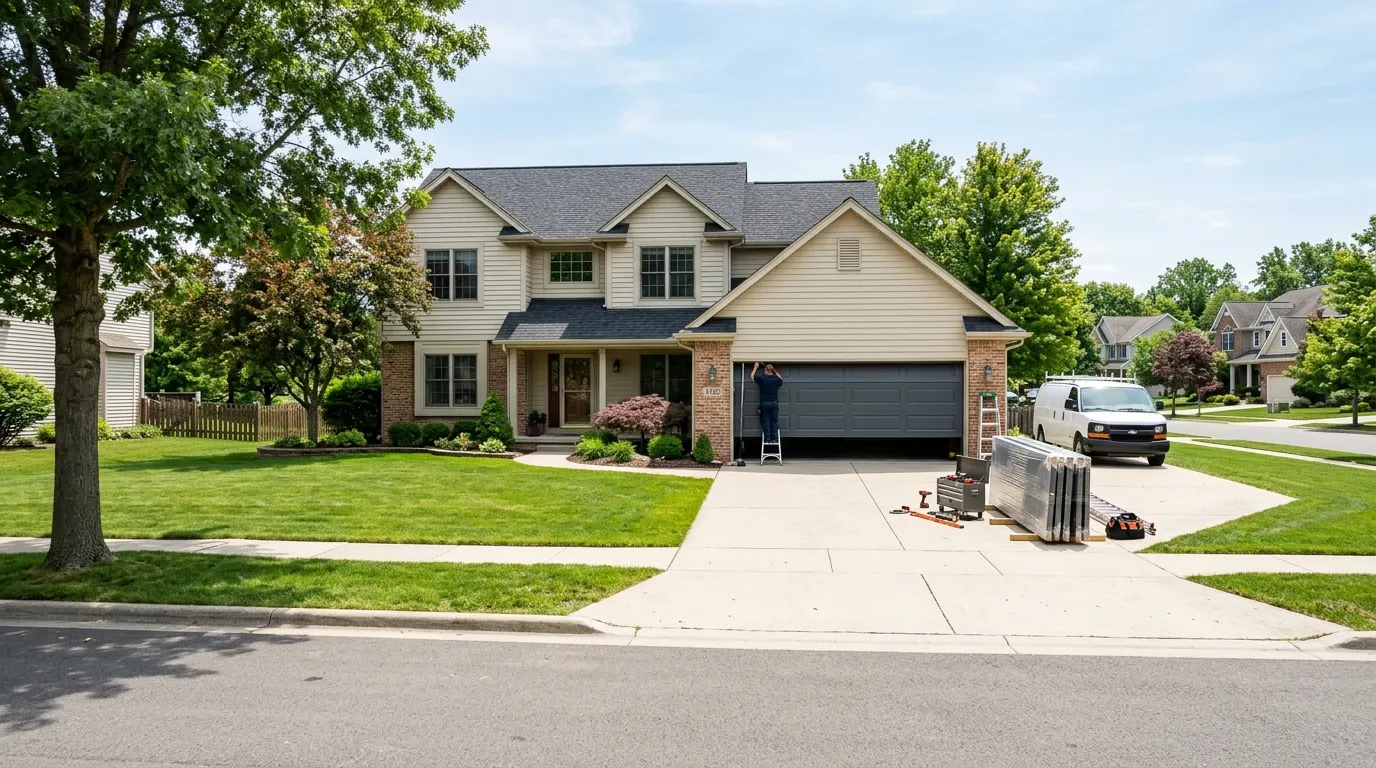
We run out of Burbank, about 16 miles from Florence-Graham. That's not a short hop, and we're upfront about it - if you need something same-hour, we may not be first through the door. What we can promise is that the trip is planned, not improvised: a truck stocked for the kind of hardware that shows up on 1950s-built garages, because that's most of what we find here. We don't keep a satellite yard or a local drop point in Florence-Graham; every job is dispatched from the Burbank shop, so scheduling a visit means working around that drive both ways. For routine repairs - a spring, a cable, an opener swap - that distance rarely changes the outcome, just the lead time on getting there. For a door that's fallen off its track and blocked a driveway, call and we'll tell you honestly how soon we can make it.
How That Shows Up in the Door
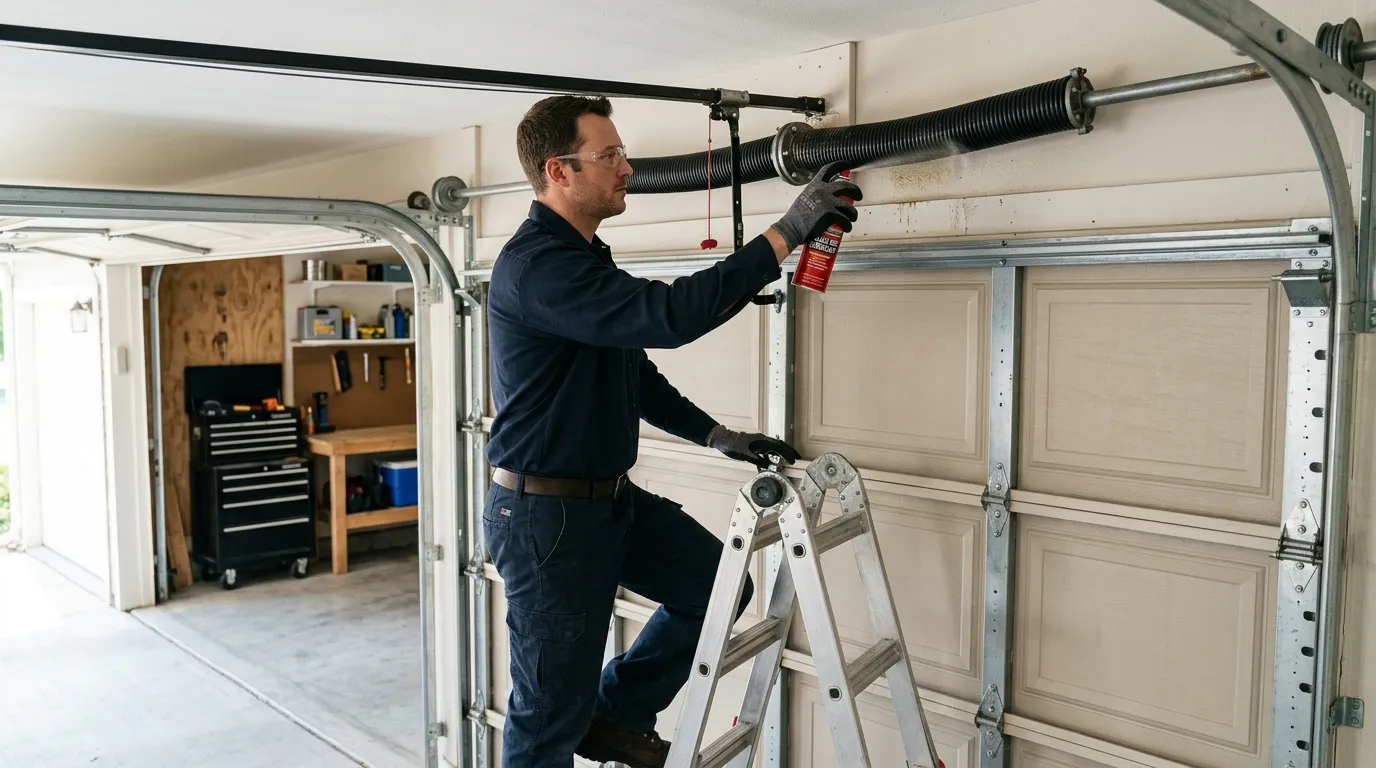
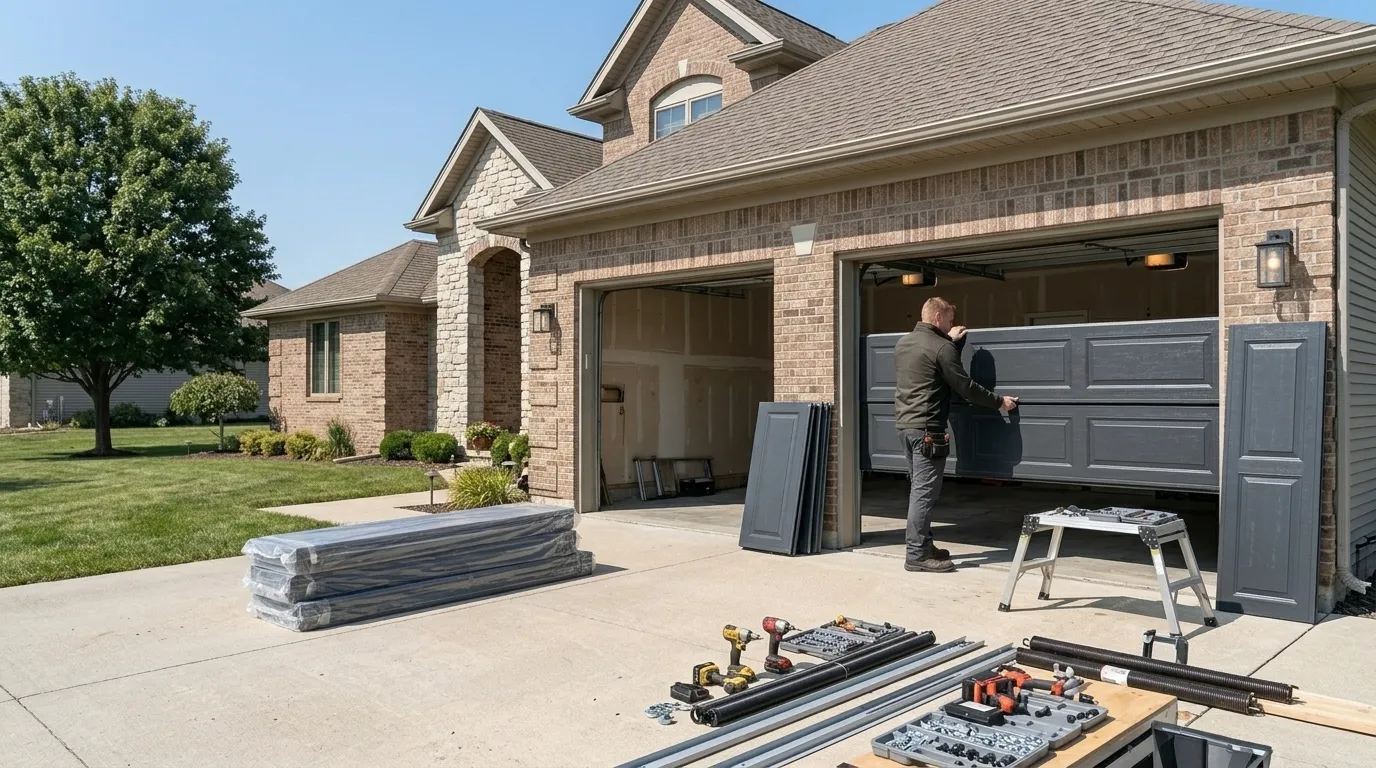
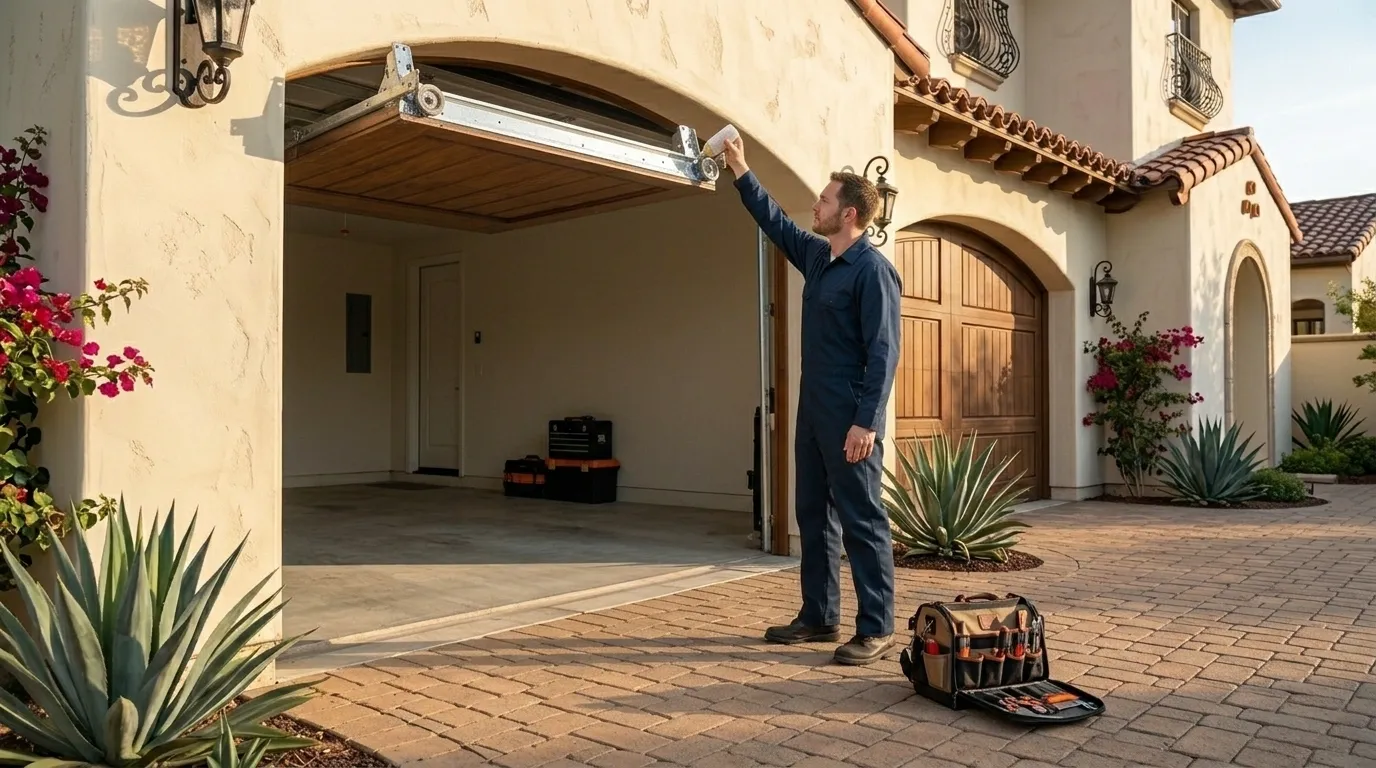
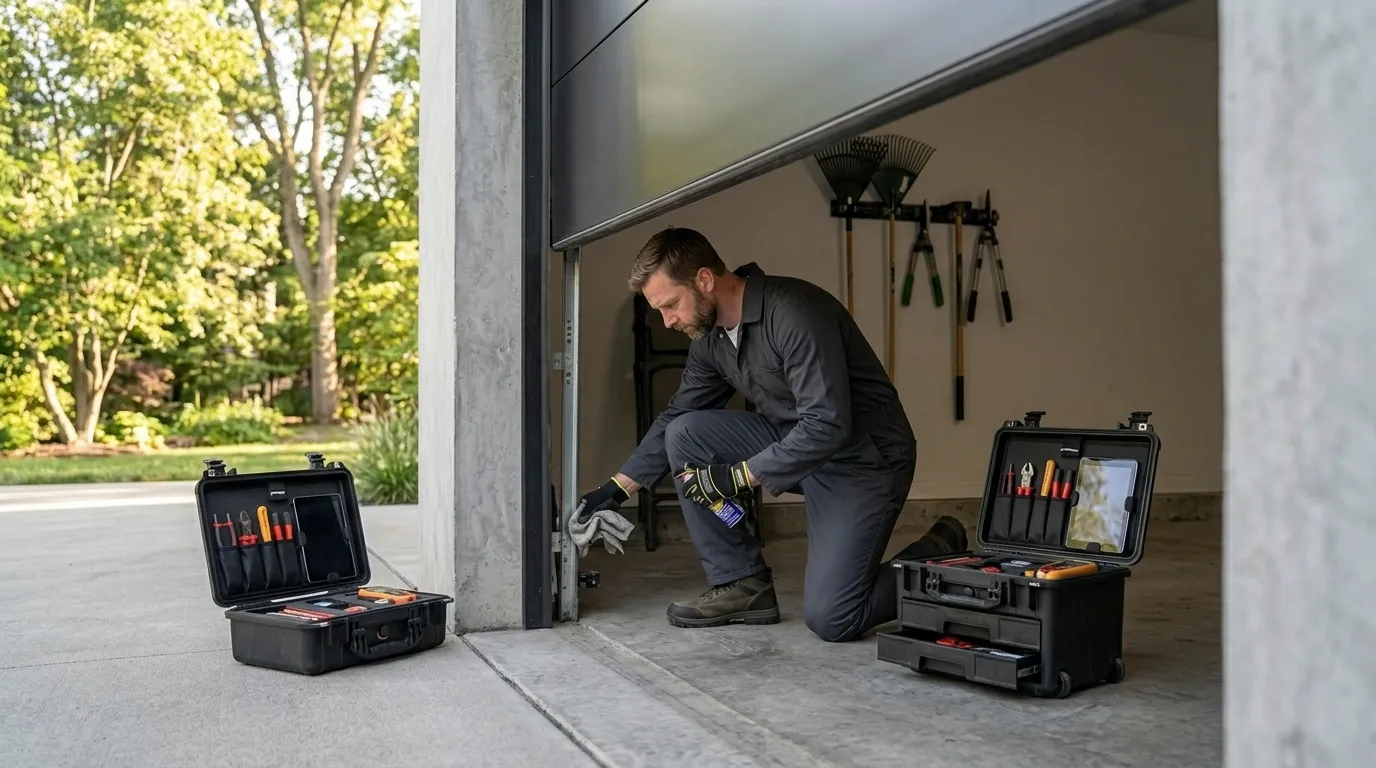
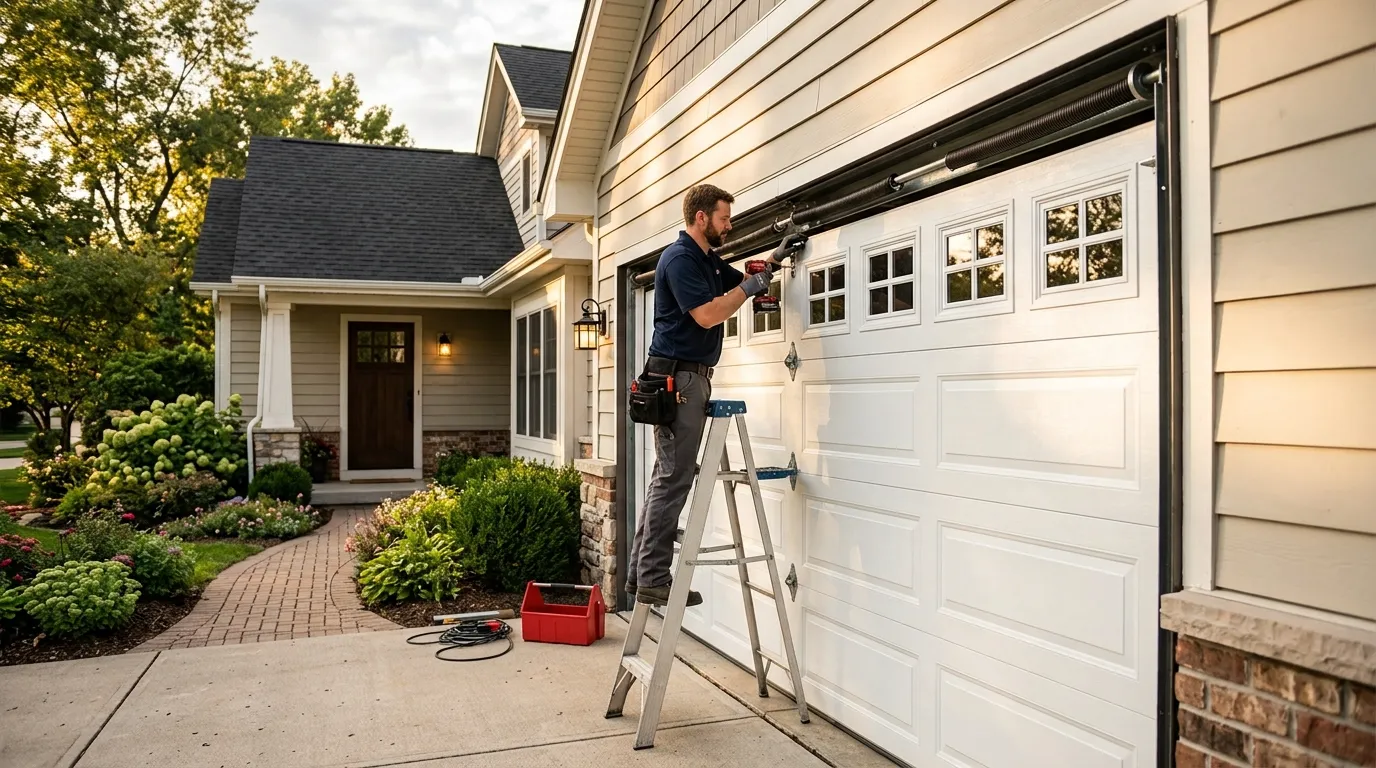
On a house built around 1952, the failure points tend to repeat. Torsion springs that were correctly sized for a lightweight wood-panel door often get replaced over the decades with a heavier steel or insulated door, and nobody recalculates the spring wind - so the opener strains, or the door slams down instead of settling. Rollers on these older tracks are frequently the older nylon or steel type without sealed bearings, which means more noise and faster wear, especially with the moderate heat this area sits in through summer. We don't see the kind of extreme cold-snap cracking you'd get in a harsher climate band, but repeated heat cycling still dries out lubrication and warps thinner wood jambs faster than people expect. The honest limitation here: if a door has been patched panel by panel over 70 years, sometimes the math doesn't favor another repair. We'll tell you when replacement costs less over five years than another round of patch work, even though that's not the answer that gets us a bigger invoice today.
Common Jobs Here
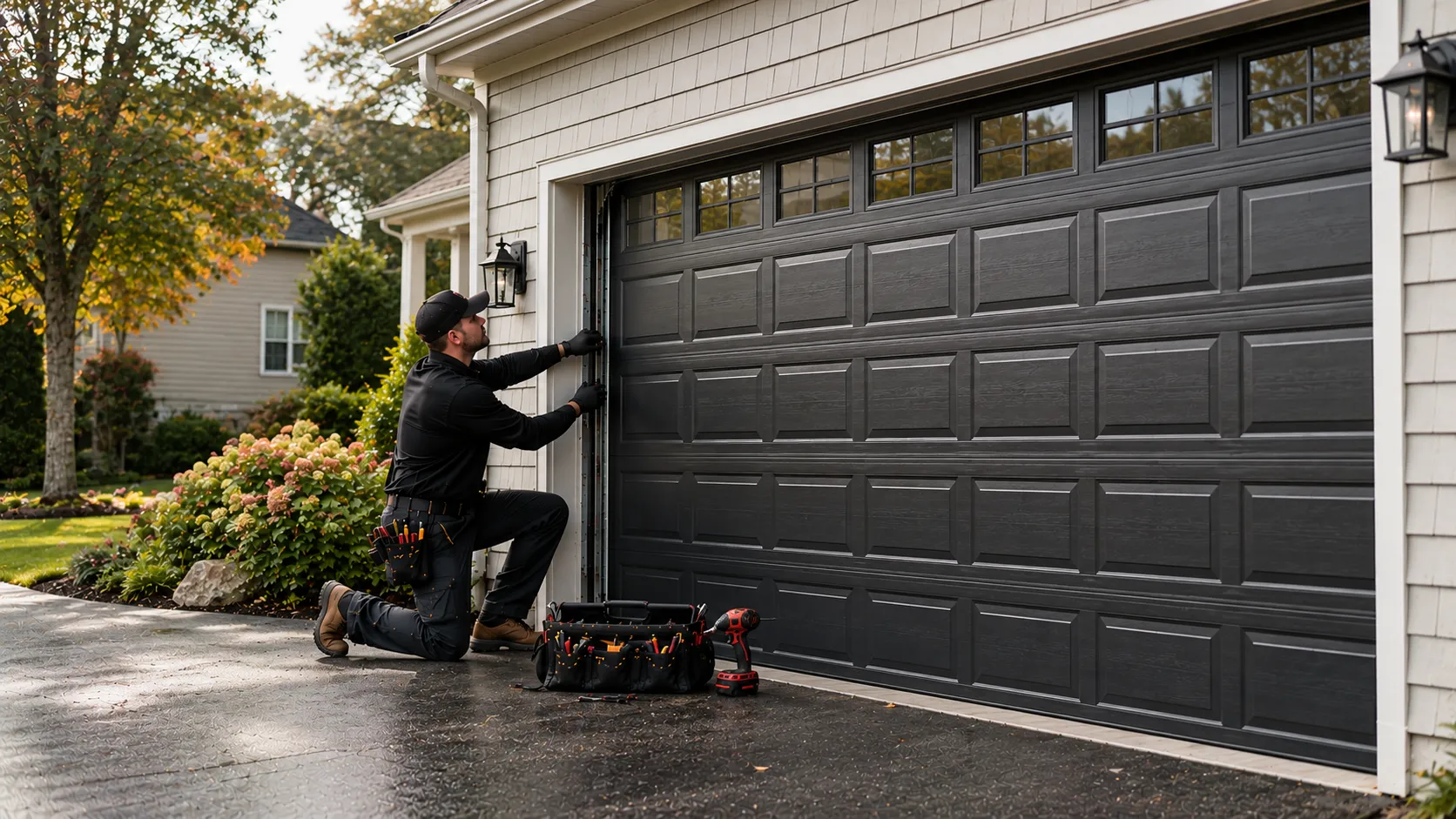
The calls we get from this part of the service area cluster around a few things. Torsion spring replacement tops the list, usually on doors where the spring size doesn't match the door weight anymore. Cable fraying on the original drum-and-cable setup is common on houses that haven't touched the hardware since it was installed. We also see a fair number of opener replacements where the original chain-drive unit has outlived its gears but the homeowner kept running it because the door still moved - until it didn't. Track realignment comes up often too, since older jamb brackets loosen with age and heat cycling and let the whole rail drift out of square. What we don't see much of here: the newer insulated-panel delamination issues that show up on houses built after 2000, simply because Florence-Graham has very little of that stock. Given 14,492 households in the area, most of them older than the median for our whole coverage zone, we plan the truck's parts inventory around older hardware first.
How it works
From “it’s stuck” to “it’s fixed”
01
Tell us what’s wrong
Describe the symptom - won’t open, loud bang, opener runs but the door won’t move.
02
On-site diagnosis
A technician tests the door under power and by hand and finds what actually failed.
03
Clear, up-front plan
You get the fix that’s needed and what drives the cost - before any work starts.
04
Repaired & tested
The repair is done, the door is set true and tested, and the work area left clean.
Next step
Serving Burbank, CA - tell us what your door’s doing and we’ll take it from there.
Straight answers about garage door repair in Burbank. Still unsure? Ask us directly.
Do you have a location in Florence-Graham?
No. We work out of Burbank, about 16 miles away, and dispatch every job from there. We don't have a yard or drop point in Florence-Graham, so travel time is part of any visit we schedule.
Why does my garage door hardware look different from a neighbor's newer house?
Florence-Graham's median year built is 1952, older than most of the wider area we serve. Doors, tracks, and spring sizing from that era were made for lighter panels than what often replaced them later, which changes how they wear and fail.
Is it worth repairing an old torsion spring setup instead of replacing the whole door?
Often yes, if the track and jamb hardware are still sound. But on a door patched repeatedly over decades, replacement sometimes costs less over time than another repair. We'll tell you which applies before we start work.