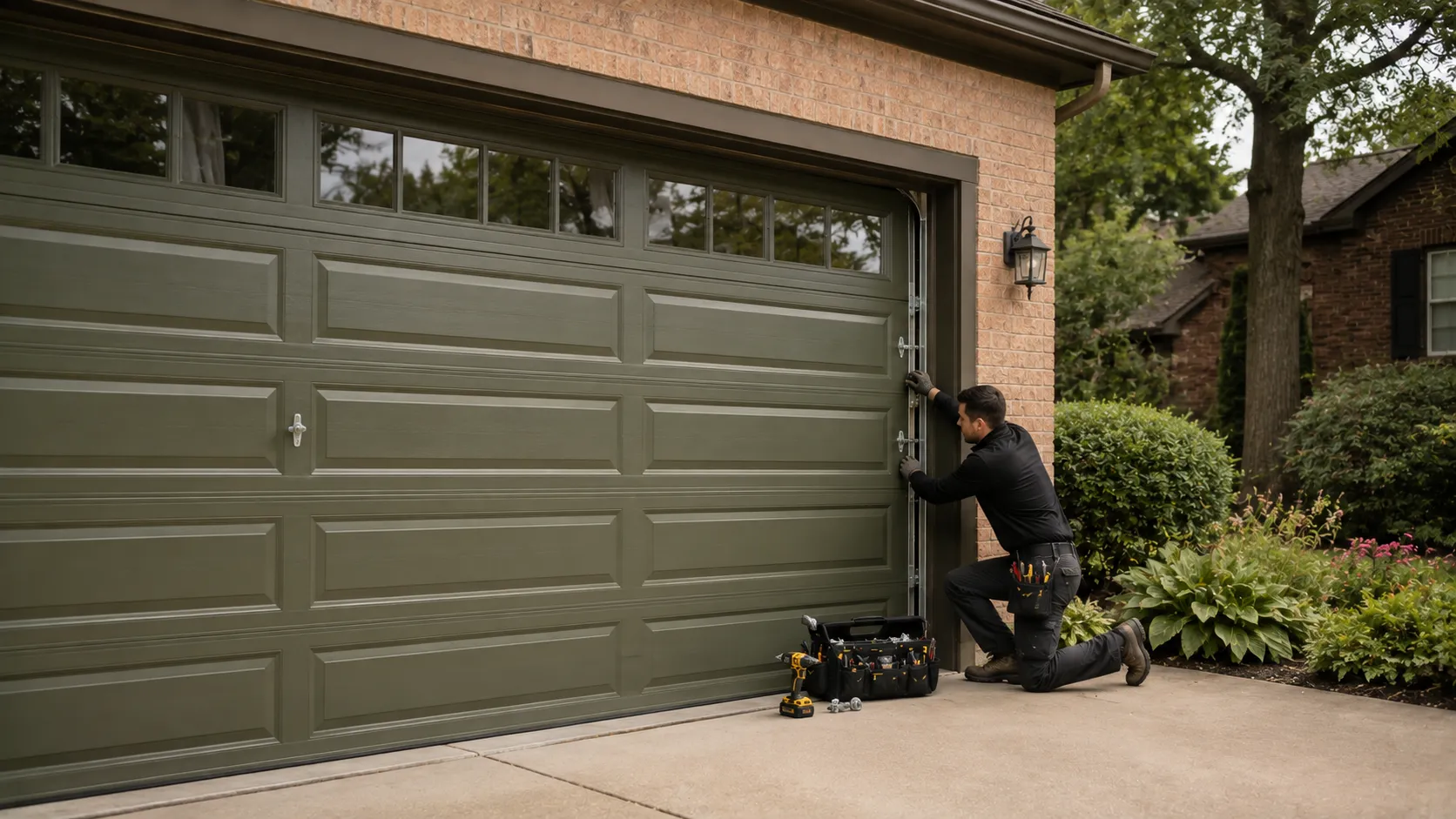
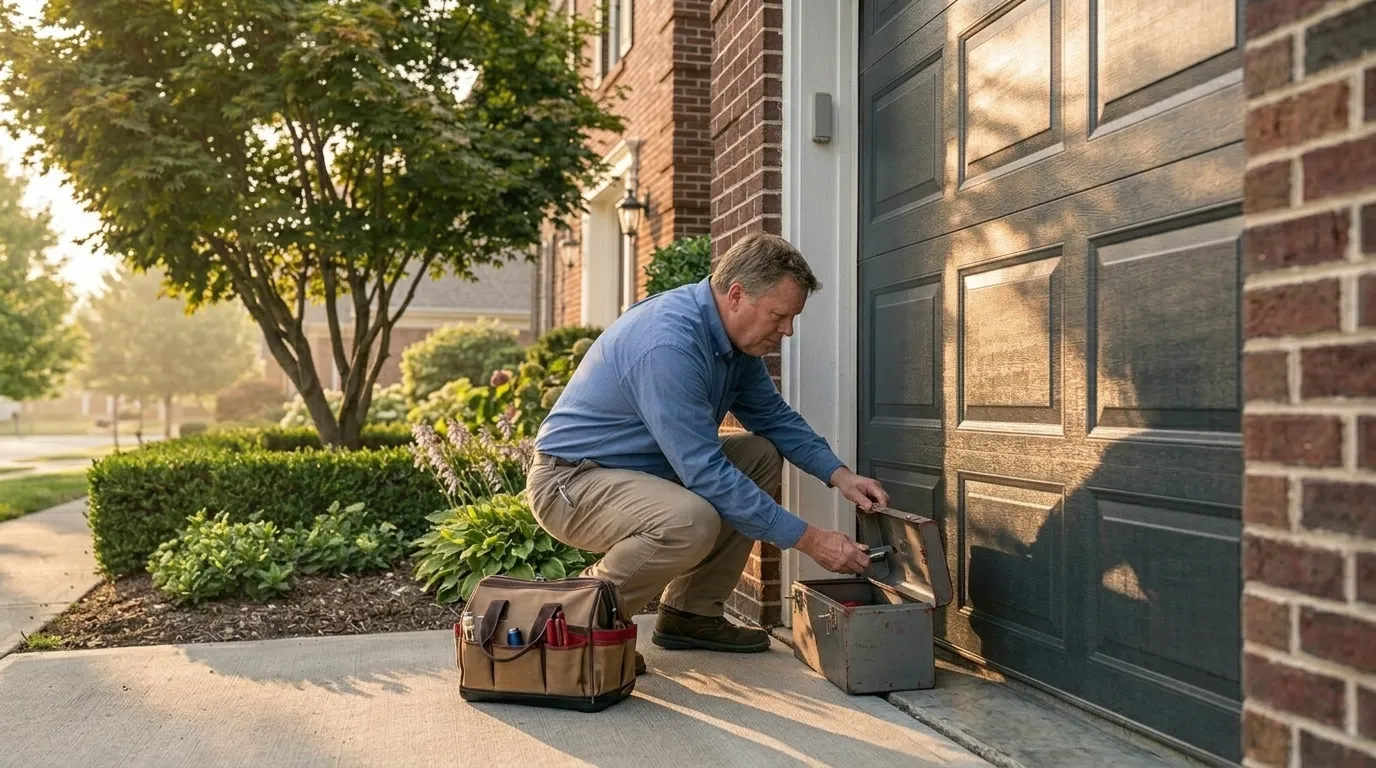
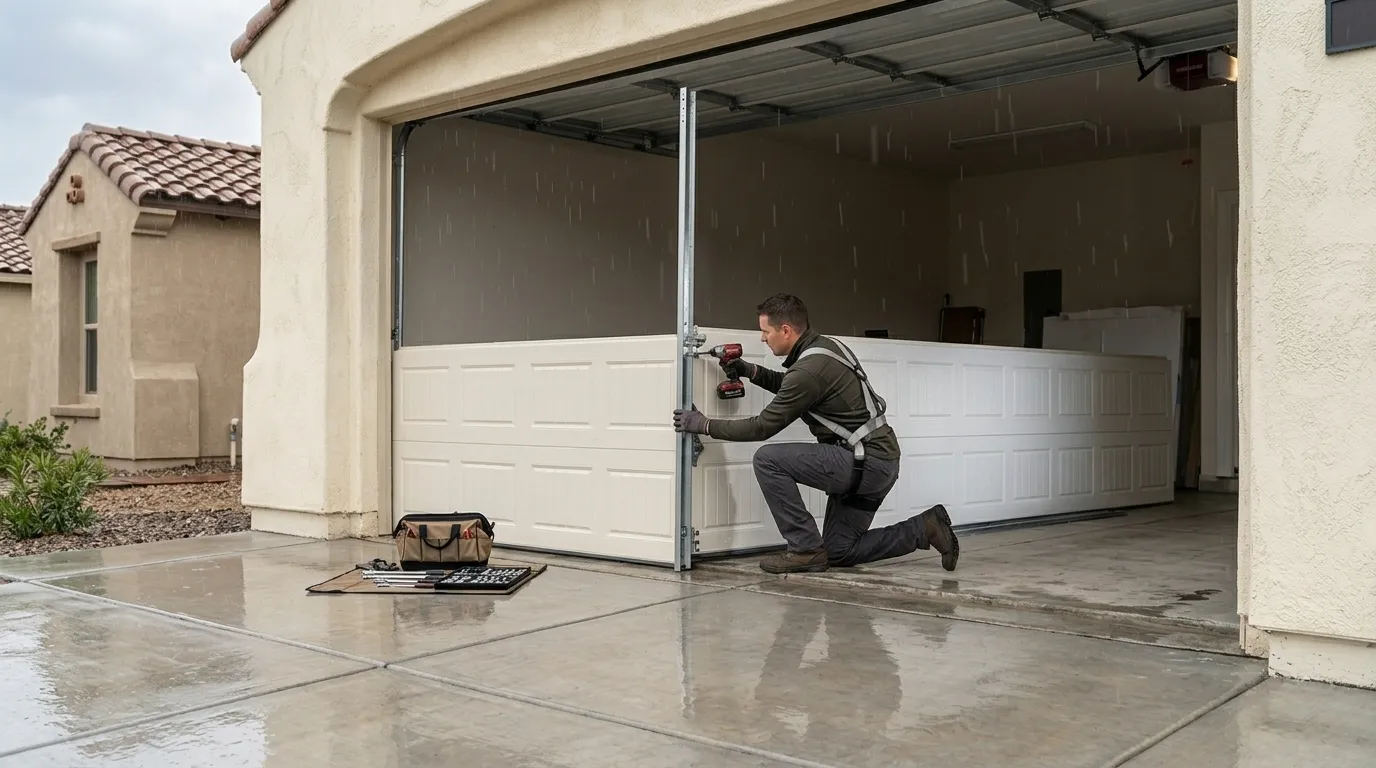
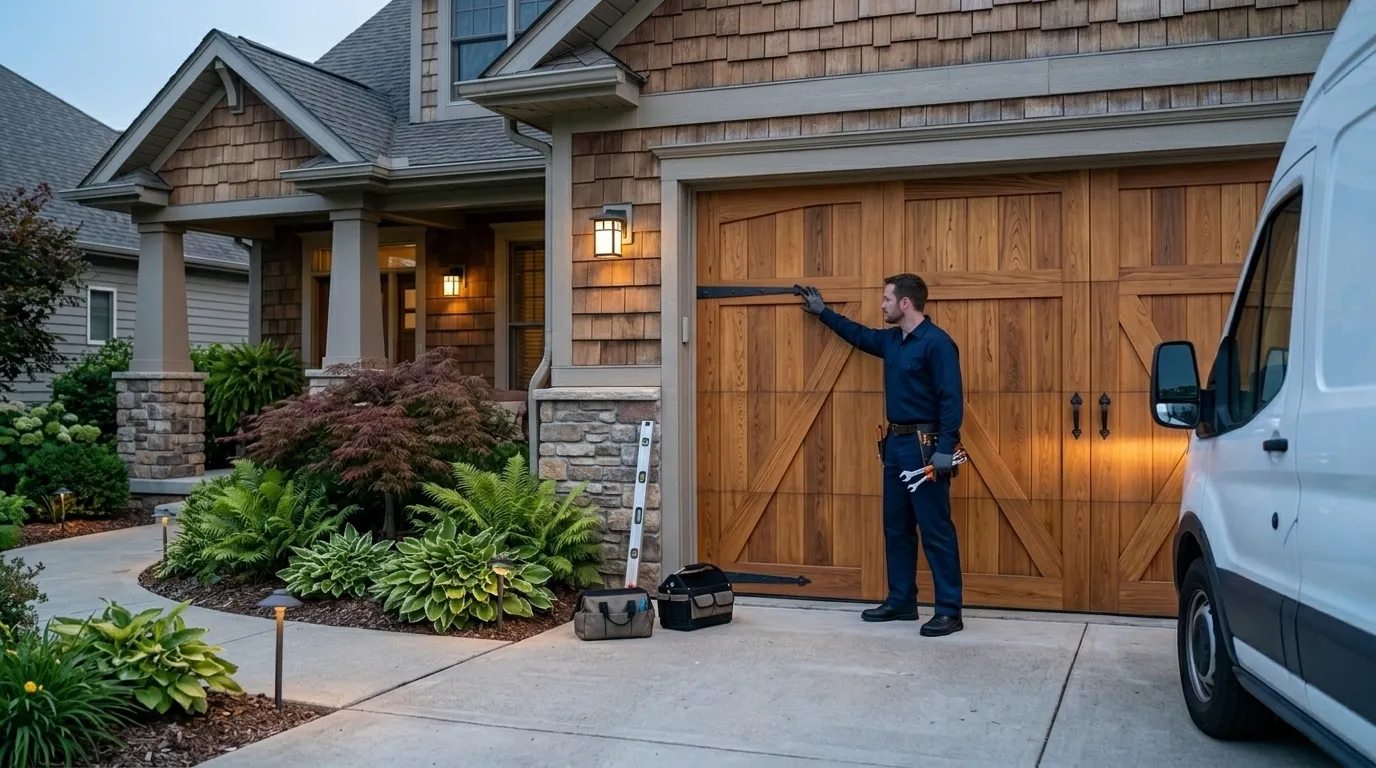
Garage door repair for Lynwood's 1953-era housing stock, serviced by trucks from Burbank Garage Door Pros. Springs, openers, and panels built for older hardware.
Lynwood's median home dates to 1953, several years older than the 1959 median across the wider service area. That six-year gap matters more than it sounds like it should. A house built in 1953 usually got its garage door and hardware before the torsion-spring era really took hold in tract construction, which means a lot of Lynwood garages still run gear from a different design generation than what you'd find in a neighborhood built even a decade later.
With 15,210 households in Lynwood, this isn't a handful of outlier homes - it's the baseline stock for the area. Across the broader service area, roughly 145,743 owner-occupied houses sit inside 520,756 total households, and most of that stock skews pre-1960 too. Lynwood just sits on the older end of that range rather than the middle. If your door has an extension-spring setup mounted flat along the horizontal track instead of a torsion spring over the header, that's consistent with a build from this period, not a sign something was done wrong later.
How We Get to You
We run out of Burbank, and Lynwood is a 20-mile drive from there. We don't keep a depot or a standing crew in Lynwood, so every job here is a scheduled trip, not a drop-in. That's the honest limitation: if you need someone on-site within the hour for an emergency, we're not the fastest option on your street. What we can do is plan the truck's route and parts load before we leave, so when we arrive we're not guessing at what a 1953-era door needs.
Because the trip is long enough to matter, we try to bundle diagnosis and repair into one visit rather than a look-then-return model. If a job needs a part we don't carry standard - an obsolete extension spring size or an odd-width track bracket, for instance - we'll tell you that up front rather than have you wait on-site while we find out.
How That Shows Up in the Door
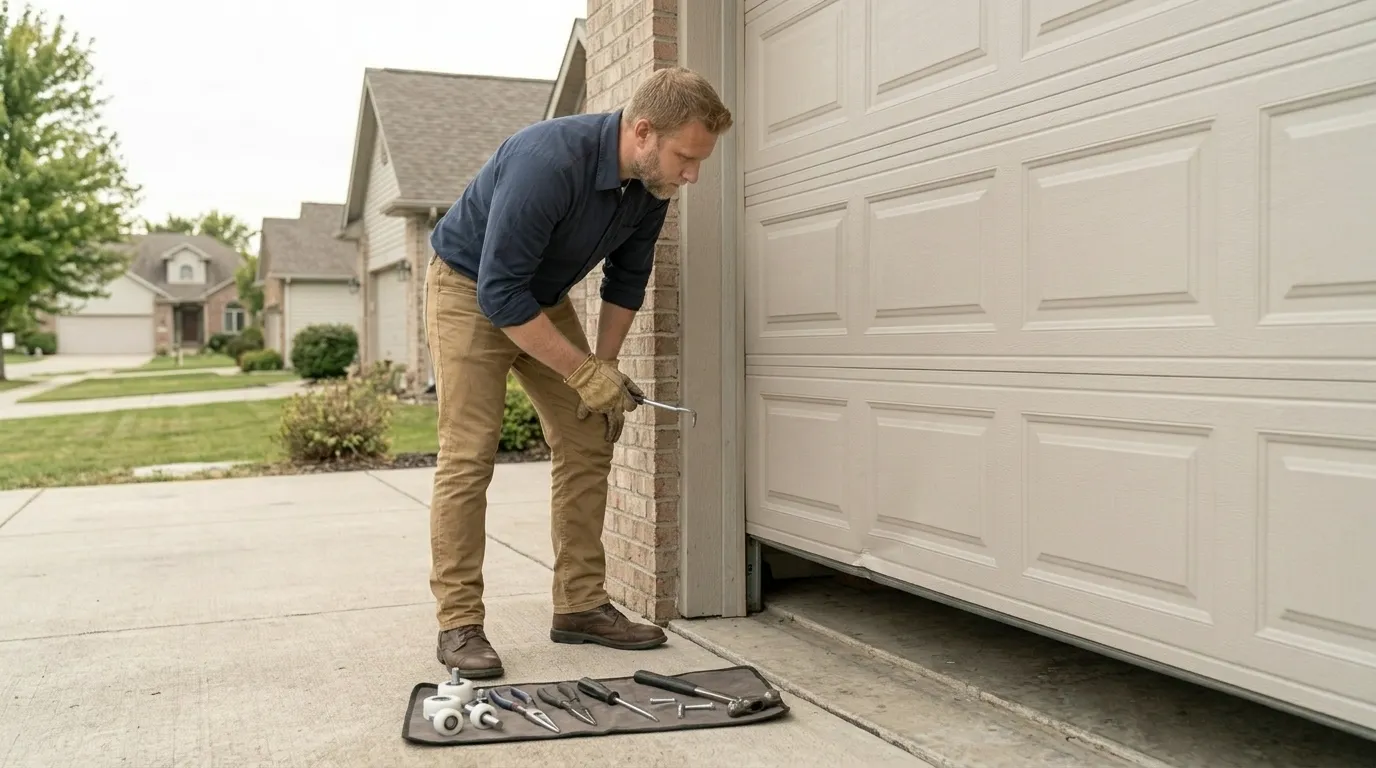
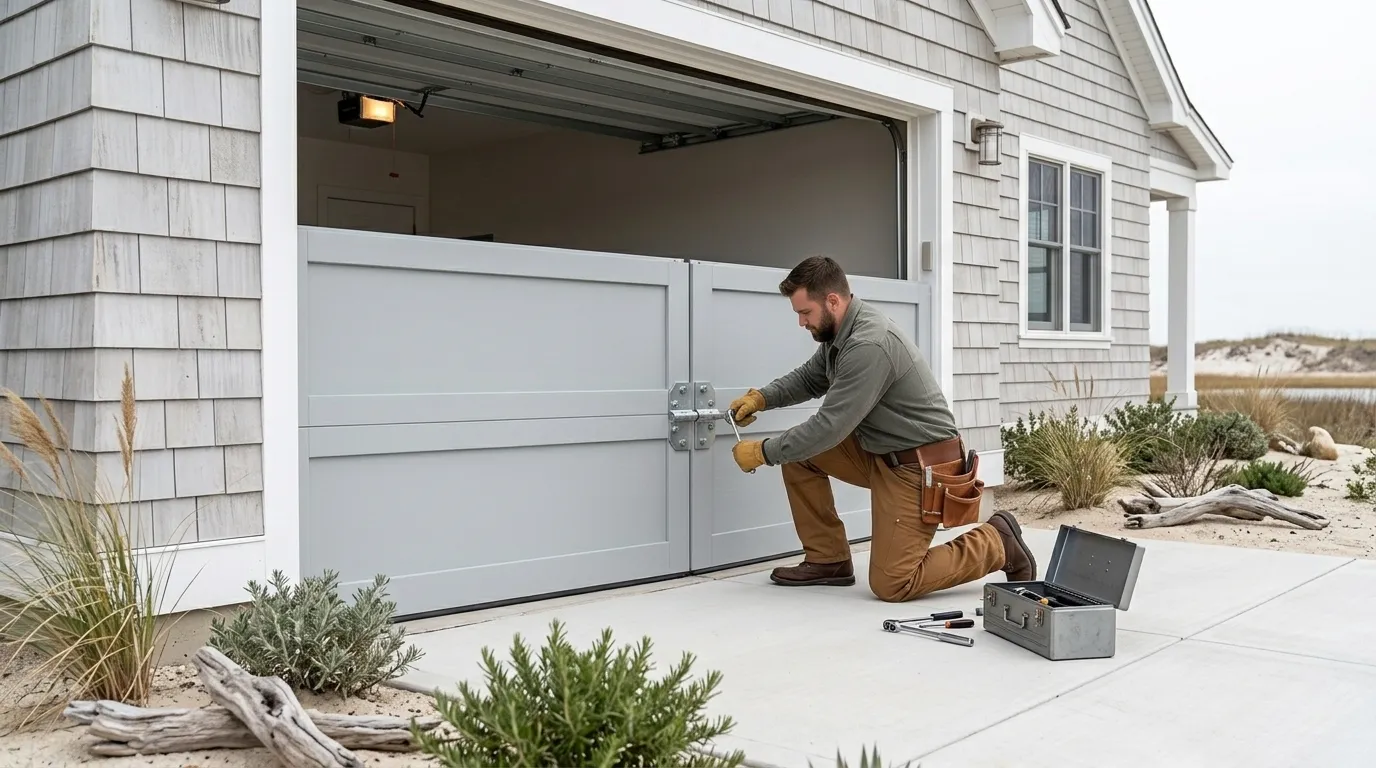
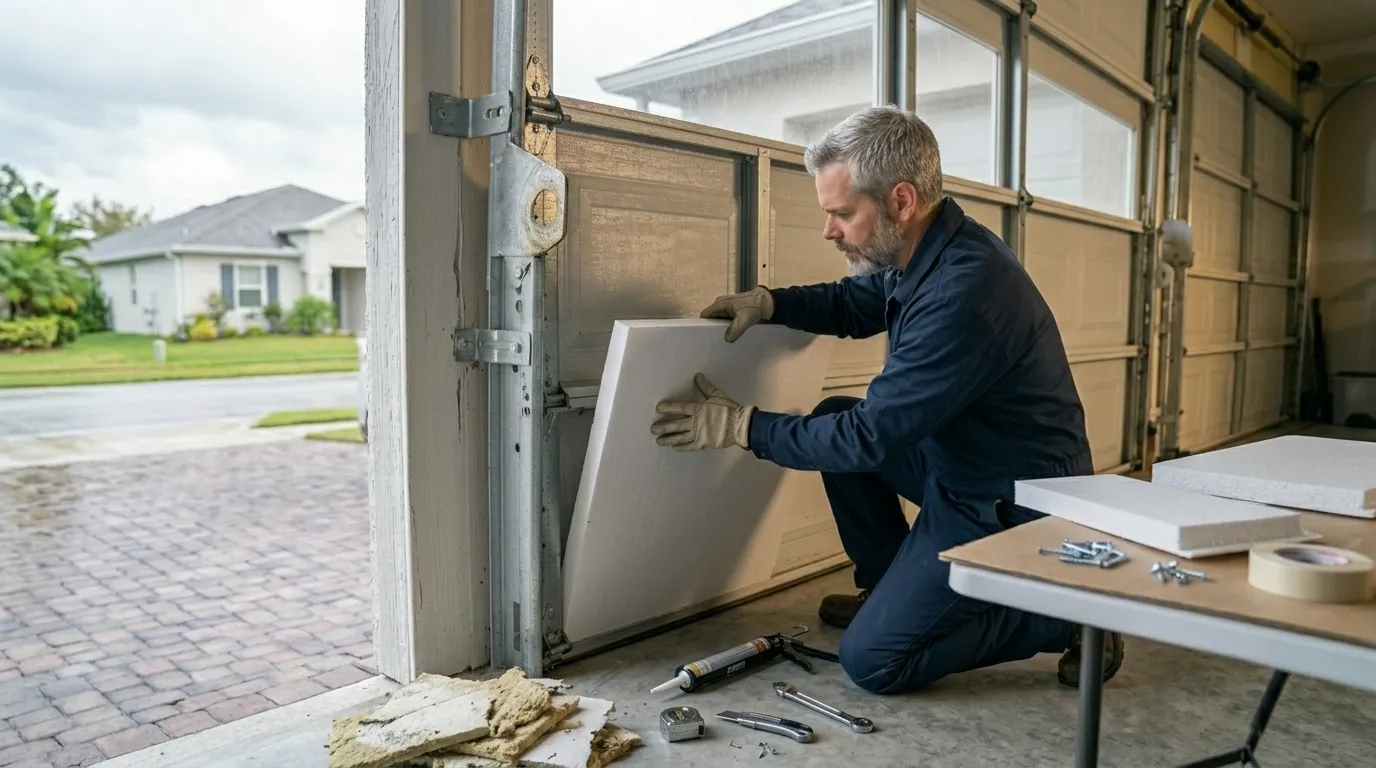
Doors from Lynwood's era were mostly built before insulated steel sandwich panels became standard, so you'll often find a single layer of steel or an early wood panel door, sometimes with hardware that's been swapped out once already over seventy-odd years. The mounting geometry is the tell: extension springs running along horizontal tracks on both sides, rather than one torsion spring centered above the door on a shaft. Repairing one side without checking the other is a common shortcut that leaves the door tracking unevenly within a year.
The climate here runs in the moderate-heat band, which is kinder to steel and hardware than a coastal-corrosion or hard-freeze climate would be - rust isn't usually the failure point on these older doors. Fatigue is. Extension springs on a door this age have typically been cycled tens of thousands of times, and the failure is often sudden: a snapped spring rather than a slow stretch. That's worth knowing before you assume a slow-closing door just needs oil.
Common Jobs Here
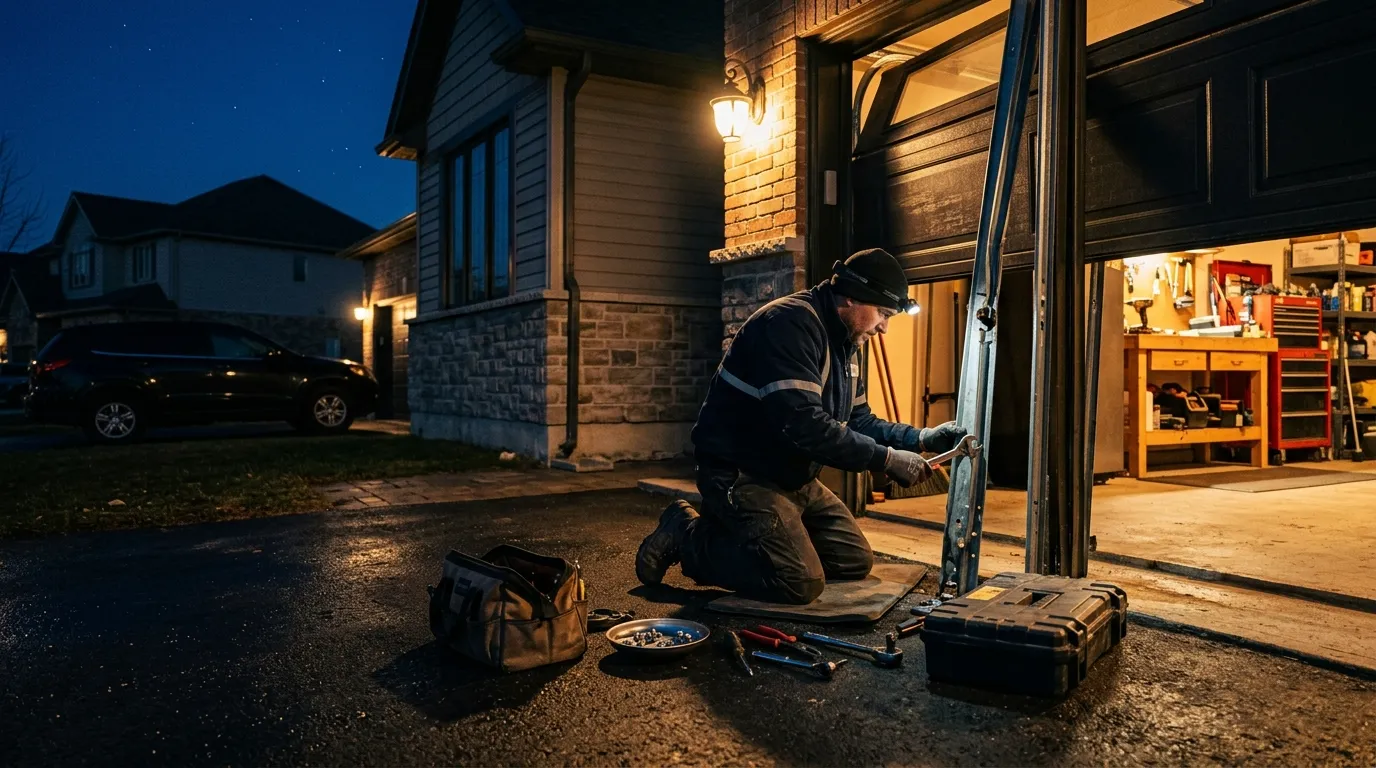
Given the housing age, the calls we get from Lynwood cluster around a few specific jobs rather than a wide spread. Extension spring replacement is the most common single repair - usually both springs at once, since if one has fatigued to failure the other is close behind. Roller replacement comes up often too, especially where the original steel rollers were never upgraded to nylon.
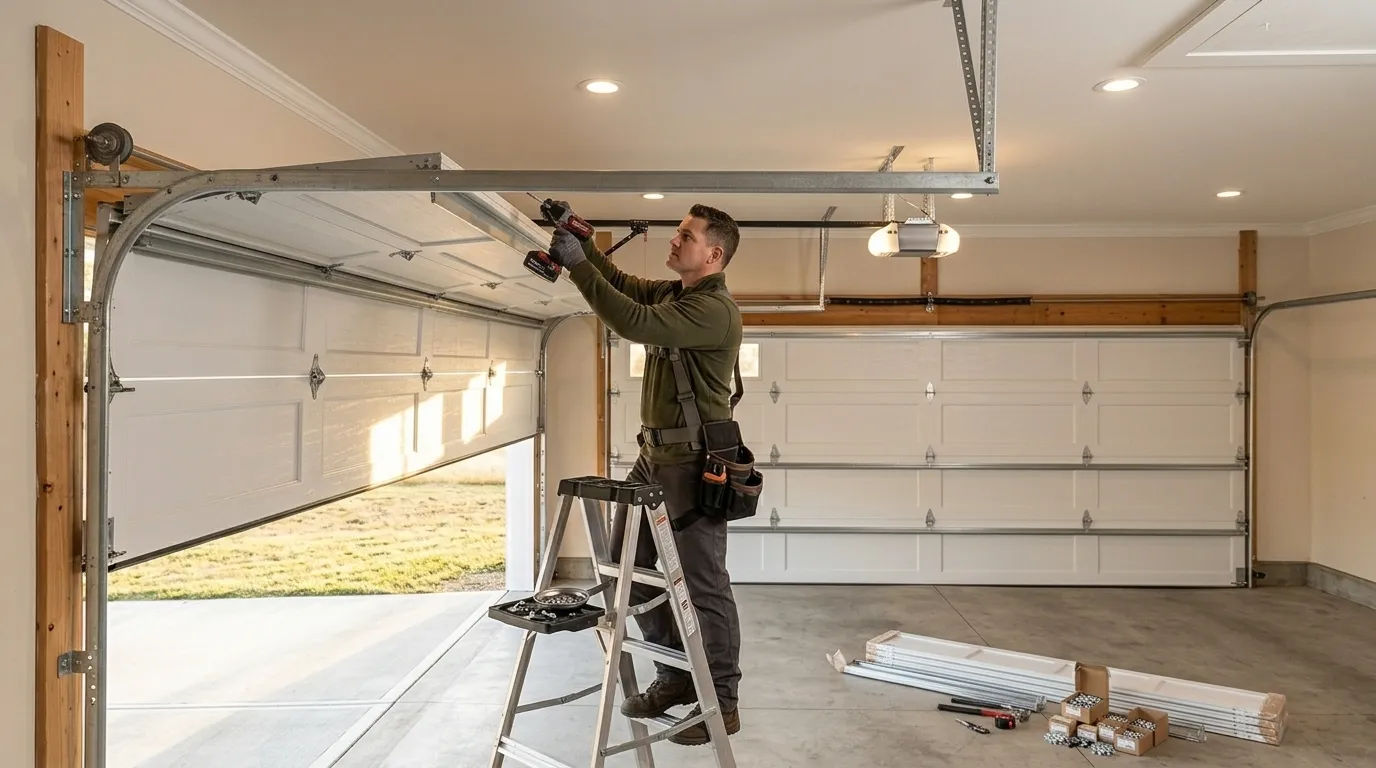
Opener retrofits are the other big category. A lot of these doors either never had an automatic opener or had one added decades after the door itself, which means the bracket and header mounting weren't designed for it. Fitting a modern opener to a 1953 door frame sometimes means reinforcing the header rather than just bolting the unit up. We won't force a retrofit onto a door that's too far gone structurally to support one safely - at that point, replacement is the more honest answer, even though it costs more up front than a repair call.
How it works
From “it’s stuck” to “it’s fixed”
01
Tell us what’s wrong
Describe the symptom - won’t open, loud bang, opener runs but the door won’t move.
02
On-site diagnosis
A technician tests the door under power and by hand and finds what actually failed.
03
Clear, up-front plan
You get the fix that’s needed and what drives the cost - before any work starts.
04
Repaired & tested
The repair is done, the door is set true and tested, and the work area left clean.
Next step
Serving Burbank, CA - tell us what your door’s doing and we’ll take it from there.
Straight answers about garage door repair in Burbank. Still unsure? Ask us directly.
Is my garage door original to my Lynwood house?
If your house dates to around 1953 and the door hasn't been visibly replaced, it's possible, though most doors have been swapped or had hardware upgraded at least once over seventy years. The clearest sign of an older setup is extension springs mounted along the horizontal tracks rather than a single torsion spring over the header.
Do you have a crew based in Lynwood?
No. We operate out of Burbank, about 20 miles away, and travel to Lynwood for scheduled jobs. We don't offer a same-hour emergency response the way a locally based company might, so plan for a scheduled visit rather than an immediate drop-in.
Why did both my extension springs need replacing at once?
Extension springs on older doors fatigue from cycle count, not just age, and both springs on a door usually see close to the same number of cycles. When one fails, the other is typically near the end of its life too, so replacing just one often means a second failure within months.
Can any opener be added to an older door frame?
Not always without extra work. Doors from the early 1950s in Lynwood often have headers that weren't built to carry a modern opener's mounting load. Sometimes the header needs reinforcing before the opener goes in. If the frame is too deteriorated to support that, replacing the door is usually the better call.